Water Heater Leak Cleanup in Palm Coast, FL
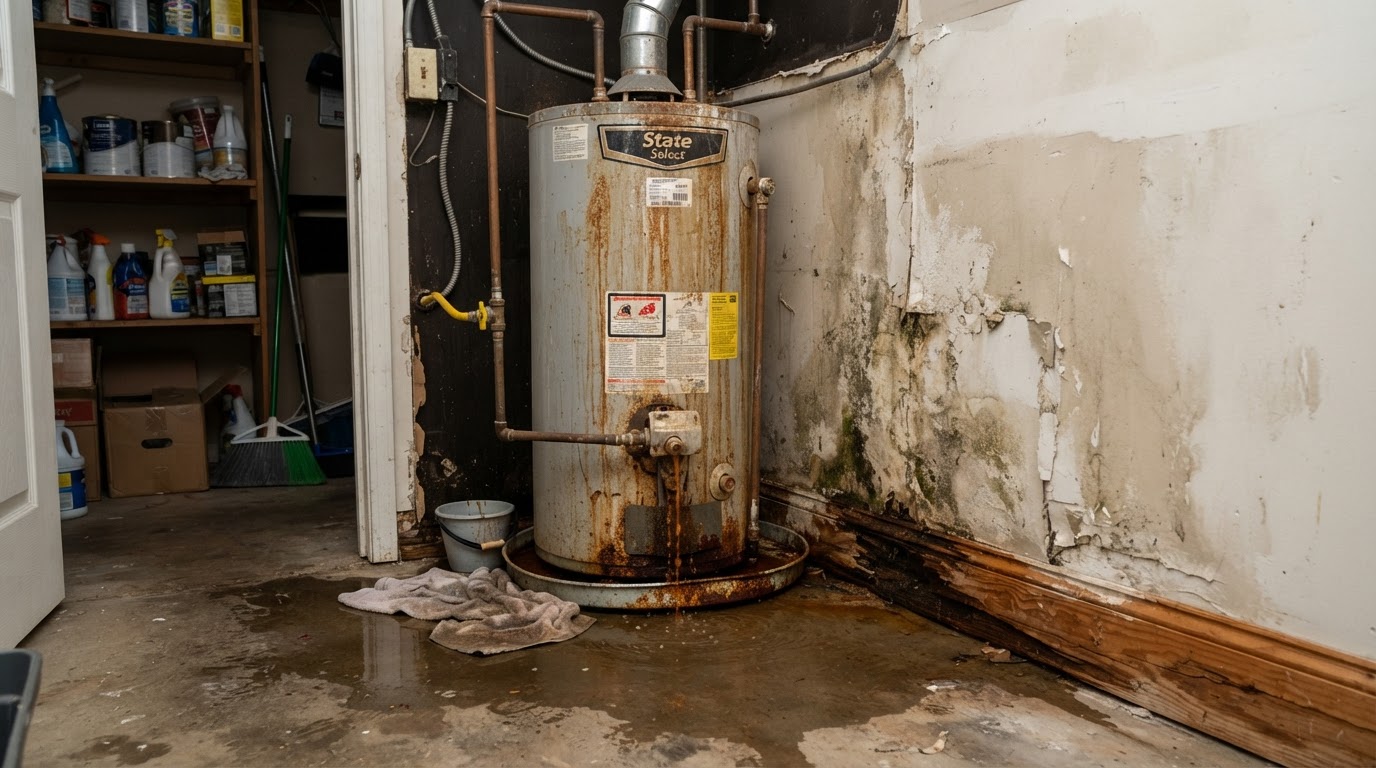
A leaking or failed water heater can release water into a closet, garage, utility room, or adjacent space — sometimes slowly over weeks, sometimes suddenly when the tank ruptures. Water heater leak cleanup in Palm Coast, FL includes extracting the water, drying nearby flooring and drywall, and inspecting for moisture that has traveled beyond the immediate area into adjacent walls and subfloors.
Palm Coast Water Damage Contractors connects property owners with professional water heater leak cleanup services across Palm Coast and surrounding communities. Because water heater leaks often go unnoticed, the moisture can spread further than expected — making a thorough inspection essential.
- Water Extraction
- Flooring & Drywall Drying
- Hidden Moisture Inspection
- Adjacent Room Assessment
How Water Heater Leaks Damage Nearby Materials
A water heater leak can affect a surprising range of nearby materials. A slow leak behind the tank can run for weeks, saturating the drywall behind the unit, the baseboards along the wall, and the subflooring beneath the tank — all before the leak is noticed. By the time water appears on the floor, moisture has often already migrated into the wall cavity and beneath the flooring.
A tank rupture is more dramatic: the full contents of the tank release at once, flooding the utility room, garage, or closet floor and sending water into adjacent rooms. The volume of water can overwhelm flooring and travel under baseboards into neighboring spaces. Hot water from a tank rupture can also affect materials differently than cold water, potentially softening adhesives and accelerating absorption.
In both cases — slow leak or sudden rupture — the concern is not just the visible water on the floor. The moisture that has been absorbed by drywall, baseboards, subflooring, and adjacent wall cavities requires inspection and drying to prevent secondary damage.
Where Water Heater Leaks Come From
Water heater leaks can originate from several points on the unit. Tank failure — where the tank itself corrodes or develops a crack — is one of the most common causes of a sudden, large-volume release. The connections where supply lines attach to the unit can develop slow drips that go unnoticed. The supply line itself can fail, especially if it is an older flexible line.
The drain valve at the bottom of the tank can leak or fail, releasing water slowly onto the floor. Pressure-related discharge from the temperature and pressure (T&P) relief valve can release water onto the floor and into the drain pan — and if the drain pan is missing, cracked, or overflowing, that water reaches the surrounding floor and walls.
It is important to note that diagnosing the exact mechanical cause of a water heater leak is the role of a plumber or appliance technician. The restoration contractor's role is to handle the water that has already entered the structure — extracting it, finding the hidden moisture, and drying the affected materials. Stopping the water source may require a plumber before drying can begin.
- Tank failure or corrosion causing sudden release
- Connection leaks at supply line attachments
- Supply line failure (especially older flexible lines)
- Drain valve leaks or failure
- T&P relief valve discharge and drain pan overflow
Water Heater Leak Cleanup Process
The first step is to stop or control the water source where safely possible. This may involve shutting off the water supply to the unit and, in the case of a tank rupture, ensuring the area is safe to enter. Note that repairing or replacing the water heater itself requires a plumber or appliance professional — the restoration contractor focuses on the water and drying.
Water extraction removes standing water from the floor around and near the unit using commercial vacuums and extraction tools. Even if the visible water seems limited to a small area, moisture has likely already been absorbed by the surrounding materials — so extraction is followed by a thorough inspection.
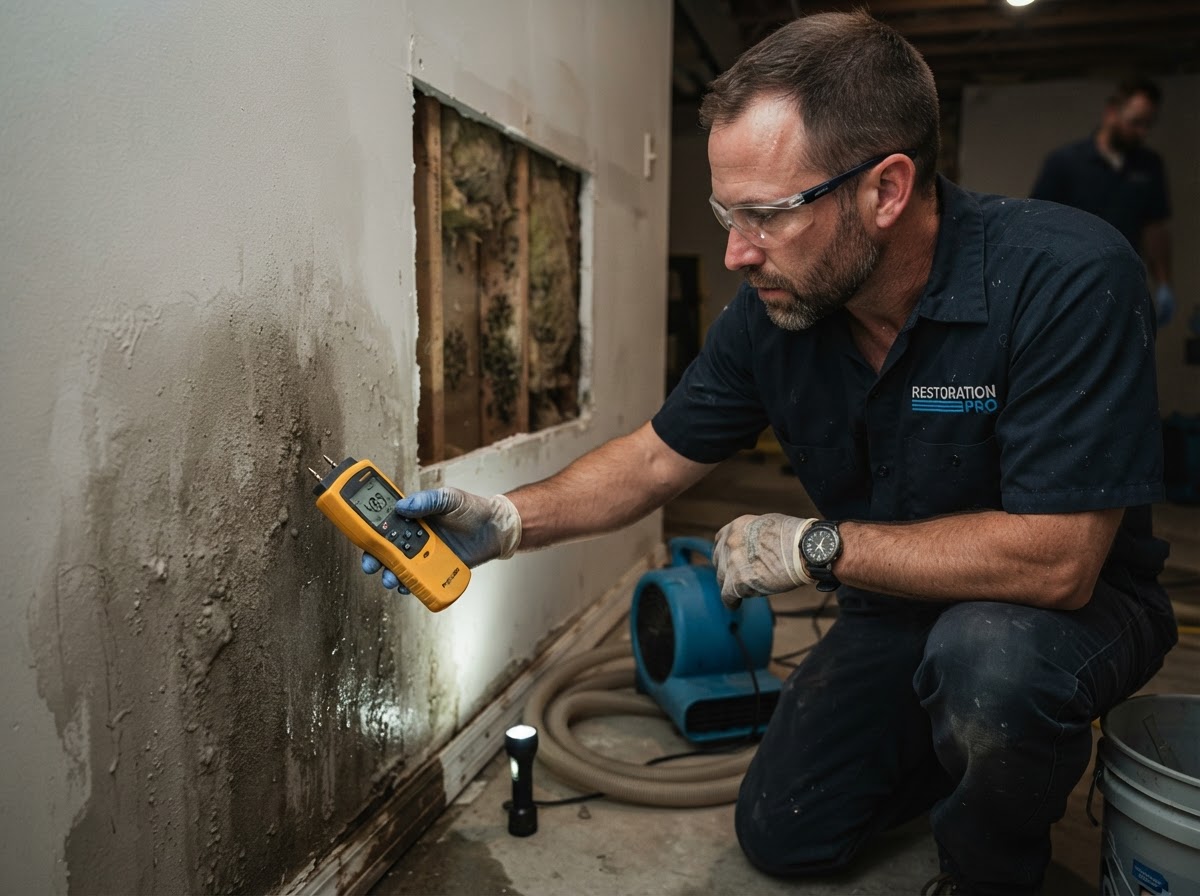
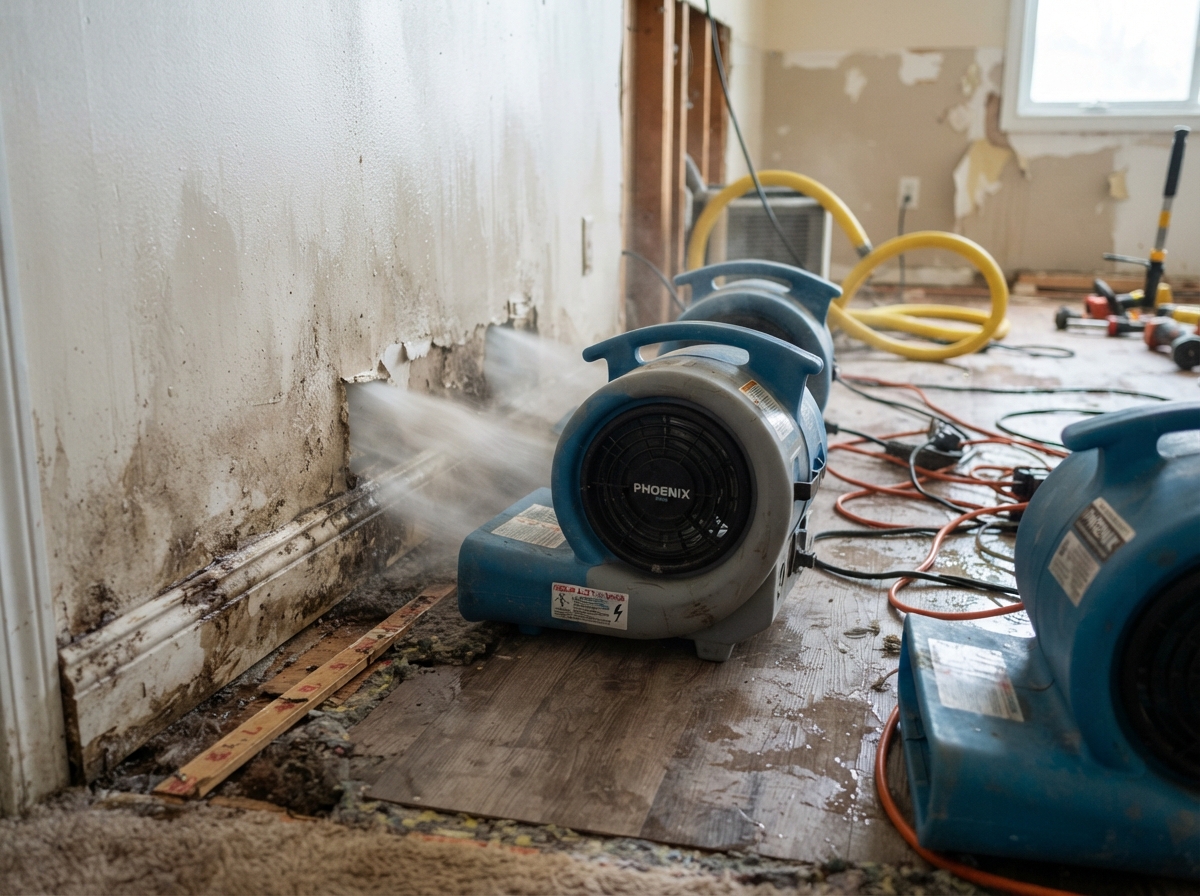
The inspection checks the drywall behind and beside the unit, the baseboards along the walls, the flooring and subflooring beneath and around the unit, and the adjacent rooms and wall cavities. Air movers and dehumidifiers are then placed to dry the affected materials, with equipment positioned to target wall cavities and subflooring where moisture has migrated. Moisture levels are monitored throughout the drying phase and confirmed against an appropriate dry standard before equipment is removed.
- Stop or control the water source (may require a plumber)
- Standing water extraction around the unit
- Inspect drywall, baseboards, and flooring near the heater
- Check adjacent rooms and wall cavities for migrated moisture
- Structural drying with air movers and dehumidifiers
- Moisture monitoring to dry standard
Water Heater Leak Cleanup in Palm Coast
Water heater leaks are a common source of water damage in Palm Coast homes, and because they often develop slowly behind the unit, the moisture can spread further than property owners expect. Palm Coast Water Damage Contractors connects property owners with professional water removal and drying services throughout Palm Coast and surrounding Flagler County communities.
If the leak originated from a supply line or plumbing connection, our plumbing leak cleanup page covers the broader cleanup process. For moisture that has traveled into wall cavities, our hidden wall water damage page addresses detection and drying behind surfaces.
Related Water Damage Services
Frequently Asked Questions
Water Heater Leak Cleanup FAQs
Get Help Now
Need Water Heater Leak Cleanup Help?
Whether you are dealing with an active leak, standing water, or hidden moisture, the next step is the same — get the water out and start drying. Call now or request service through the form.
Request Service
Fill out the form and we'll follow up to help with your water damage situation.