Water Damage Restoration in Palm Coast, FL
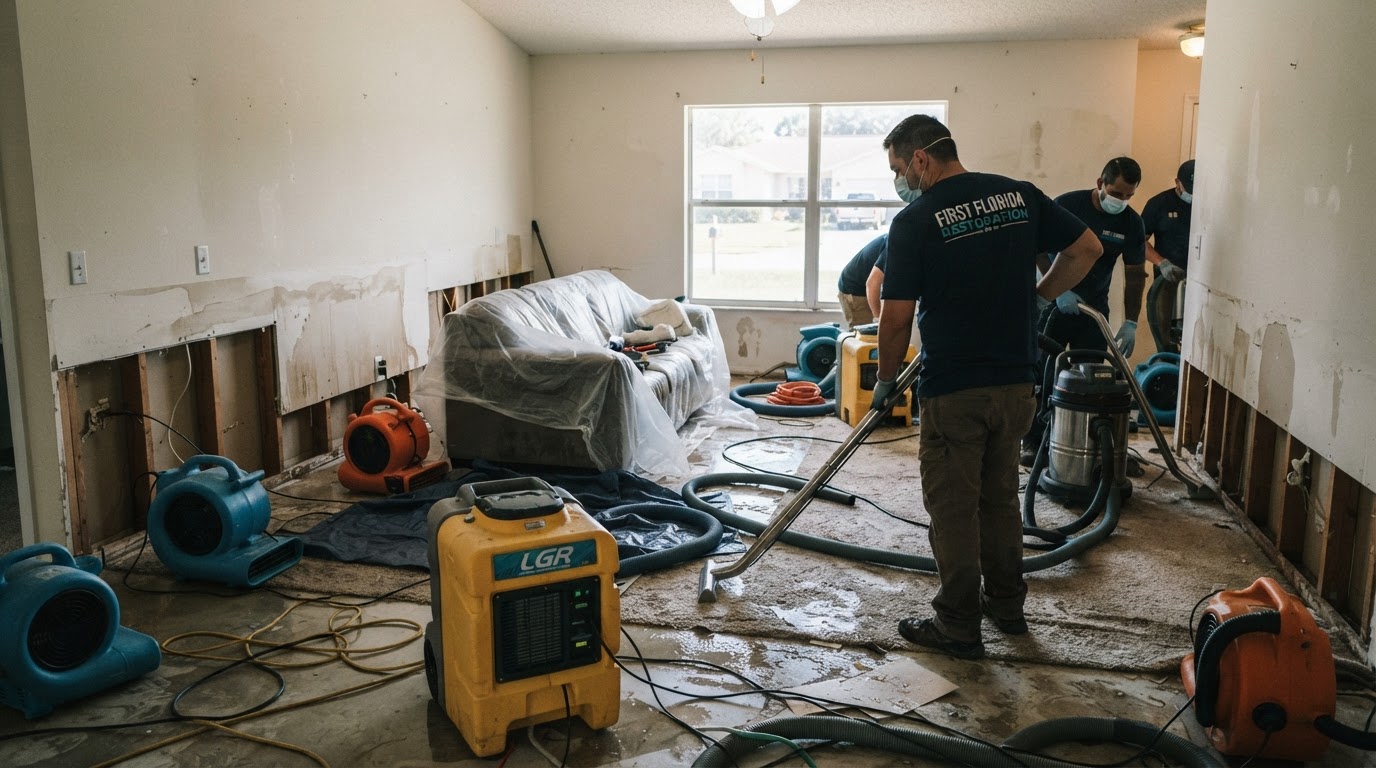
Water damage restoration in Palm Coast, FL addresses water intrusion from plumbing failures, appliance leaks, roof leaks, storm-driven rain, and flooding — restoring affected homes and businesses to a dry, stable condition through a structured process of assessment, extraction, drying, and monitoring.
Palm Coast Water Damage Contractors connects property owners with professional water removal, moisture detection, and structural drying services across Palm Coast and surrounding Flagler County communities. Whether the loss is a single-room plumbing leak or a larger multi-area water event, the goal is the same: get the water out, find the hidden moisture, and dry the structure.
- Water Removal & Extraction
- Moisture Detection
- Structural Drying
- Residential & Commercial
Understanding Water Damage Restoration in Palm Coast
Water damage restoration is the full process of returning a water-affected property to a dry, stable condition. It is not a single step — it is a sequence that begins with identifying the source, moves through water removal and extraction, and continues with structural drying, dehumidification, and monitoring until moisture levels return to an appropriate dry standard for the building materials.
Several terms describe parts of this process, and understanding the distinction helps property owners know what to expect. Water removal and extraction refer to pulling standing water out of the structure using pumps and vacuums. Structural drying targets the bound moisture that remains inside drywall, framing, flooring, and other materials after the visible water is gone. Cleanup addresses affected contents and surfaces. Restoration is the umbrella term that covers the entire effort from start to finish.
In Palm Coast, water damage restoration commonly follows plumbing leaks, burst supply lines, water heater failures, appliance overflows, HVAC condensate problems, roof leaks, and storm or hurricane water intrusion. Each source leaves moisture in different materials and requires a different drying approach. A slow leak behind a wall may saturate insulation and drywall over weeks, while a burst pipe can flood a room in minutes — but both need thorough moisture inspection and drying to prevent secondary damage.
Common Causes of Water Damage in Palm Coast Homes
Water damage in Palm Coast properties comes from a range of sources. Plumbing leaks and burst pipes are among the most common — a failed supply line or cracked joint can release hundreds of gallons into walls, ceilings, and flooring before the water is even noticed. Appliance failures, including washing machine hoses, dishwasher leaks, and refrigerator ice maker lines, are another frequent cause of sudden indoor flooding.
Water heater leaks often develop slowly behind the tank, saturating nearby drywall, baseboards, and subflooring before the damage becomes visible. Bathroom overflows from toilets, tubs, and showers introduce water onto flooring and into subfloors, sometimes with contamination. HVAC condensate drain line clogs can overflow for days, sending water into ceilings and walls near the air handler. Roof leaks and wind-driven rain can push water into attics and wall cavities long before a ceiling stain appears.
Florida's storm and hurricane season adds another layer of water intrusion risk. Wind-driven rain, roof damage, and flooding can introduce large volumes of water into a property. The affected materials vary by source — but in every case, the concern is the same: water that is not removed and dried leads to secondary damage.
- Drywall and baseboards absorb water and wick moisture upward
- Flooring and subflooring can trap water beneath the surface
- Cabinetry and insulation hold moisture against framing
- Ceiling cavities collect water from roof and upper-floor leaks
- Wall cavities conceal moisture that travels down from above
The Water Damage Restoration Process
The restoration process follows a clear sequence designed to remove water, find hidden moisture, and dry the structure systematically. Each step builds on the one before it.
The process begins with source assessment — identifying where the water is coming from, the visibly affected areas, and where moisture may have traveled but is not yet visible. Where safe and possible, the water source is stopped or controlled. Note that stopping a plumbing leak may require a licensed plumber; the restoration contractor focuses on the water and drying, not plumbing repairs.
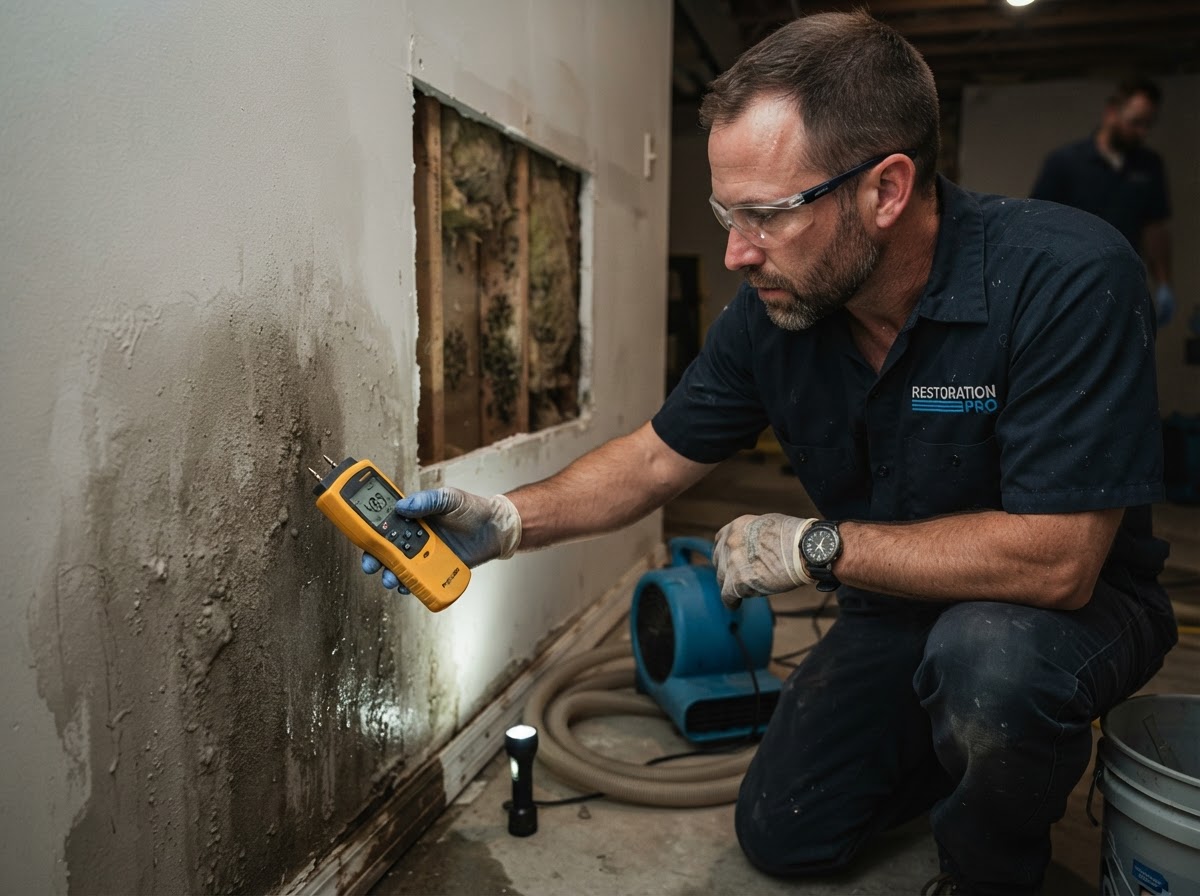
Extraction removes standing water using commercial pumps and vacuums. Once the bulk water is out, moisture inspection uses meters and thermal imaging to check walls, floors, baseboards, cabinetry, ceilings, and adjacent materials for trapped water. Because water follows the path of least resistance, areas below and next to the visible damage are always inspected.
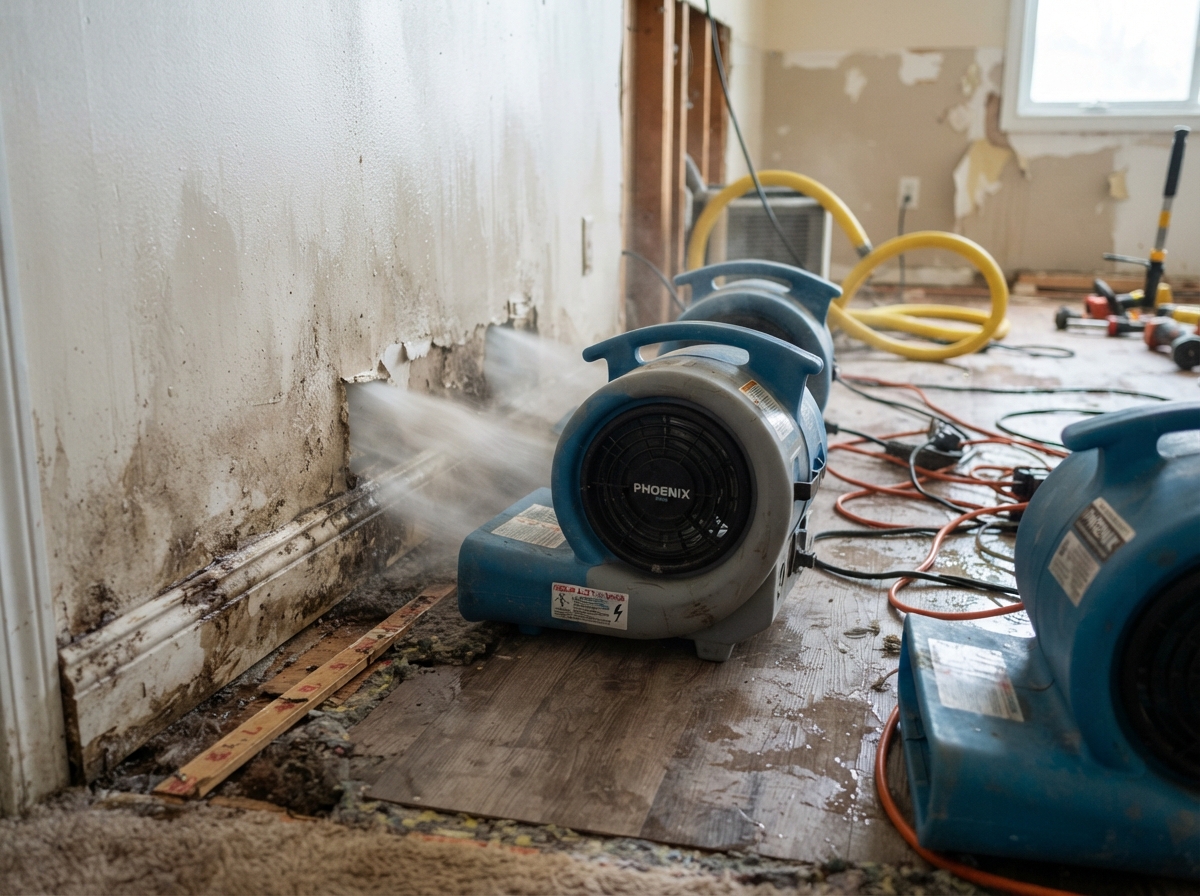
Drying and dehumidification follow. Air movers create evaporation across wet surfaces while dehumidifiers pull moisture out of the air. Together they draw bound water out of drywall, framing, and flooring. In humid Palm Coast conditions, dehumidification is essential — moist coastal air can slow the drying of interior materials and allow secondary moisture to develop. Moisture levels are monitored throughout the drying phase and confirmed against an appropriate dry standard before equipment is removed.
- Source assessment and water source control
- Standing water extraction with commercial equipment
- Moisture inspection of walls, floors, ceilings, and cavities
- Structural drying with air movers and dehumidifiers
- Monitoring and verification of drying progress
Palm Coast Water Damage Restoration Services
Palm Coast Water Damage Contractors provides water damage restoration services for homes and businesses throughout Palm Coast and surrounding communities in Flagler County. Palm Coast's coastal location means properties face both indoor water loss from plumbing and appliance failures and outdoor water intrusion from storms and hurricanes — and the drying approach differs for each.
If you are dealing with a specific type of water loss, these related service pages provide more detail on the cleanup and drying process for each scenario. For standing water that needs immediate removal, see our emergency water extraction page. For storm-related intrusion, our hurricane water damage page covers the drying approach after severe weather.
Frequently Asked Questions
Water Damage Restoration FAQs
Get Help Now
Need Water Damage Restoration Help?
Whether you are dealing with an active leak, standing water, or hidden moisture, the next step is the same — get the water out and start drying. Call now or request service through the form.
Request Service
Fill out the form and we'll follow up to help with your water damage situation.