Emergency Water Removal & Water Extraction in Palm Coast, FL
Emergency water removal and extraction is the first critical step when standing water enters a Palm Coast home or business. Whether the water comes from a burst pipe, appliance overflow, water heater failure, or storm intrusion, pulling the bulk water out quickly limits how far moisture migrates into drywall, subflooring, and adjacent rooms.
Palm Coast Water Damage Contractors connects property owners with professional water extraction services across Palm Coast and surrounding communities. The goal is simple: remove the standing water, inspect for moisture that has already traveled beyond the visible area, and set up structural drying before secondary damage develops.
- Standing Water Removal
- Wet Carpet Extraction
- Moisture Inspection
- Drying Setup
What Water Extraction Involves
Water extraction is the physical process of removing standing water from a property using commercial-grade pumps, vacuums, and extraction tools. It is the fastest way to pull bulk water out of a structure so it cannot continue migrating into drywall, subflooring, insulation, and adjacent rooms. Extraction is always the first step — but it is not the same as drying.
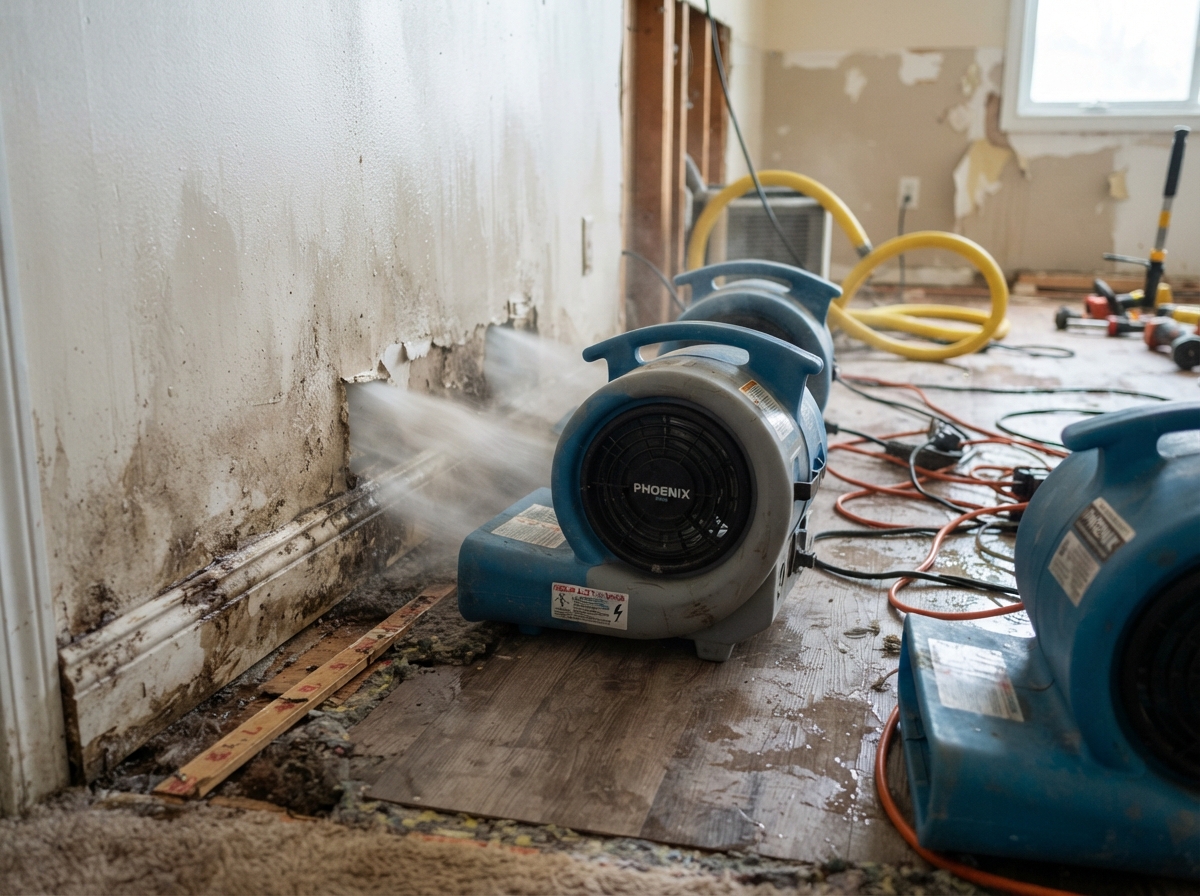
Removing visible standing water is only the beginning. Even after the floor looks dry, water has already been absorbed by porous materials throughout the affected area. Drywall wicks moisture upward, carpet padding holds water like a sponge, and subflooring traps water beneath hard flooring surfaces. That bound moisture cannot be removed by extraction alone — it requires structural drying with air movers and dehumidifiers to draw it back out of the materials.
This is why water extraction and structural drying are always paired. Extraction removes the water you can see; drying removes the moisture you cannot. Skipping the drying phase leaves trapped water inside the building, where it can drive secondary damage over the following days and weeks.
When Emergency Water Removal Is Needed
Standing water can come from many sources, and the extraction approach may vary based on the water's origin and contamination level. Burst pipes and supply line failures release large volumes of clean water quickly, often flooding entire rooms before the supply is shut off. Appliance overflows — washing machines, dishwashers, refrigerators — send water across flooring and into adjacent rooms.
Water heater failures can dump dozens of gallons of stored hot water across a utility room, garage, or closet floor. Bathroom overflows from toilets and tubs introduce water onto flooring and into subfloors, sometimes with contamination. Storm intrusion and flooding can bring large volumes of water into a property from outside, which may carry soil and contaminants.
Signs that water extraction is needed include visible standing water, saturated or squishy carpet, wet or discolored flooring, water beneath flooring edges, damp or swollen baseboards, and wet drywall. If any of these are present, the water has likely already traveled beyond the visible area — and extraction should begin as soon as the source is controlled.
- Burst pipes and supply line failures
- Appliance overflows and hose failures
- Water heater tank ruptures and leaks
- Bathroom and toilet overflows
- Storm intrusion and interior flooding
- Plumbing leaks that have spread across floors
The Water Extraction and Drying Process
The process begins with a safety assessment — checking for electrical hazards, structural concerns, and the water source. Where safe and possible, the water source is stopped or controlled before extraction begins. For plumbing sources, this may require shutting off the water supply; note that repairing the plumbing itself may require a licensed plumber.
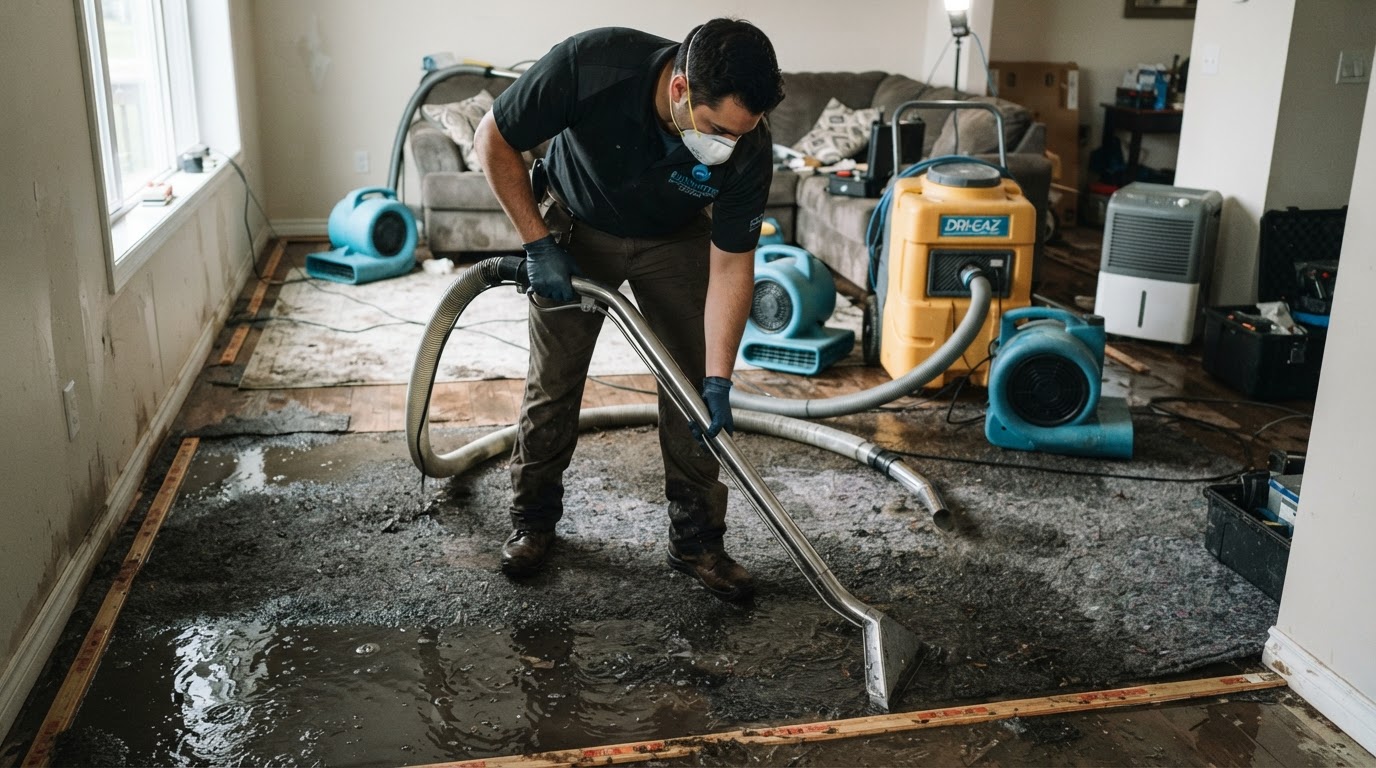
Extraction equipment is then deployed based on the volume and location of the water. Commercial pumps handle deeper standing water, while extraction wands and vacuums pull water from carpet, hard flooring, and affected surfaces. The goal is to remove as much bulk water as possible before drying begins — every gallon extracted is a gallon the drying equipment does not have to evaporate.
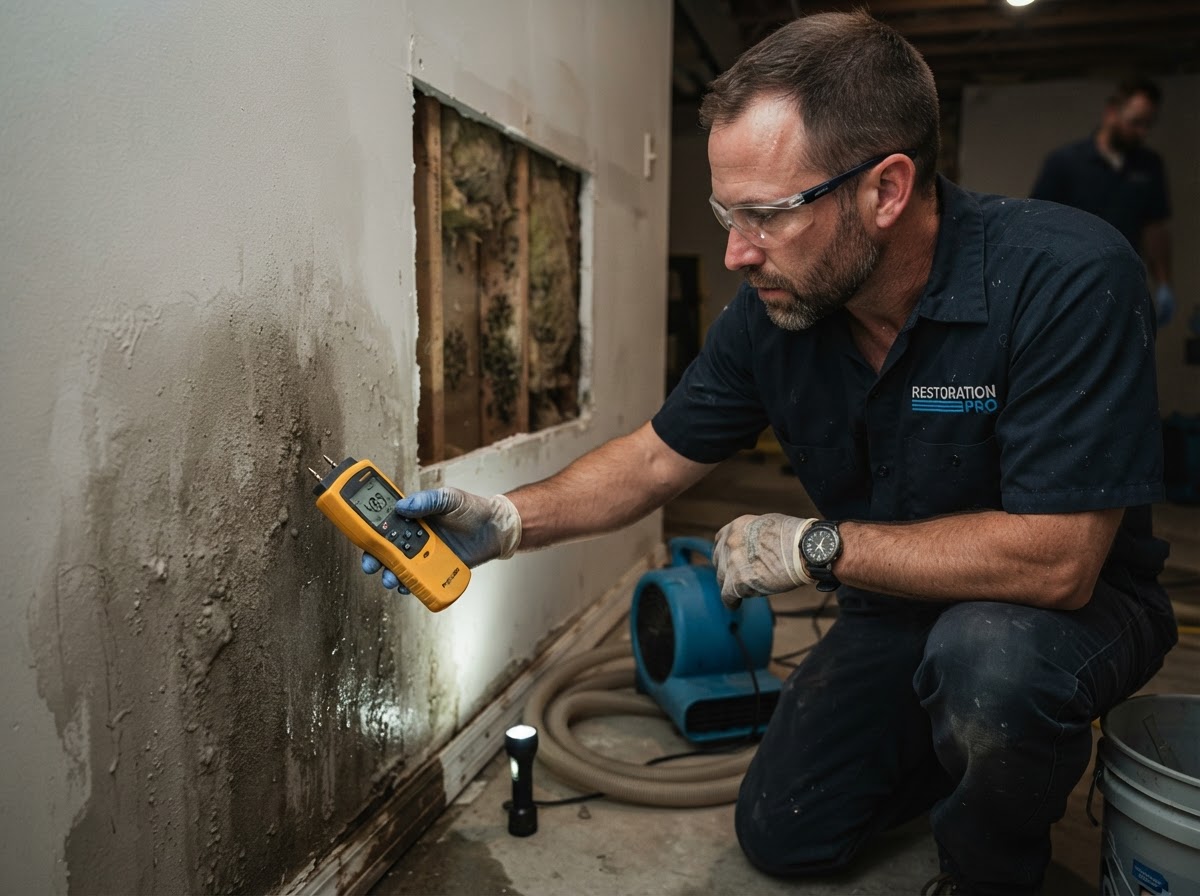
After extraction, a moisture inspection checks walls, floors, baseboards, cabinetry, and adjacent areas for trapped water that has migrated beyond the visible area. Air movers and dehumidifiers are then placed to begin structural drying. Moisture levels are monitored throughout the drying phase and the equipment layout is adjusted as areas reach their dry standard. In humid Palm Coast conditions, dehumidification is especially important to keep drying on track.
- Safety assessment and water source control
- Standing water extraction with commercial pumps and vacuums
- Carpet and hard-floor extraction
- Moisture inspection of walls, floors, and cavities
- Air mover and dehumidifier placement for structural drying
- Ongoing moisture monitoring and equipment adjustment
Water Extraction Services in Palm Coast
Standing water does not wait — and neither should the response. Palm Coast Water Damage Contractors connects property owners with emergency water removal and extraction services throughout Palm Coast and surrounding Flagler County communities. Florida's humidity makes prompt extraction and drying especially important, because moist air can slow the evaporation of trapped moisture and extend the drying timeline.
If your water loss involves contamination, flooding, or a specific source, these related pages provide more detail on the appropriate cleanup approach.
Related Water Damage Services
Frequently Asked Questions
Emergency Water Removal & Water Extraction FAQs
Get Help Now
Need Emergency Water Removal & Water Extraction Help?
Whether you are dealing with an active leak, standing water, or hidden moisture, the next step is the same — get the water out and start drying. Call now or request service through the form.
Request Service
Fill out the form and we'll follow up to help with your water damage situation.