Burst Pipe & Plumbing Leak Cleanup in Palm Coast, FL
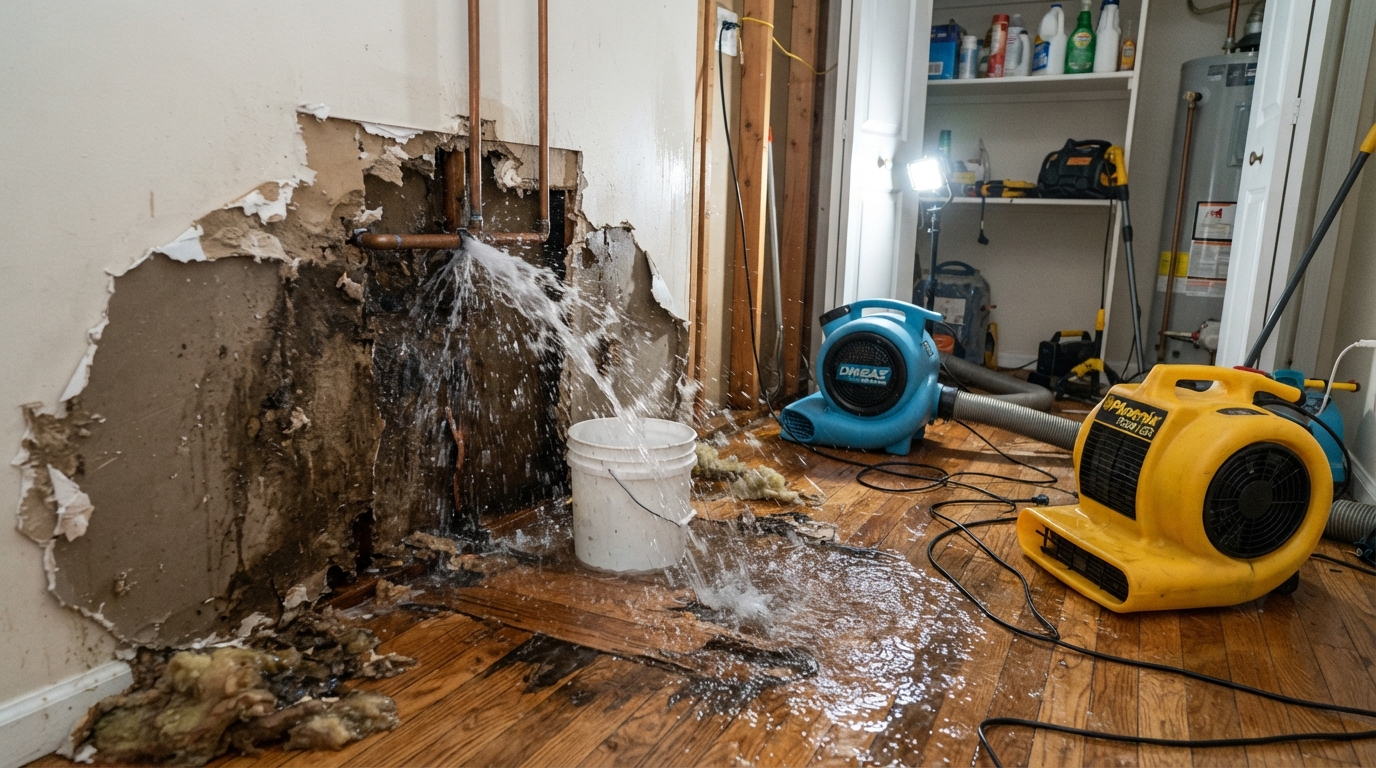
A burst pipe or plumbing leak can release hundreds of gallons of water into walls, ceilings, and flooring in a short time. Burst pipe cleanup in Palm Coast, FL focuses on extracting the water, finding moisture that has migrated behind walls and beneath flooring, and drying the affected materials before secondary damage develops.
Palm Coast Water Damage Contractors connects property owners with professional plumbing leak water damage cleanup services across Palm Coast and surrounding communities. After the water source is stopped, the priority shifts to water removal and structural drying.
- Water Extraction
- Hidden Moisture Detection
- Wall Cavity Drying
- Structural Drying
How Plumbing Leaks Cause Hidden Damage
Even a small plumbing leak can cause significant hidden water damage. A slow drip behind a wall, under a sink, or inside a ceiling cavity can saturate drywall, insulation, and framing over days or weeks before it is noticed. By the time a stain appears on the ceiling or the baseboard swells, water has often traveled well beyond the visible damage.
A burst pipe is more dramatic — it releases a large volume of water quickly, often flooding an entire room. But the same principle applies: water follows the path of least resistance. It migrates under baseboards, into wall cavities, across subflooring, and into adjacent rooms. The visible water on the floor is only part of the problem; the moisture that has already been absorbed by building materials is what drives secondary damage if it is not found and dried.
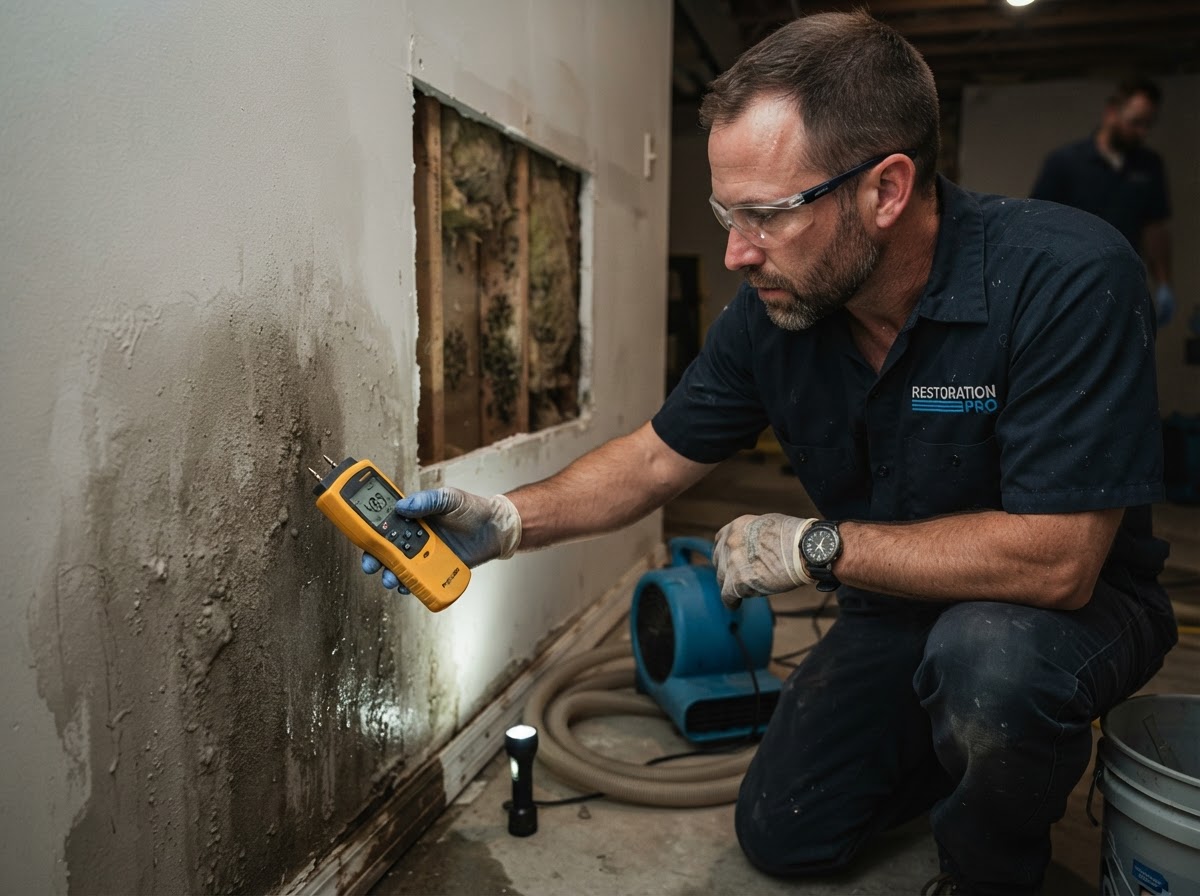
This is why burst pipe cleanup always includes moisture inspection beyond the visible water. Walls, floors, baseboards, cabinets, and adjacent rooms are checked for trapped water — because the water that cannot be seen is the water most likely to cause problems later.
Common Sources of Plumbing Leaks
Plumbing leaks that lead to water damage come from many points throughout a property's water system. Supply lines — the flexible hoses connecting fixtures to the water supply — are a common failure point, especially washing machine hoses, dishwasher lines, and refrigerator ice maker connections. These lines can fail suddenly, releasing large volumes of water quickly.
Pipe joints and connections can develop slow leaks that go unnoticed behind walls or under floors. Under-sink plumbing leaks can saturate the cabinet, flooring, and wall cavity below the sink. Toilet supply lines can fail or leak, sending water across the bathroom floor. Wall plumbing and ceiling plumbing leaks — pipes running inside wall cavities or above ceilings — can drip into insulation and drywall for extended periods before being discovered.
Appliance connections, including water heaters, washing machines, and refrigerators, are another common source. The key in every case is that the water source must be stopped before cleanup and drying can begin — and stopping the source may require a licensed plumber, while the restoration contractor focuses on the water and drying.
- Supply line failures (washing machine, dishwasher, refrigerator)
- Pipe joint and connection leaks
- Under-sink plumbing leaks
- Toilet supply line failures
- Wall and ceiling plumbing leaks
- Appliance connection failures
Burst Pipe Cleanup and Drying Process
It is important to understand the distinction between stopping the plumbing source and restoring the water damage. A plumber stops the leak — repairing or replacing the failed pipe, supply line, or connection. The restoration contractor handles the water that has already entered the structure: extracting it, finding the hidden moisture, and drying the affected materials. These are separate scopes of work, and both are necessary.
After the water source is stopped, cleanup begins with extracting any standing water using commercial pumps and vacuums. Even if the visible water seems minimal, moisture has likely already been absorbed by drywall, subflooring, and insulation — so extraction is followed by a thorough moisture inspection.
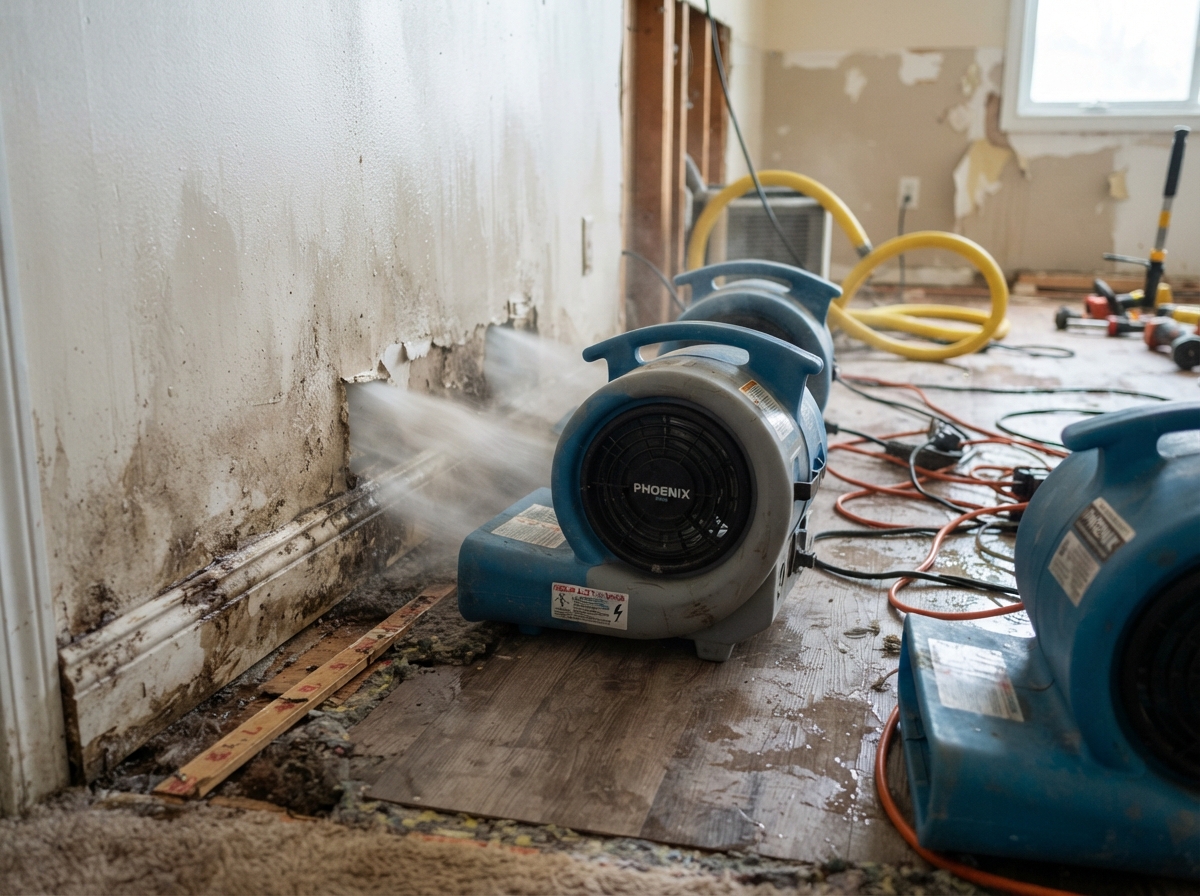
Moisture detection uses meters and thermal imaging to check walls, floors, baseboards, cabinets, and adjacent rooms for trapped water. Air movers and dehumidifiers are then placed to dry the affected materials, with equipment positioned to target wall cavities, subflooring, and other areas where moisture has migrated. In humid Palm Coast conditions, dehumidification is essential to keep drying on track. Moisture levels are monitored throughout the process and confirmed against an appropriate dry standard before equipment is removed.
- Stop the water source (may require a licensed plumber)
- Standing water extraction
- Moisture detection in walls, floors, and cavities
- Structural drying with air movers and dehumidifiers
- Dehumidification to control indoor humidity
- Moisture monitoring to dry standard
Plumbing Leak Cleanup in Palm Coast
Plumbing leaks are one of the most common sources of water damage in Palm Coast homes and businesses, and the cleanup approach depends on where the leak occurred and how far the water traveled. Palm Coast Water Damage Contractors connects property owners with professional water removal and drying services throughout Palm Coast and surrounding Flagler County communities.
If the leak originated from a water heater, our water heater leak cleanup page covers the specific considerations for that scenario. For hidden moisture that has traveled into walls and ceilings, our roof leak and hidden water damage page addresses moisture detection behind surfaces.
Frequently Asked Questions
Burst Pipe & Plumbing Leak Cleanup FAQs
Get Help Now
Need Burst Pipe & Plumbing Leak Cleanup Help?
Whether you are dealing with an active leak, standing water, or hidden moisture, the next step is the same — get the water out and start drying. Call now or request service through the form.
Request Service
Fill out the form and we'll follow up to help with your water damage situation.