Commercial Water Damage Restoration in Palm Coast, FL
Commercial water damage restoration in Palm Coast, FL addresses water loss in office buildings, retail spaces, restaurants, and other business properties. Water intrusion in a commercial setting can affect inventory, equipment, tenant spaces, and operations — and the restoration scope is adapted to the size and complexity of the loss.
Palm Coast Water Damage Contractors connects commercial property owners and managers with professional water removal, moisture mapping, and structural drying services across Palm Coast and surrounding communities. The goal is to remove the water, find the hidden moisture, and dry the structure so the business can return to normal operations.
- Commercial Water Removal
- Moisture Mapping
- Equipment Placement
- Drying & Monitoring
Water Damage in Commercial Properties
Commercial water losses can range from a single affected office to multi-room or multi-floor events. Offices may experience supply line failures, restroom overflows, or roof leaks that affect workspaces, carpet, drywall, and equipment. Retail spaces can face water damage that affects merchandise, displays, and customer areas. Restaurants may deal with plumbing leaks, appliance water loss, or restroom overflows that impact kitchen and dining areas.
Professional facilities and multi-unit properties present additional complexity: water can travel between units, affect shared infrastructure, and require coordination across multiple tenants or occupants. Warehouses and light commercial spaces can experience large-volume water loss that affects stored goods, flooring, and structural materials.
In every commercial setting, the restoration approach is scoped to the size of the loss and the needs of the business. The process is the same as in residential restoration — assessment, extraction, moisture inspection, drying, and monitoring — but the scale, equipment requirements, and work-area considerations are different.
Common Commercial Water Loss Scenarios
Commercial water damage comes from many of the same sources as residential water loss, but the scale and impact can be larger. Supply line failures in office buildings can flood entire floors before the water is discovered. Restroom overflows in retail or restaurant settings can affect customer areas and adjacent spaces. Roof leaks can send water into ceilings, walls, and inventory areas over extended periods.
HVAC leaks and condensate drain line clogs are common in commercial buildings with large air handling systems, and the resulting water can saturate ceilings and drywall near the equipment. Appliance and equipment water loss — from commercial dishwashers, ice machines, water heaters, and processing equipment — can release significant volumes of water. Storm intrusion can affect large commercial buildings through roof damage, window failures, and flooding.
The affected materials in a commercial property — commercial carpet, tile, drywall, ceiling tiles, concrete subfloors — each hold and release moisture differently. A moisture assessment identifies which materials are wet and how the drying plan should be structured.
- Supply line failures in offices and multi-unit buildings
- Restroom overflows in retail and restaurant properties
- Roof leaks affecting ceilings, walls, and inventory
- HVAC and condensate drain line overflows
- Appliance and equipment water loss
- Storm intrusion and flooding in commercial buildings
Commercial Water Damage Restoration Process
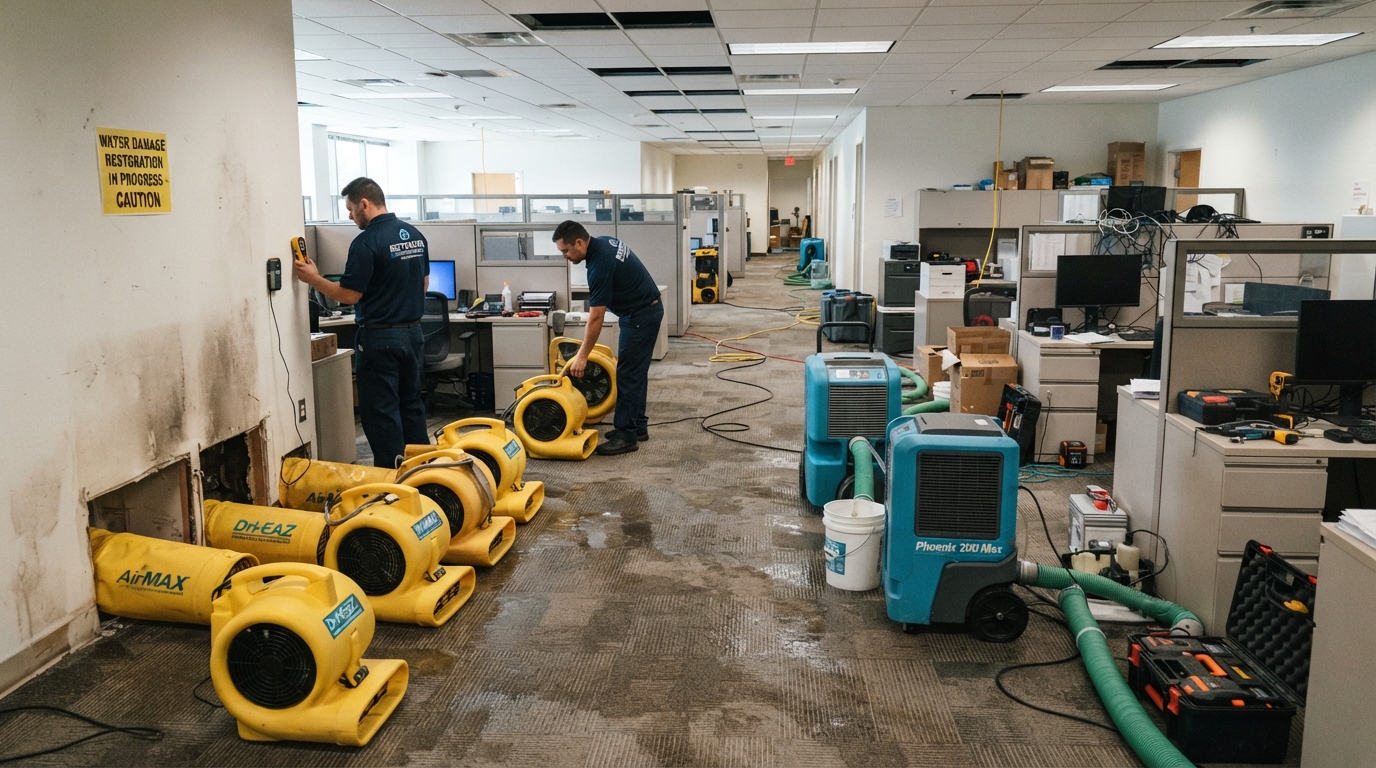
The commercial restoration process begins with an assessment of the water source, the affected areas, and the scope of the loss. In a commercial setting, this includes identifying which spaces, units, or floors are affected and how the water has migrated between areas. Water removal then extracts standing water using commercial-grade pumps and vacuums sized to the volume of the loss.
Moisture mapping is especially important in commercial properties, where water can travel between units, through ceiling plenums, and across large floor areas. Moisture meters and thermal imaging are used to trace the full extent of water migration — checking walls, floors, ceilings, and shared structures. This ensures that no wet area is missed, even in spaces that appear unaffected.
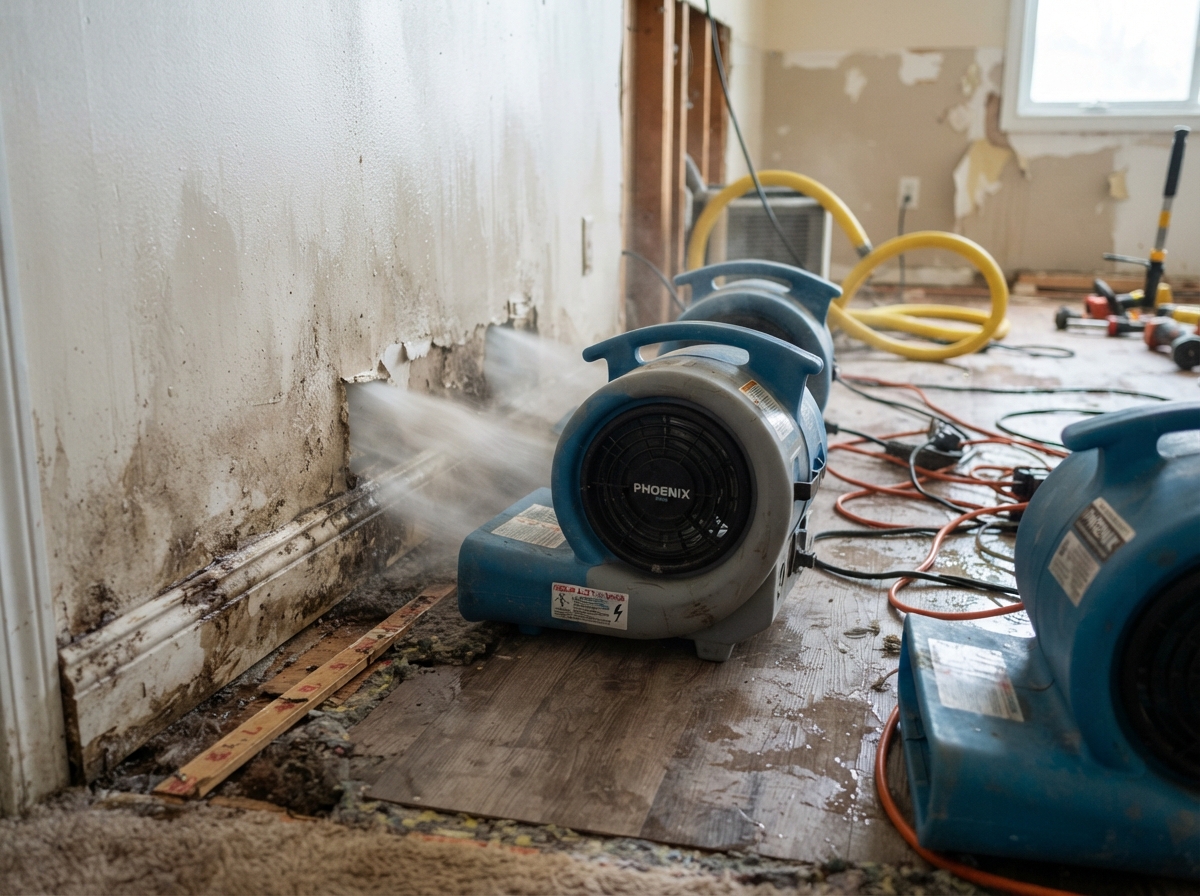
Drying equipment — air movers and dehumidifiers — is then placed throughout the affected areas. In a commercial setting, equipment placement considers work-area access, noise, and the need to keep certain areas operational where possible. Moisture levels are monitored throughout the drying phase, and the equipment layout is adjusted as areas reach their dry standard. The goal is to return the structure to a dry, stable condition so business operations can resume.
- Assessment of source, affected areas, and scope of loss
- Water removal with commercial-grade extraction equipment
- Moisture mapping across walls, floors, ceilings, and units
- Drying equipment placement with work-area considerations
- Dehumidification for large or multi-room spaces
- Moisture monitoring and equipment adjustment
Commercial Water Damage Services in Palm Coast
Commercial water damage in Palm Coast can affect a wide range of business properties — from small offices to multi-unit retail and restaurant spaces. Palm Coast Water Damage Contractors connects commercial property owners and managers with professional water removal and drying services throughout Palm Coast and surrounding communities. The restoration approach is adapted to the size of the loss and the operational needs of the business.
For the extraction phase, our emergency water removal page covers standing water removal. For the drying phase, our structural drying page explains how air movers and dehumidifiers return commercial building materials to a dry condition. For storm-related commercial losses, our hurricane water damage page addresses post-storm restoration.
Related Water Damage Services
Frequently Asked Questions
Commercial Water Damage Restoration FAQs
Get Help Now
Need Commercial Water Damage Restoration Help?
Whether you are dealing with an active leak, standing water, or hidden moisture, the next step is the same — get the water out and start drying. Call now or request service through the form.
Request Service
Fill out the form and we'll follow up to help with your water damage situation.