Water Damage Restoration in St. Augustine, FL
Water damage restoration in St. Augustine, FL addresses water intrusion from plumbing leaks, appliance failures, water heater leaks, storm-driven rain, roof leaks, and commercial water losses. St. Augustine is in the St. Johns County service region, and properties here face both residential and commercial water damage scenarios that require professional extraction, moisture detection, and structural drying.
Palm Coast Water Damage Contractors connects St. Augustine homeowners and businesses with professional water removal and drying services throughout the area. Because water from any source can travel beneath flooring, behind baseboards, and into wall and ceiling cavities before the full extent of the damage becomes visible, a thorough moisture inspection is essential to finding all the water.
- Water Extraction
- Storm Water Damage Restoration
- Hidden Moisture Detection
- Commercial Water Removal
Water Damage Restoration for St. Augustine Properties
St. Augustine is located in St. Johns County along Florida's Atlantic coast, and properties here face a combination of indoor water loss and coastal storm intrusion. Plumbing leaks, burst supply lines, and appliance failures are the most common sources of indoor water damage — a failed washing machine hose or cracked pipe joint can release water into walls, flooring, and cabinets before it is noticed. Water heater leaks can develop slowly behind the tank or rupture suddenly, flooding utility rooms and garages.
Water damage restoration is the structured process of returning a water-affected property to a dry, stable condition. Water extraction removes standing water using commercial pumps and vacuums, but that is only the beginning. The moisture absorbed by drywall, framing, subflooring, and insulation requires structural drying with air movers and dehumidifiers to remove. This distinction between extraction and drying is critical — extraction removes bulk water, while drying removes the bound moisture that remains inside building materials after the visible water is gone.
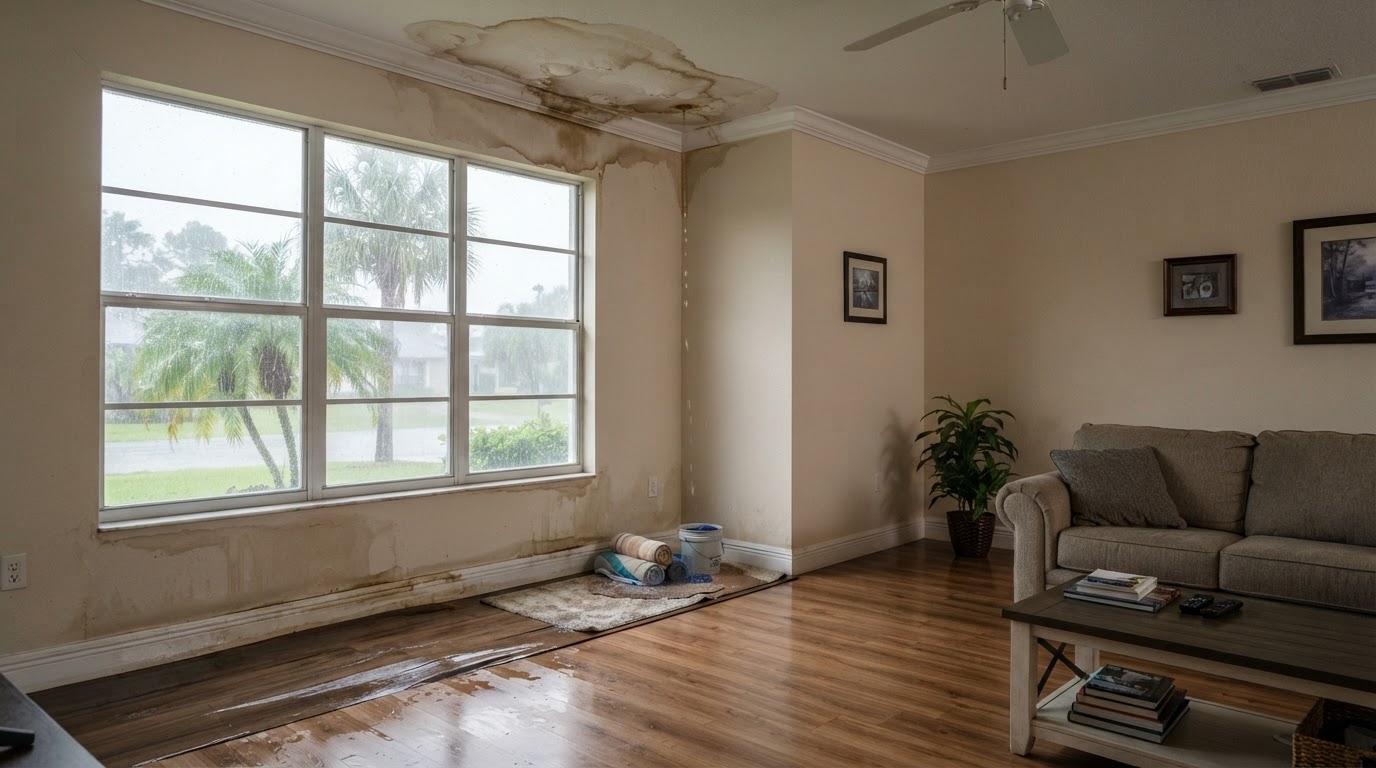
St. Augustine's coastal location adds storm intrusion to the list of water damage risks. Wind-driven rain during Florida storms can push water through roof damage and around windows and doors, sending moisture into attics, ceiling cavities, and wall cavities. By the time a ceiling stain appears, water may have traveled through insulation and down inside walls. In St. Augustine's humid climate, dehumidification is essential to keep drying on track, because moist air can slow the evaporation of water from interior building materials and allow secondary moisture to develop.
Water Removal & Drying Services in St. Augustine
Palm Coast Water Damage Contractors provides a full range of water damage restoration services for St. Augustine homes and businesses. Each service addresses a different type of water loss, and the appropriate response depends on the source, the volume, and the materials affected.
Water Damage Restoration
full assessment, extraction, drying, and monitoring
Learn MoreEmergency Water Removal
standing water pump-out and surface extraction
Learn MoreFlood Damage Cleanup
contaminated water handling and structural drying
Learn MoreBurst Pipe & Plumbing Leak Cleanup
wall cavity and subfloor drying
Learn MoreStorm & Hurricane Water Damage
wind-driven rain and roof intrusion drying
Learn MoreStructural Drying & Dehumidification
bound moisture removal from materials
Learn MoreCommercial Water Damage Restoration
business property water removal
Learn MoreRoof Leak, Ceiling & Hidden Water Damage
moisture mapping behind surfaces
Learn More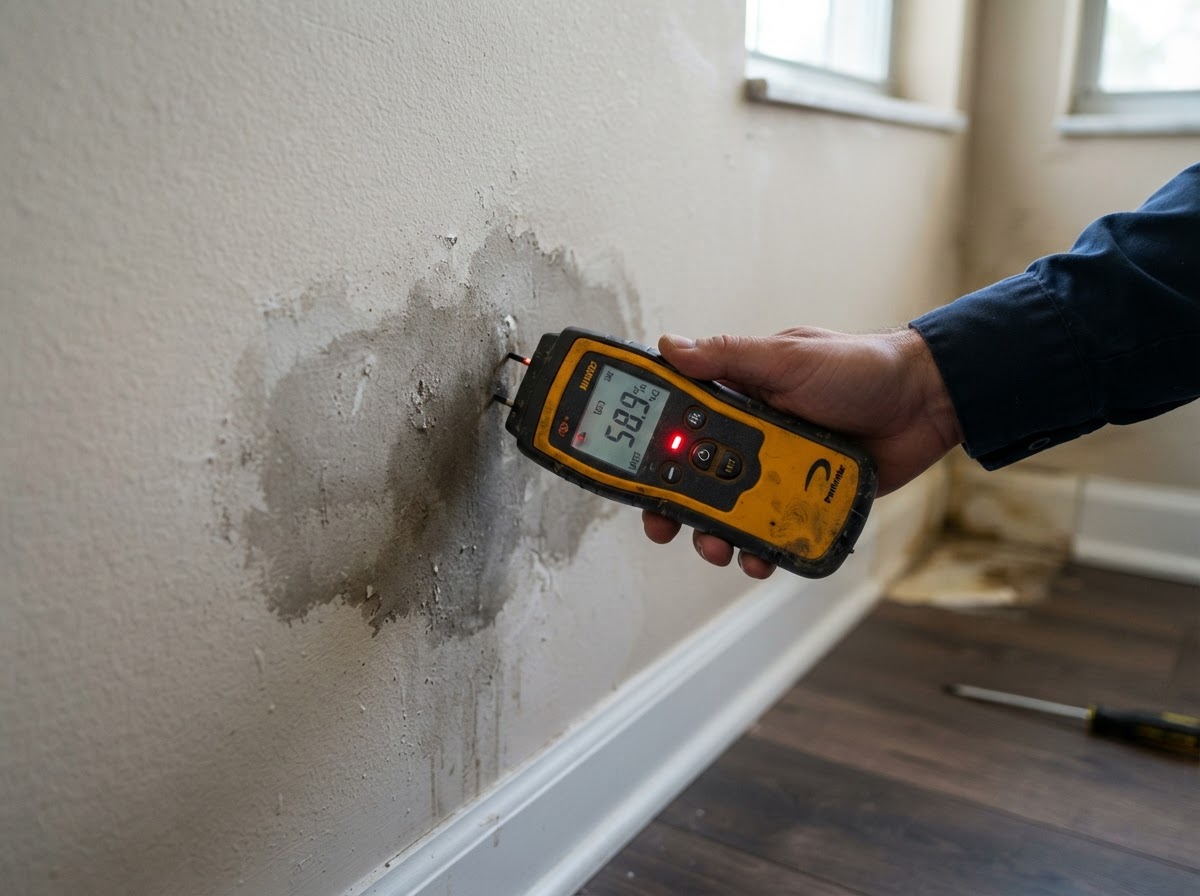
Common Causes of Water Damage in St. Augustine
Plumbing leaks are the most frequent source of water damage in St. Augustine homes. Supply line failures — flexible hoses connecting washing machines, dishwashers, and refrigerators — can burst or crack, releasing pressurized water across flooring and into adjacent rooms. Pipe joints and under-sink connections can develop slow leaks that saturate drywall, insulation, and framing behind walls over days or weeks. Water heater leaks can develop slowly behind the tank or rupture suddenly, and because they often go unnoticed, the moisture can spread into nearby walls and subflooring before cleanup begins.
Storm-driven rain and roof leaks are significant concerns for St. Augustine properties, particularly during Florida's storm season. Wind-driven rain can force water through roof damage, around windows and doors, and through vents and soffits. Roof leaks can send water into the attic, where it saturates insulation and runs down rafters into ceiling drywall and wall cavities. The visible ceiling stain may appear days after the storm and far from the actual roof entry point, because water follows the path of least resistance through the building structure.
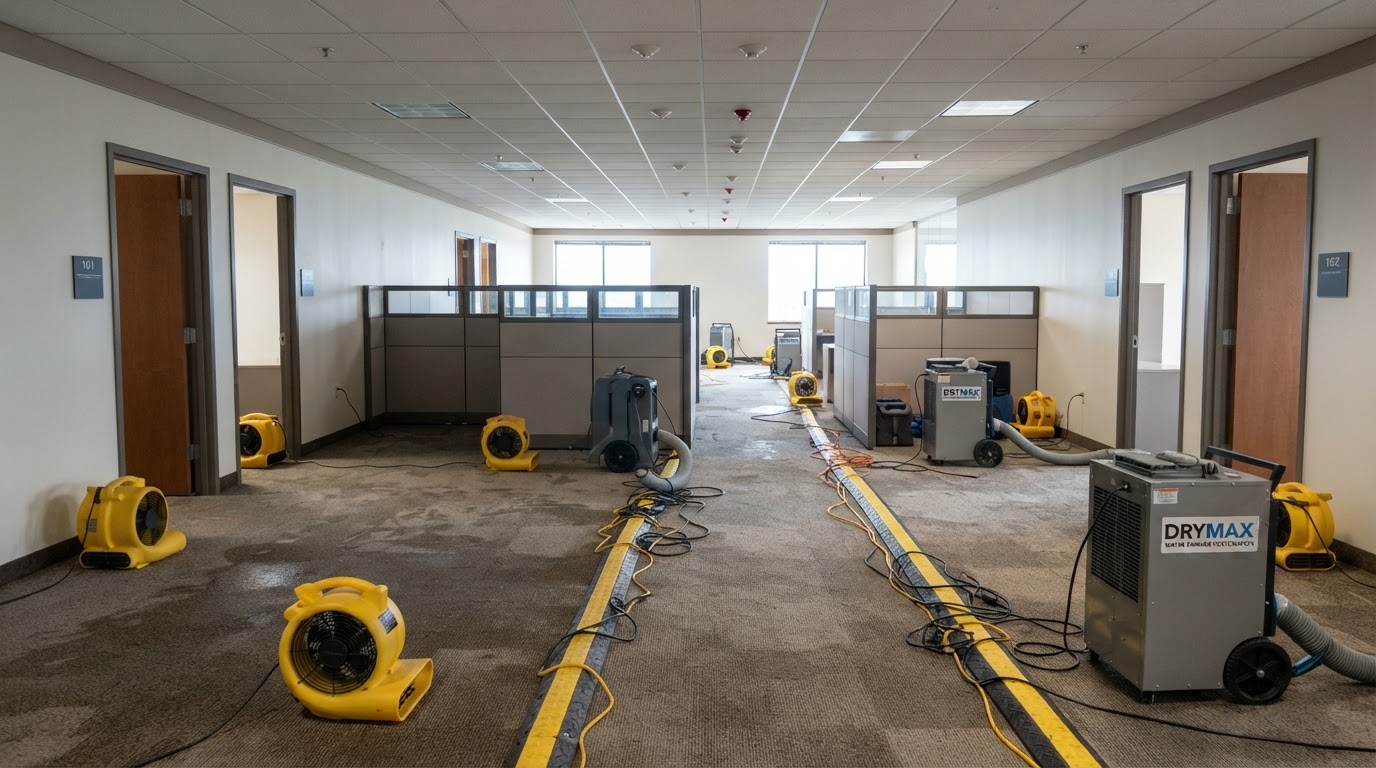
Commercial properties in St. Augustine can also experience water loss from supply line failures, restroom overflows, roof leaks, and HVAC condensate drain line clogs that affect larger floor areas. Bathroom overflows, washing machine overflows, and HVAC condensate problems are common in residential properties as well. In every case, the moisture that has traveled beyond the visible water — beneath flooring, behind baseboards, into wall cavities — requires professional inspection and drying to address. Without it, trapped moisture can drive secondary damage long after the surface appears dry.
Water Removal & Structural Drying Process
The restoration process in St. Augustine follows a structured sequence. It begins with identifying the water source — a plumbing leak, appliance failure, water heater leak, roof intrusion, or storm water entry — and stopping or controlling the source where safely possible. Note that plumbing, HVAC, or roof repairs may require separate contractors; the restoration contractor focuses on the water and drying.
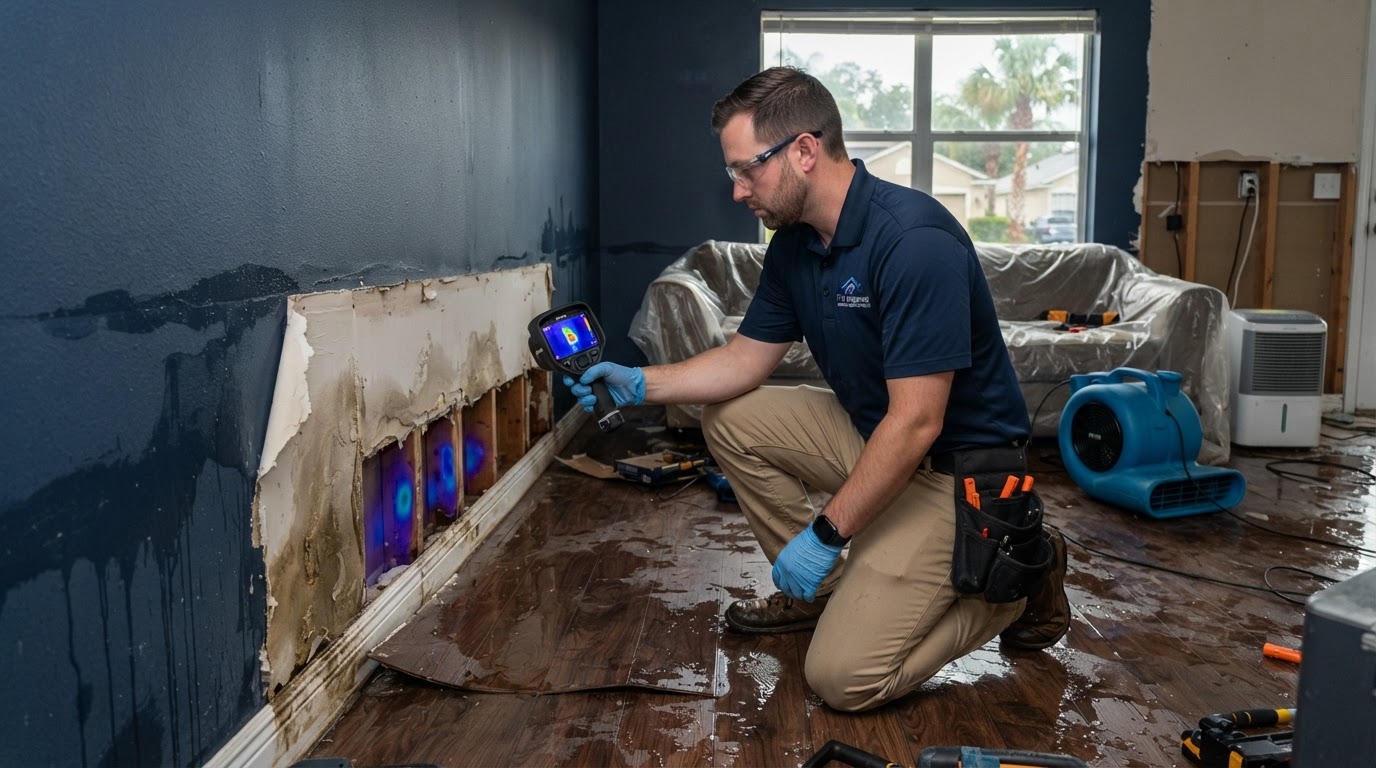
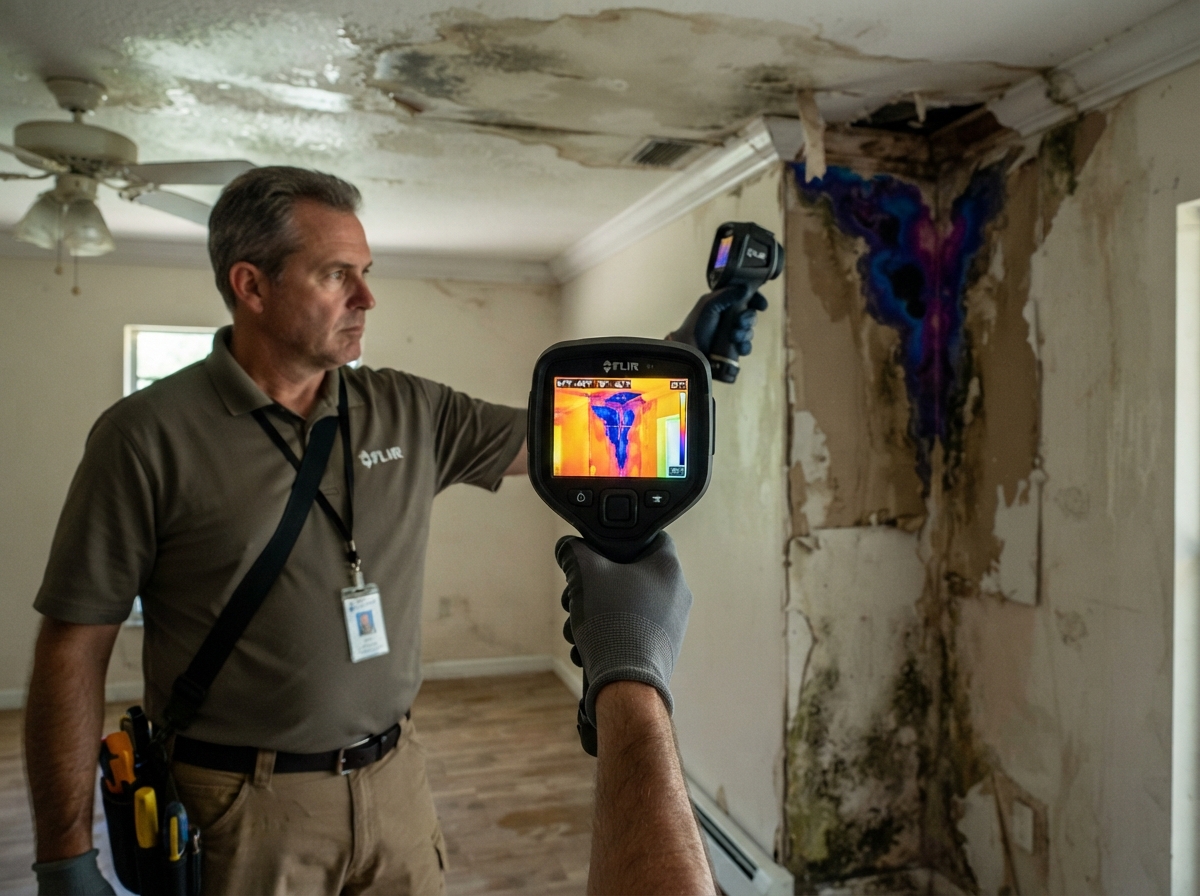
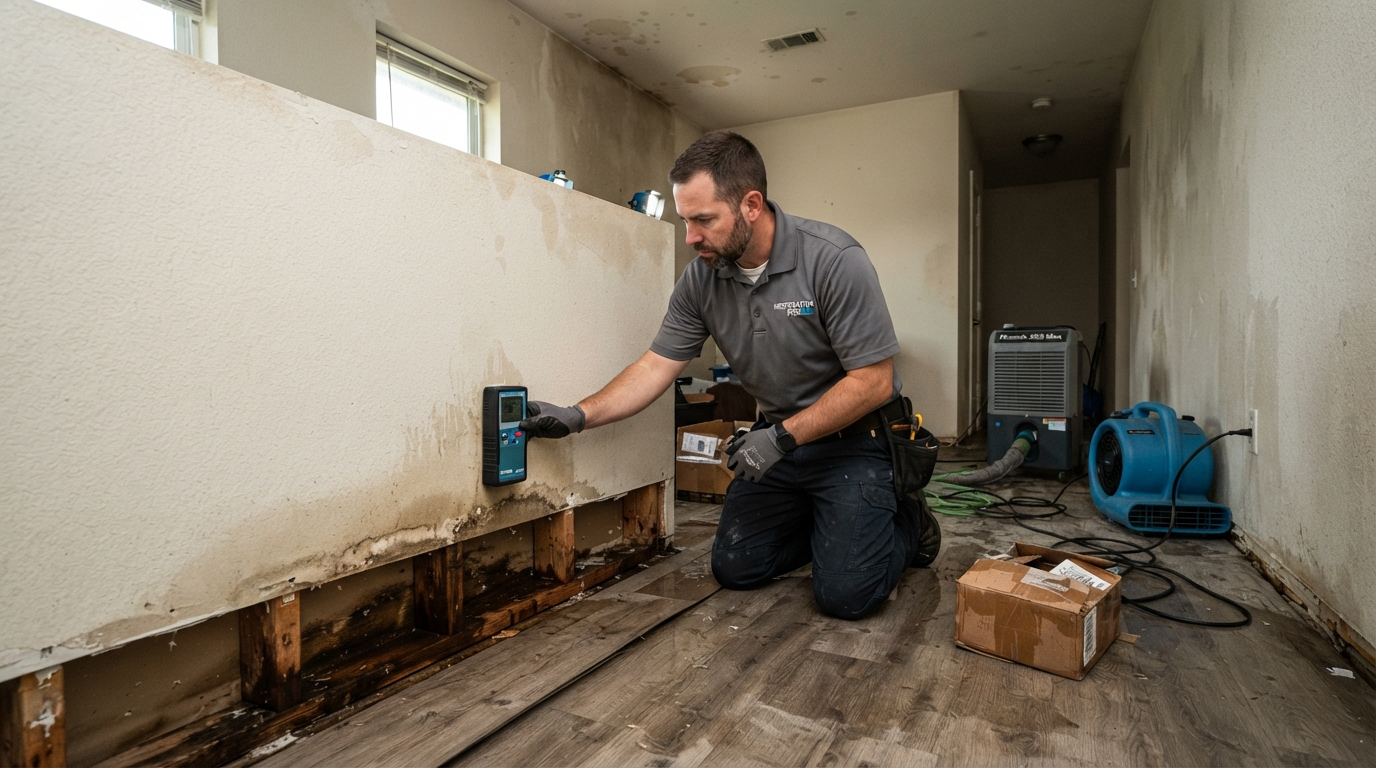
Standing water is extracted using commercial pumps and vacuums. The faster bulk water is removed, the less it can continue migrating into drywall, subflooring, and adjacent rooms. After extraction, a moisture inspection uses meters and thermal imaging to check walls, floors, baseboards, ceilings, and adjacent areas for trapped water. Because water follows the path of least resistance, areas below and next to the visible damage are always inspected — not just the obviously wet area.
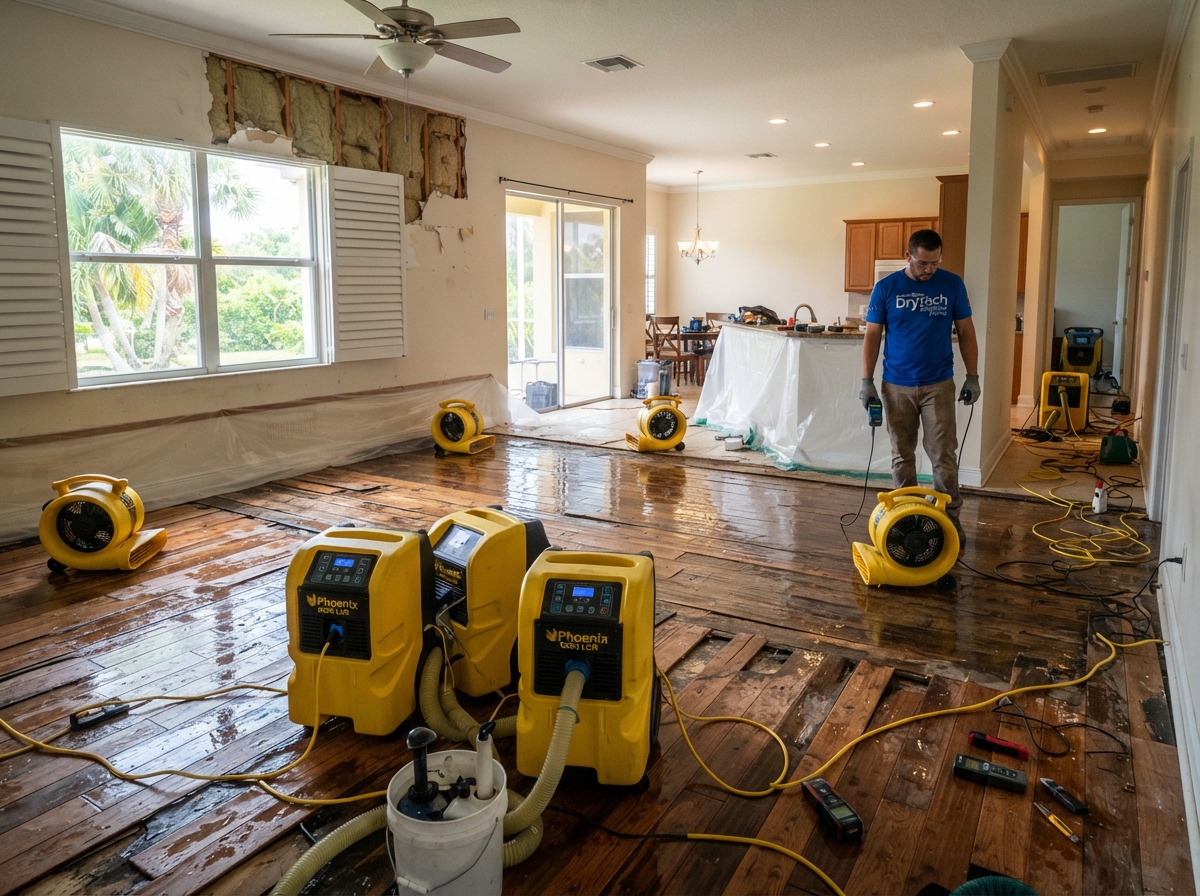
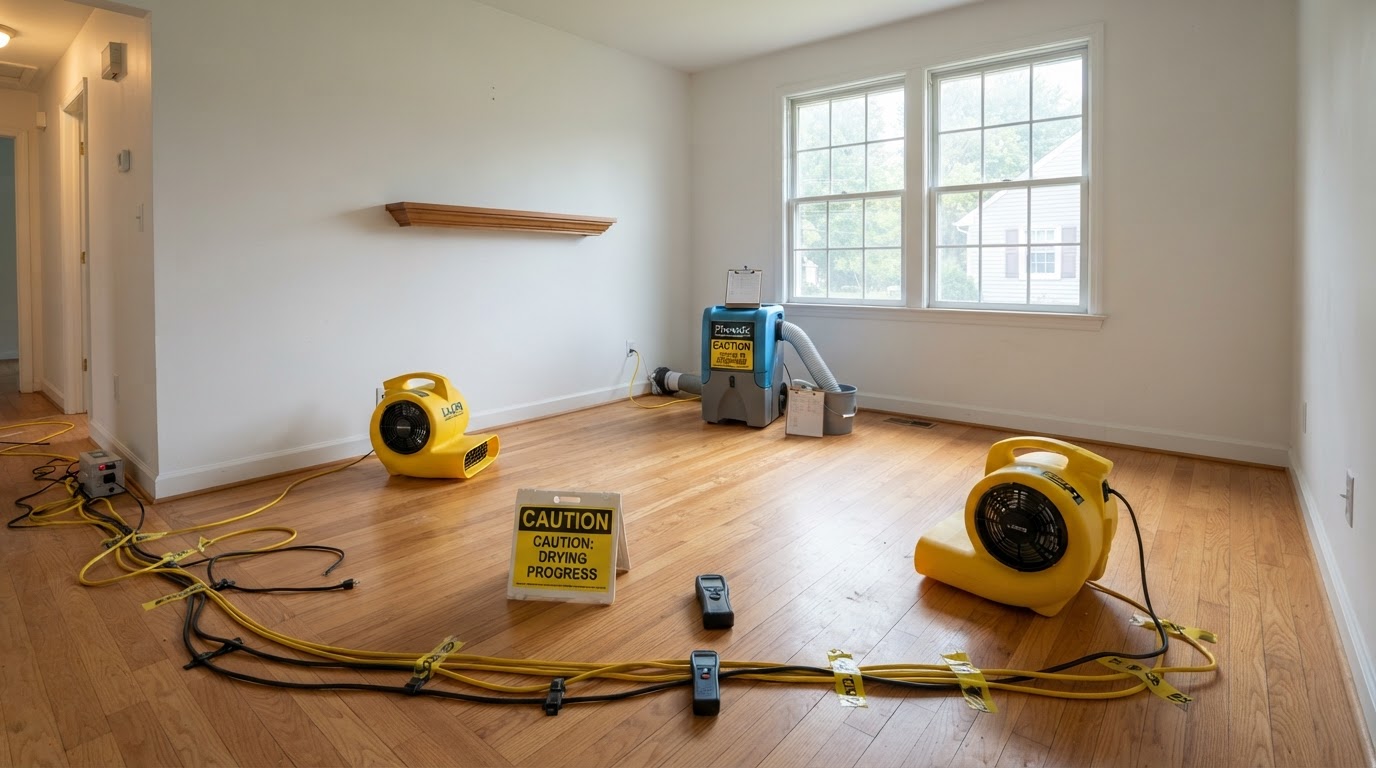
Structural drying then uses air movers and dehumidifiers to draw the remaining moisture out of the affected materials. Air movers create evaporation across wet surfaces while dehumidifiers pull moisture out of the air, preventing it from reabsorbing into dry materials. In St. Augustine's humid coastal conditions, dehumidification is essential to keep drying on track. Moisture levels are monitored throughout the drying phase, and the equipment layout is adjusted as different areas reach their dry standard. The process is complete when readings return to an appropriate dry standard for the structure.
- Identify the water source and stop or control it where possible
- Extract standing water with commercial pumps and vacuums
- Inspect for hidden moisture in walls, floors, ceilings, and cavities
- Set up structural drying with air movers and dehumidifiers
- Monitor moisture readings and adjust equipment as areas dry
- Complete cleanup based on water source and contamination level
St. Augustine & Nearby Service Areas
St. Augustine is located in St. Johns County along Florida's Atlantic coast and is one of the key communities in the region. Palm Coast Water Damage Contractors provides water damage restoration services to homes and businesses throughout St. Augustine and the surrounding area, with Palm Coast as the primary service hub. Services extend across St. Johns County and into neighboring communities.
Properties in St. Augustine face a combination of residential and commercial water loss scenarios, along with coastal storm intrusion during Florida's storm season. The drying approach adapts to the source — clean water from a supply line may allow more materials to be dried in place, while storm water or contaminated water may require more careful material handling. In every case, the priority is finding the full extent of the moisture and drying the structure.
Water damage restoration services are also available in nearby communities, including St. Augustine Beach, Palm Coast, and Flagler Beach. If your property is in one of these surrounding areas, the same professional water removal, moisture detection, and structural drying services are available.
Service Area
St. Augustine, FL
St. Augustine, FL — St. Johns County Service Area
Service-area representation — no physical storefront address listed.
Frequently Asked Questions
St. Augustine Water Damage Restoration FAQs
Before & After Water Damage Restoration & Cleanup Transformations Near St. Augustine, FL
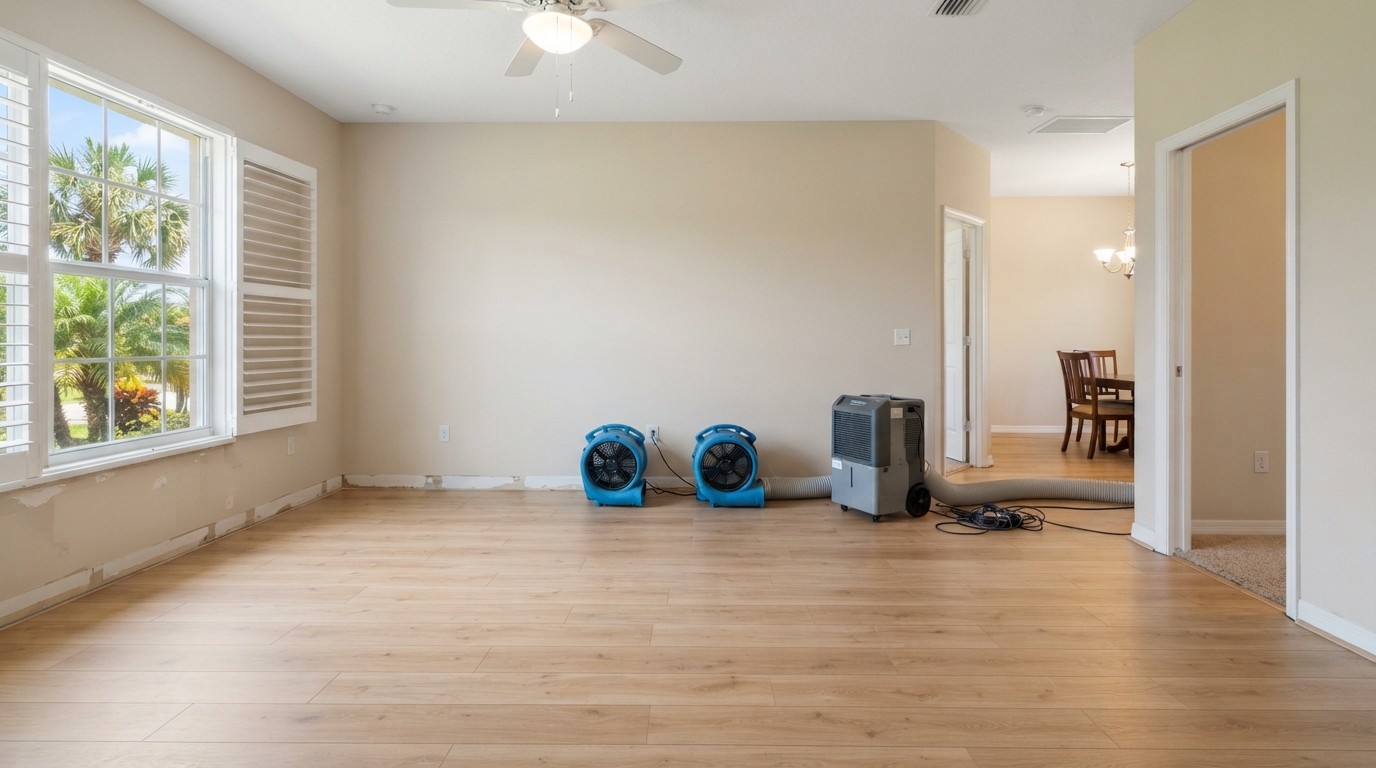
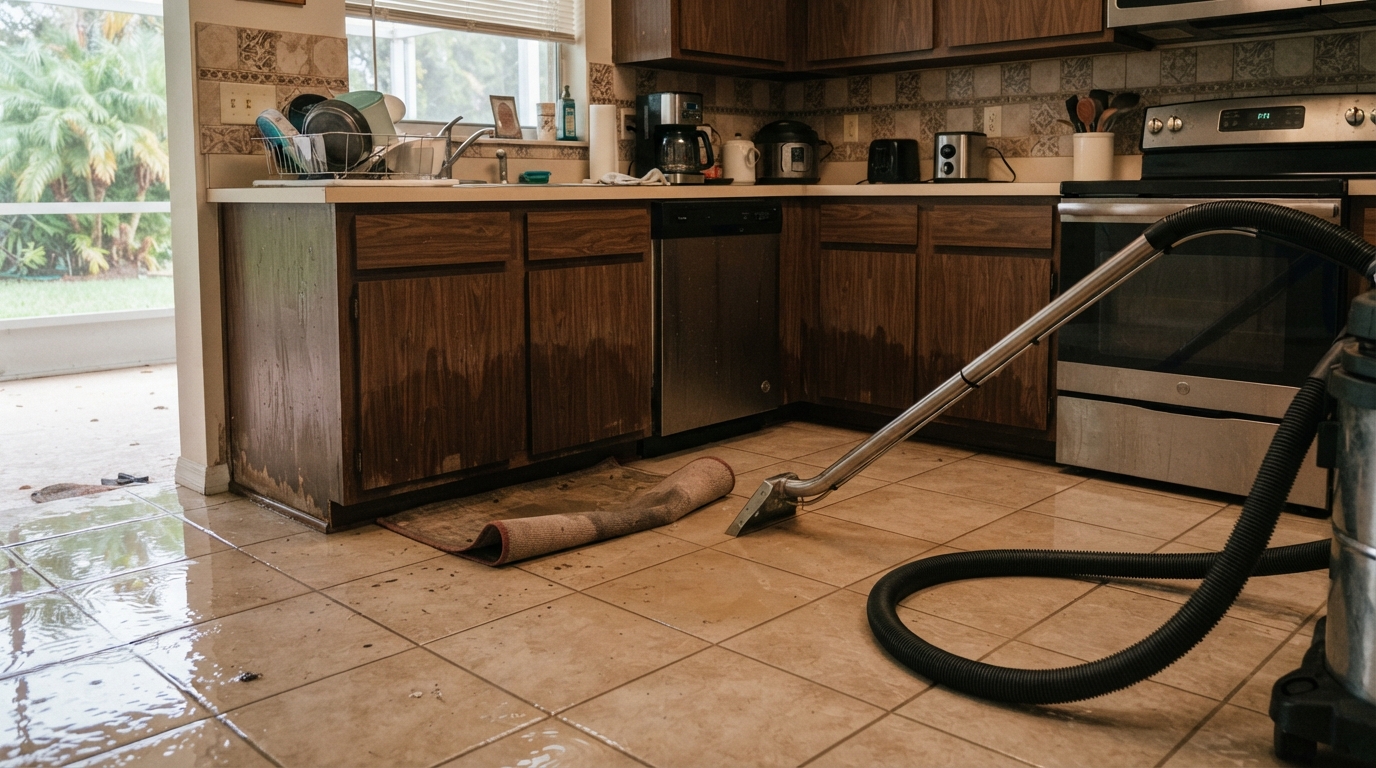
These interactive before-and-after comparisons demonstrate representative water damage restoration scenarios common to St. Augustine properties — from plumbing leaks and appliance overflows to storm-driven water intrusion and commercial water losses. Drag the slider to see how water extraction, flood damage cleanup, and structural drying can transform a water-damaged room. Each comparison reflects the type of water removal and dehumidification work performed for St. Augustine homes and businesses.
Interactive images are representative service examples intended to illustrate common water extraction, flood cleanup, sewage cleanup, plumbing-leak restoration, storm-damage cleanup, structural drying and related water-damage transformations. Actual project appearance varies by property, materials, water source, affected areas and site conditions.
Water Damage Restoration Transformation in St. Augustine
Professional water damage restoration focuses on identifying affected materials, removing standing water when present, controlling moisture, drying the structure, and preparing damaged areas for cleaning or necessary repairs. The transformation shows how a saturated room returns to a dry, stable condition.
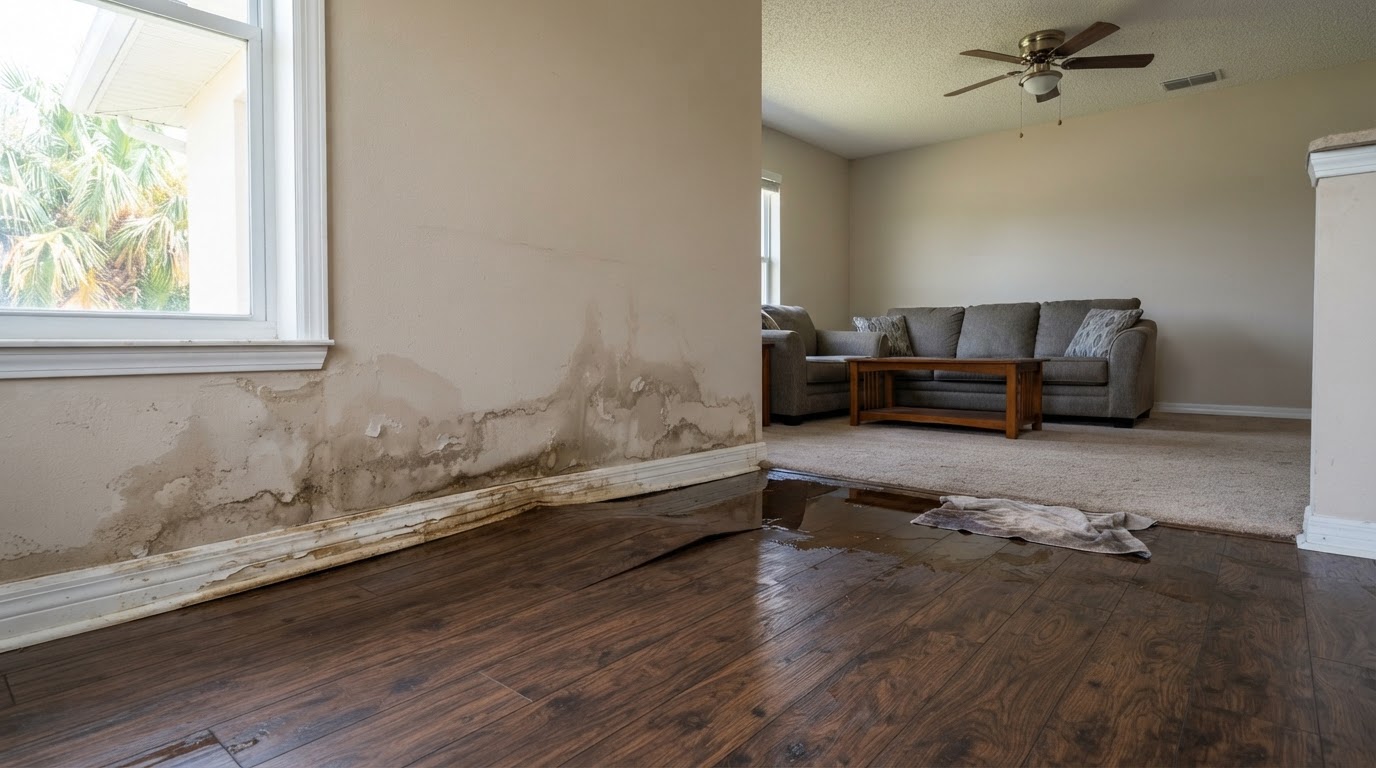
Emergency Water Removal & Water Extraction Near St. Augustine
Emergency water extraction removes accessible standing water from affected areas so detailed moisture assessment, structural drying, and cleanup can proceed. The comparison shows a room with shallow standing water before extraction and the same space after bulk water removal.
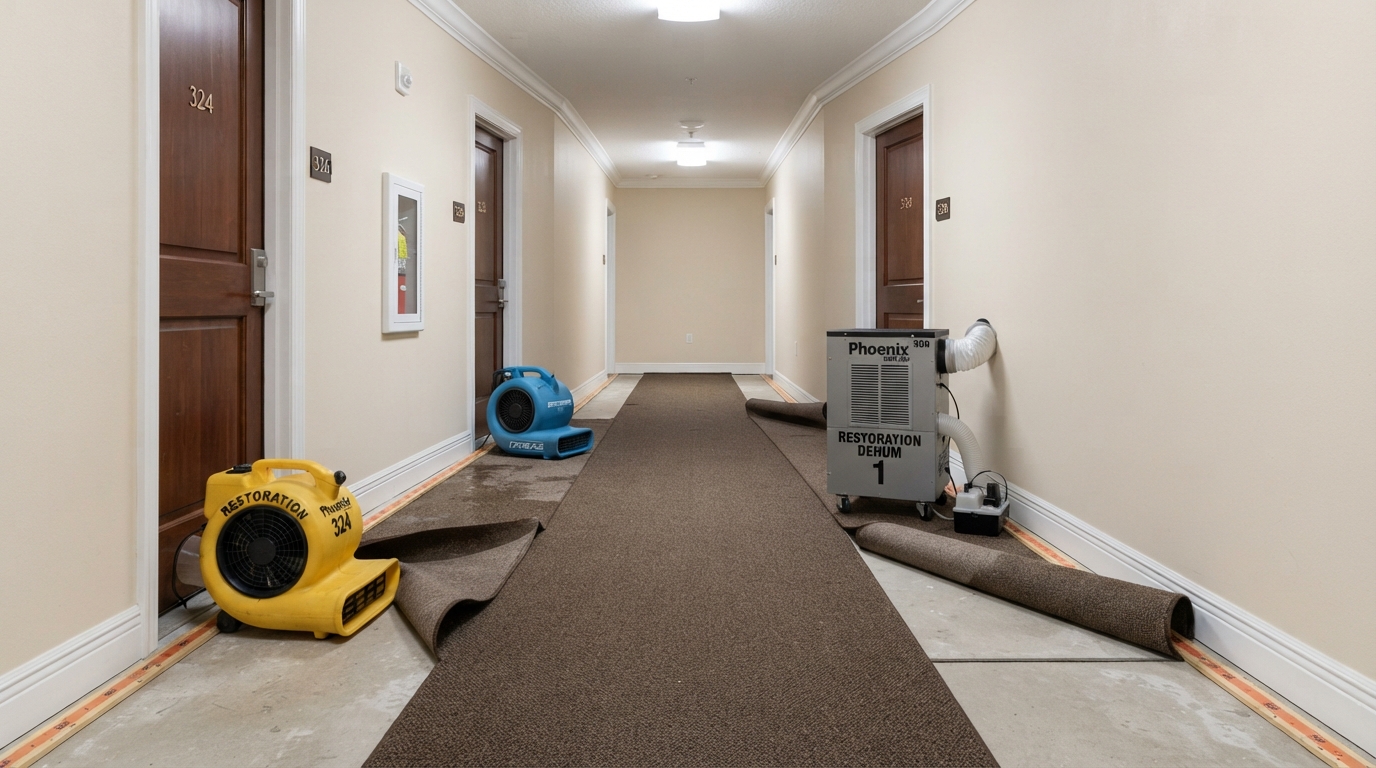
Flood Damage Cleanup Transformation in St. Augustine
Flood damage cleanup may include water extraction, removal of unsalvageable materials, cleaning, moisture control, and structural drying based on the source and extent of the water intrusion. The transformation shows a flooded hallway before and after professional cleanup and drying setup.
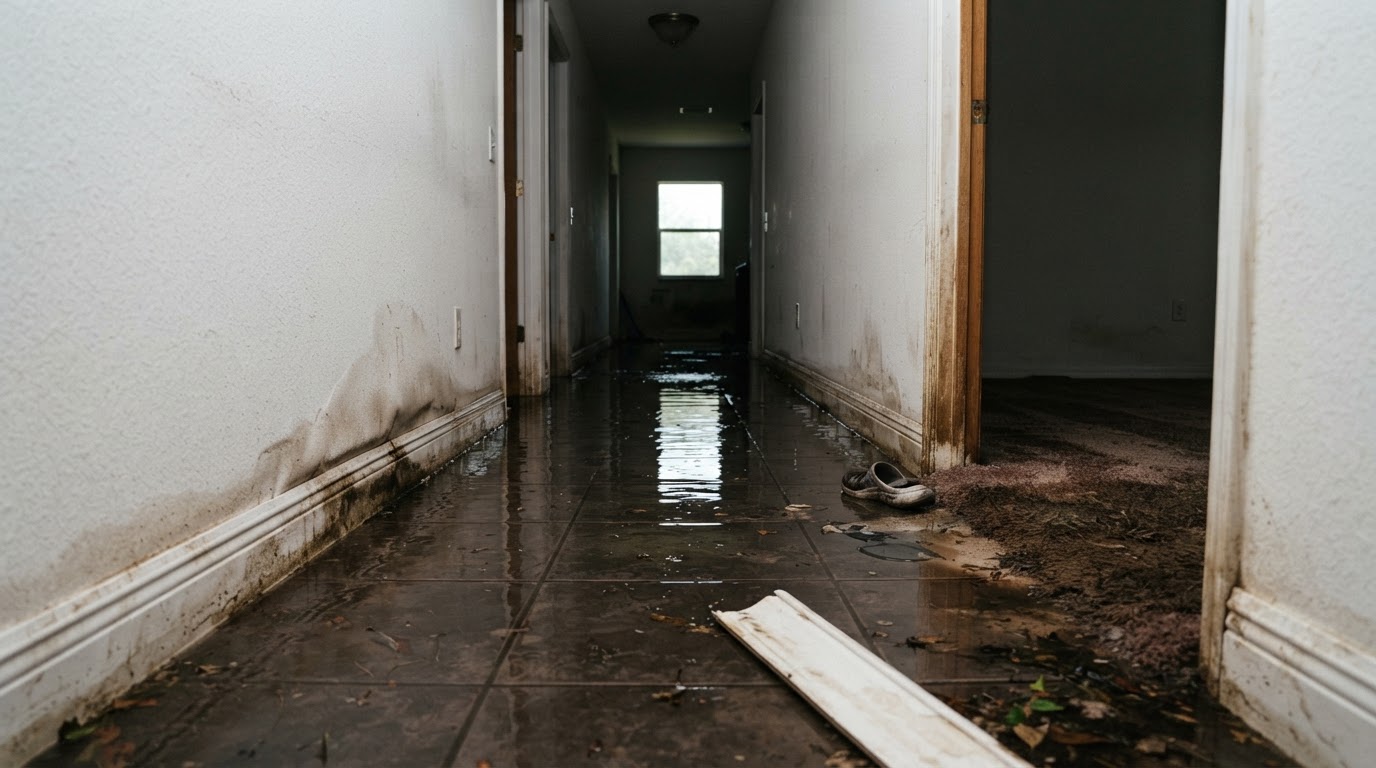
Sewage Backup & Black Water Cleanup Near St. Augustine
Sewage and black-water cleanup requires careful removal of contaminated water and affected materials, cleaning of salvageable surfaces, and controlled drying procedures appropriate to the contamination level. The comparison shows a controlled work area before and after professional contaminated-water cleanup.
Burst Pipe & Plumbing Leak Cleanup in St. Augustine
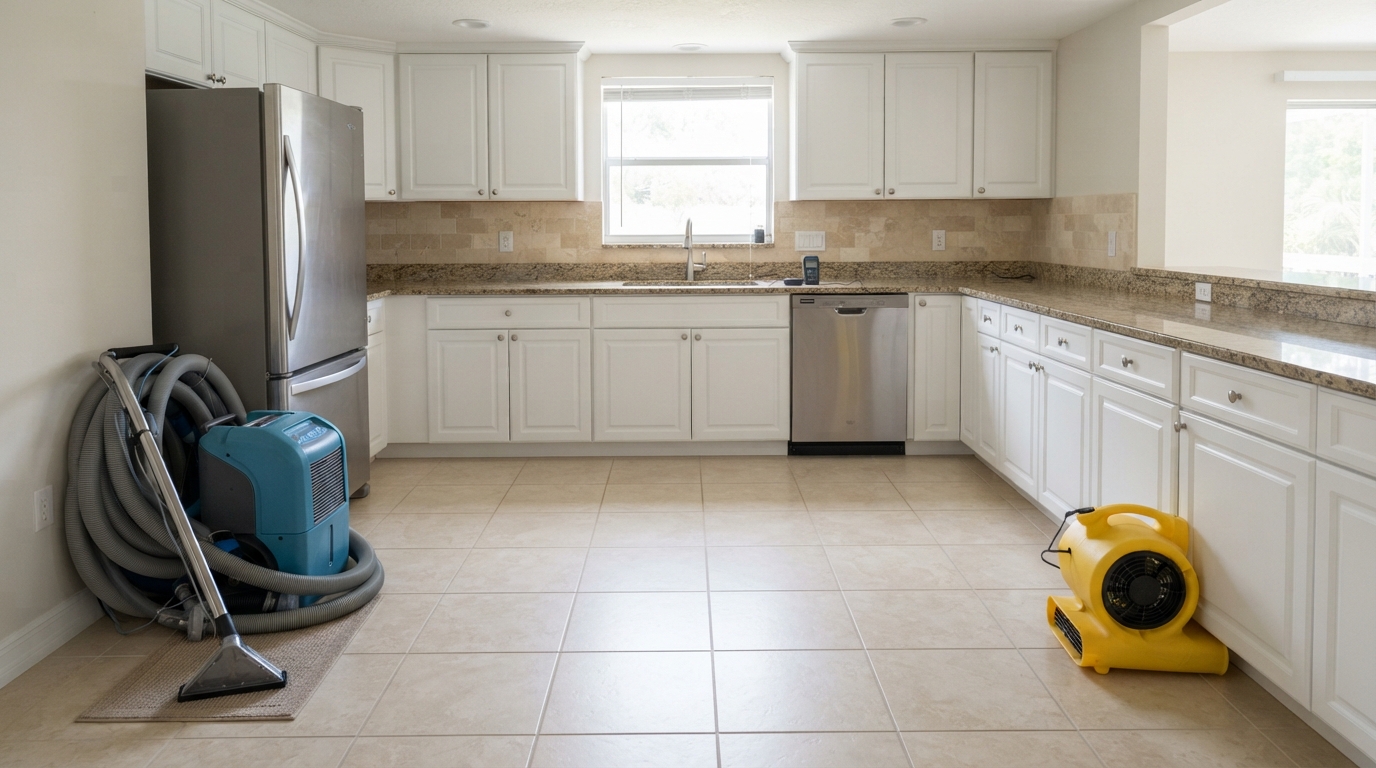
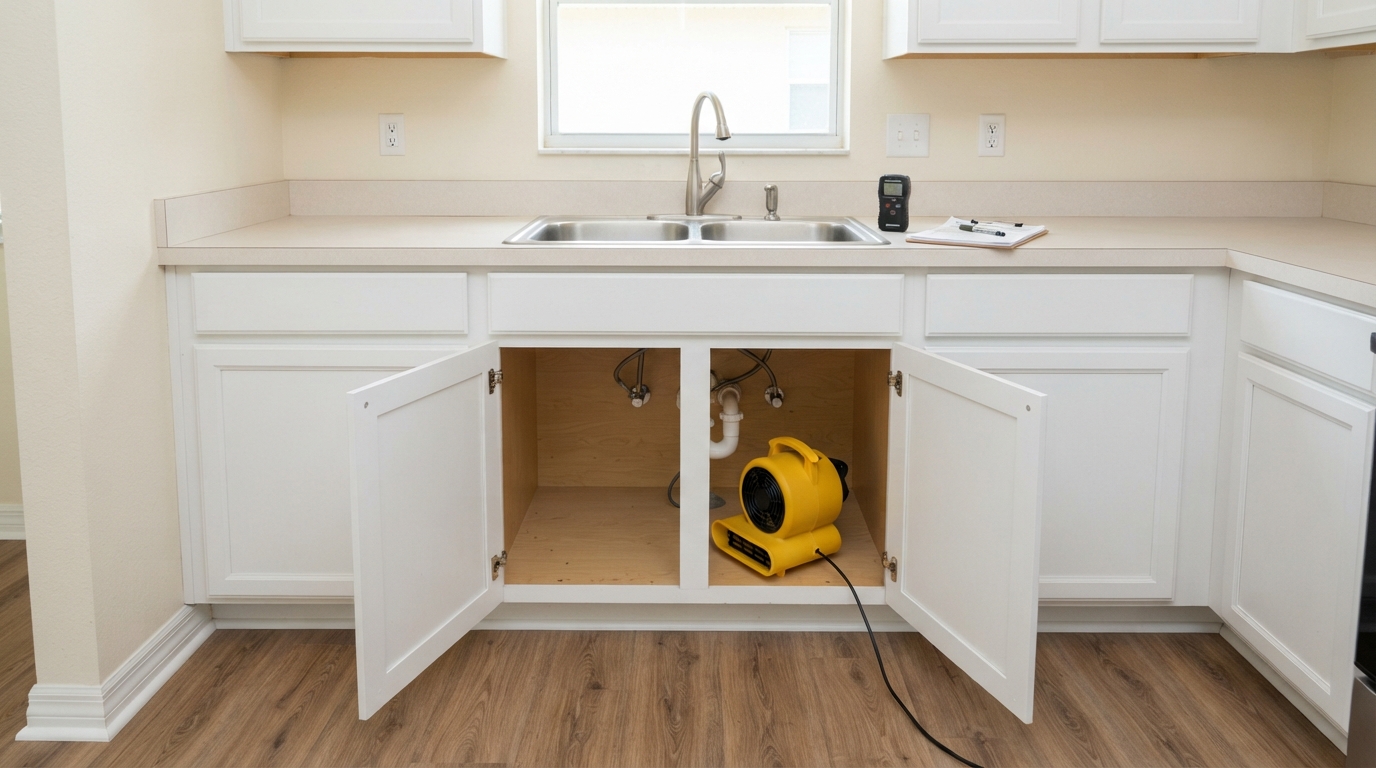
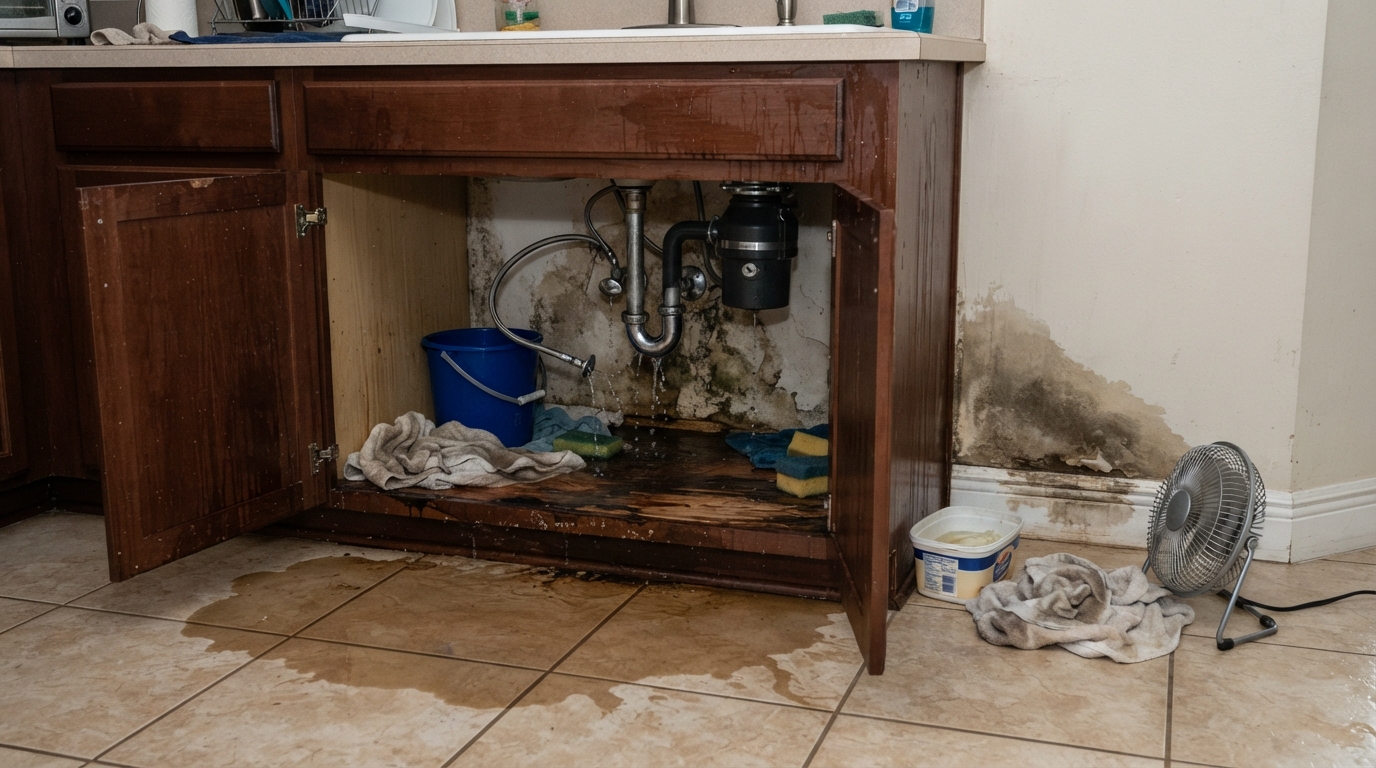
Cleanup following a burst pipe or plumbing leak can involve stopping additional water exposure, extracting standing water, identifying moisture migration, and drying affected walls, floors, cabinetry, or other building materials. The comparison shows a kitchen cabinet area before and after source control and drying setup.
Storm & Hurricane Water Damage Restoration Near St. Augustine
Storm and hurricane water-damage restoration may involve extracting water that entered the structure, documenting affected areas, removing unsalvageable materials where necessary, and drying moisture-affected structural components. The comparison shows a room with wind-driven rain intrusion before and after water removal and controlled drying.
Structural Drying & Dehumidification in St. Augustine
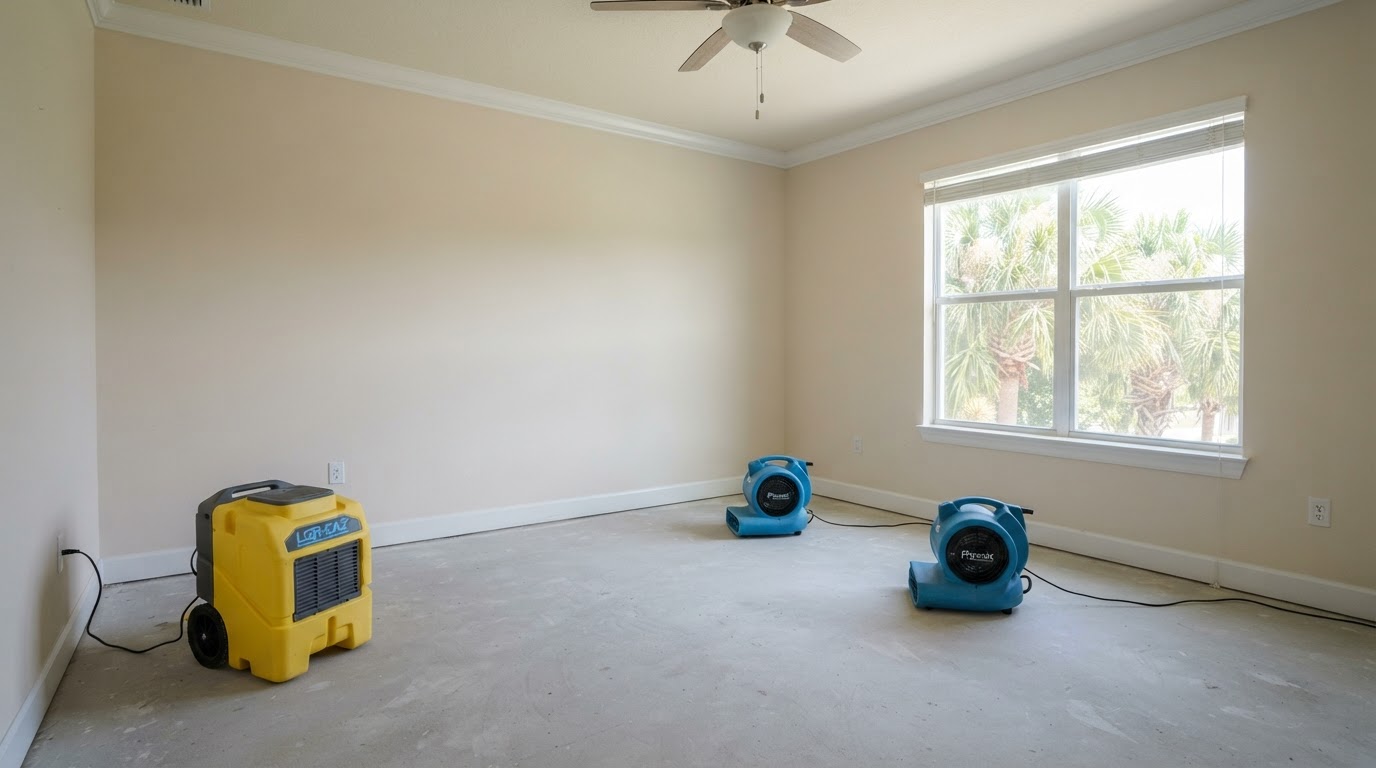
Structural drying and dehumidification are used to reduce excess moisture in affected building materials and indoor air after water has been removed, with equipment placement adjusted according to conditions and moisture readings. The comparison shows a room with residual moisture before and during controlled structural drying.
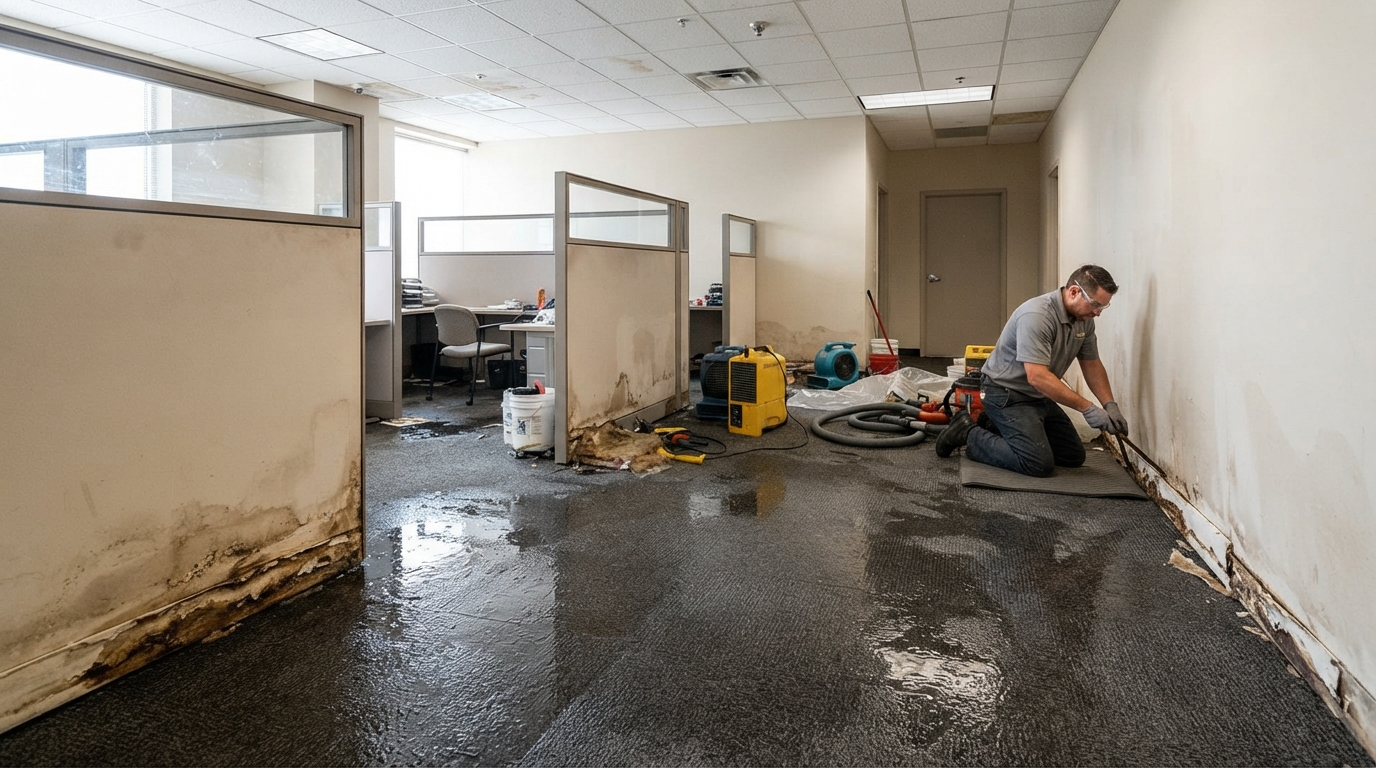
Commercial Water Damage Restoration Near St. Augustine
Commercial water damage restoration focuses on removing water, evaluating affected materials, and drying the structure while organizing the work area to help property managers and businesses plan the next restoration steps. The comparison shows a commercial space with standing water before and after extraction and drying setup.
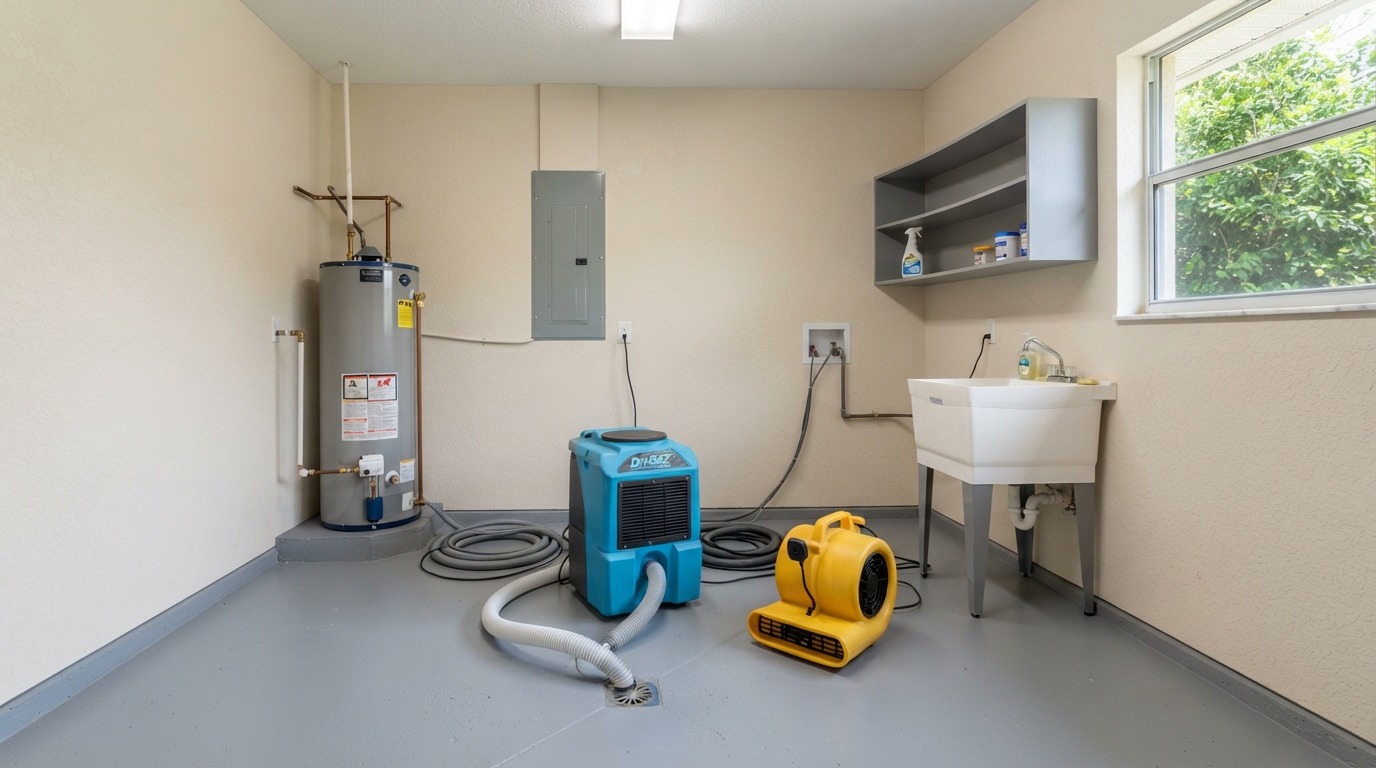
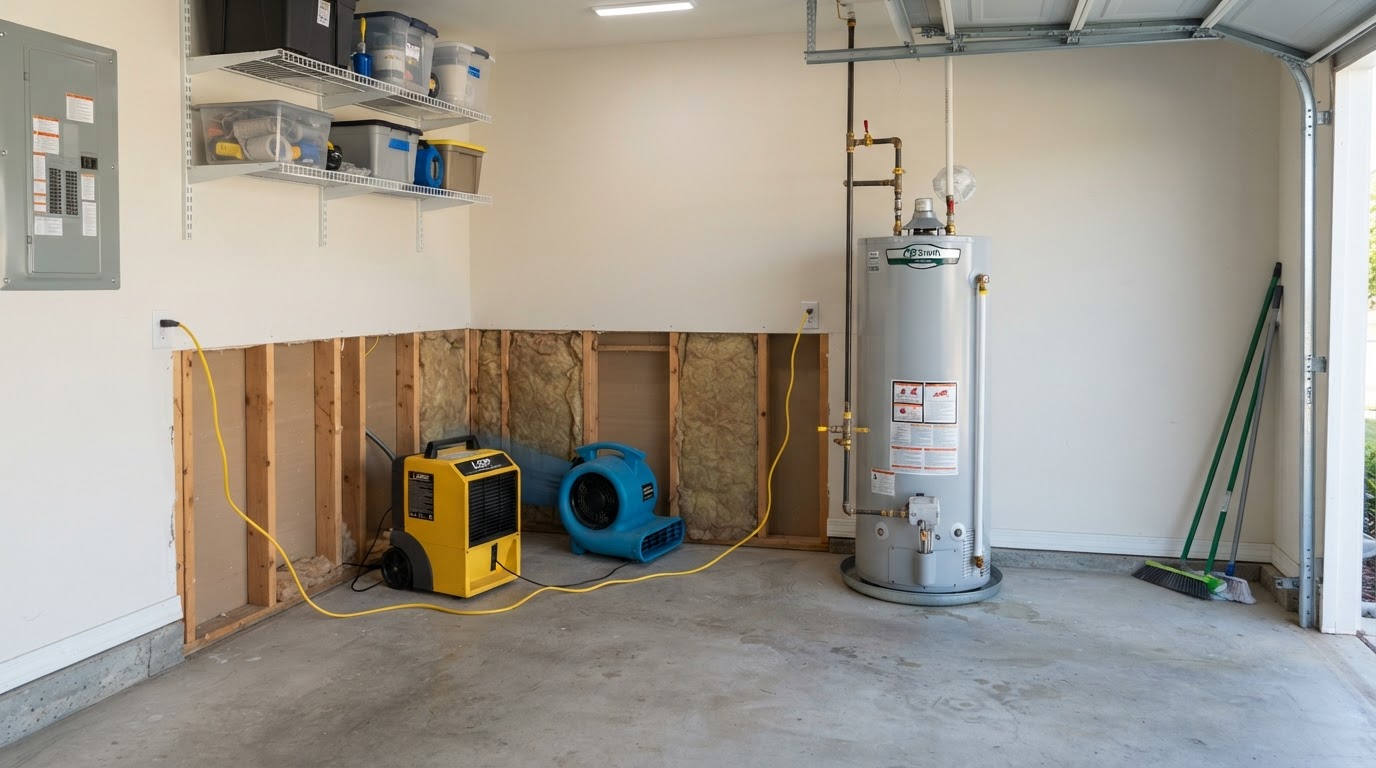
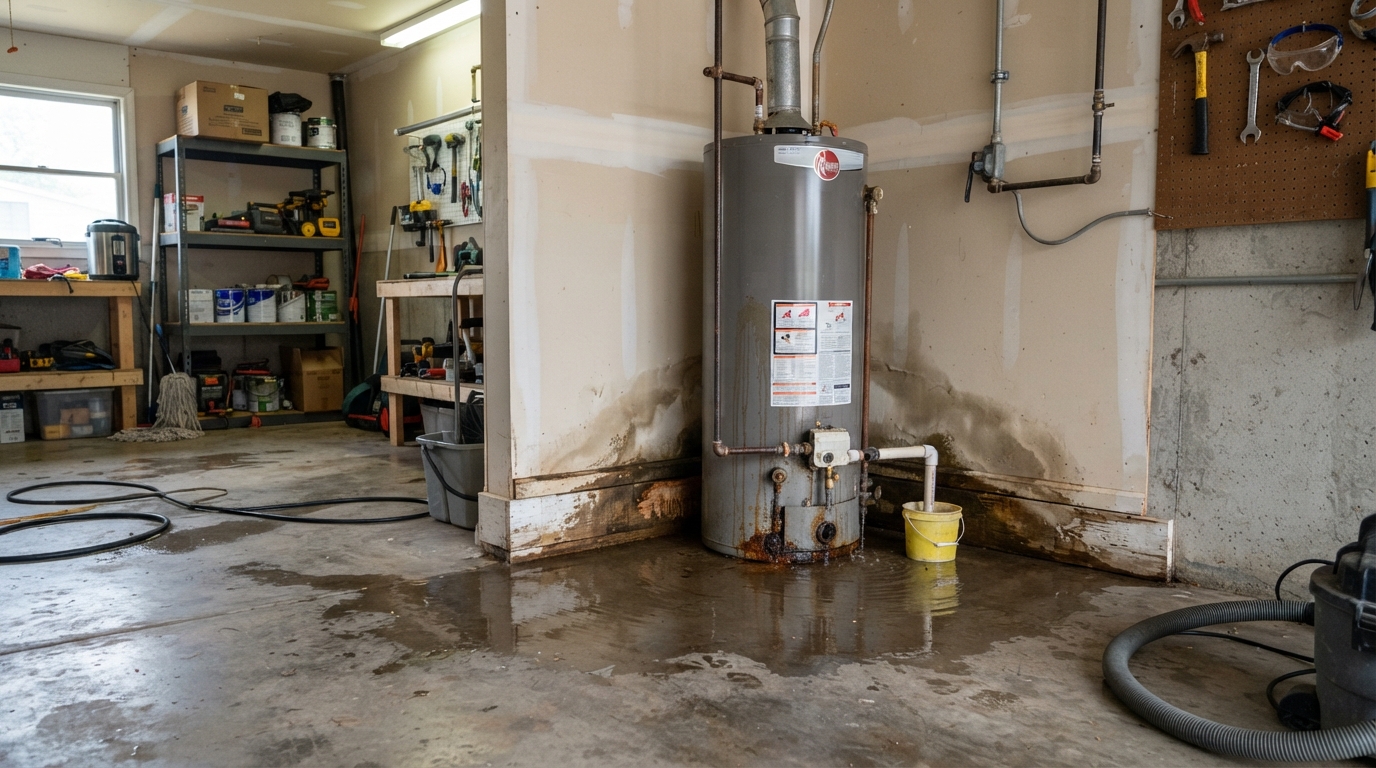
Water Heater Leak Cleanup in St. Augustine
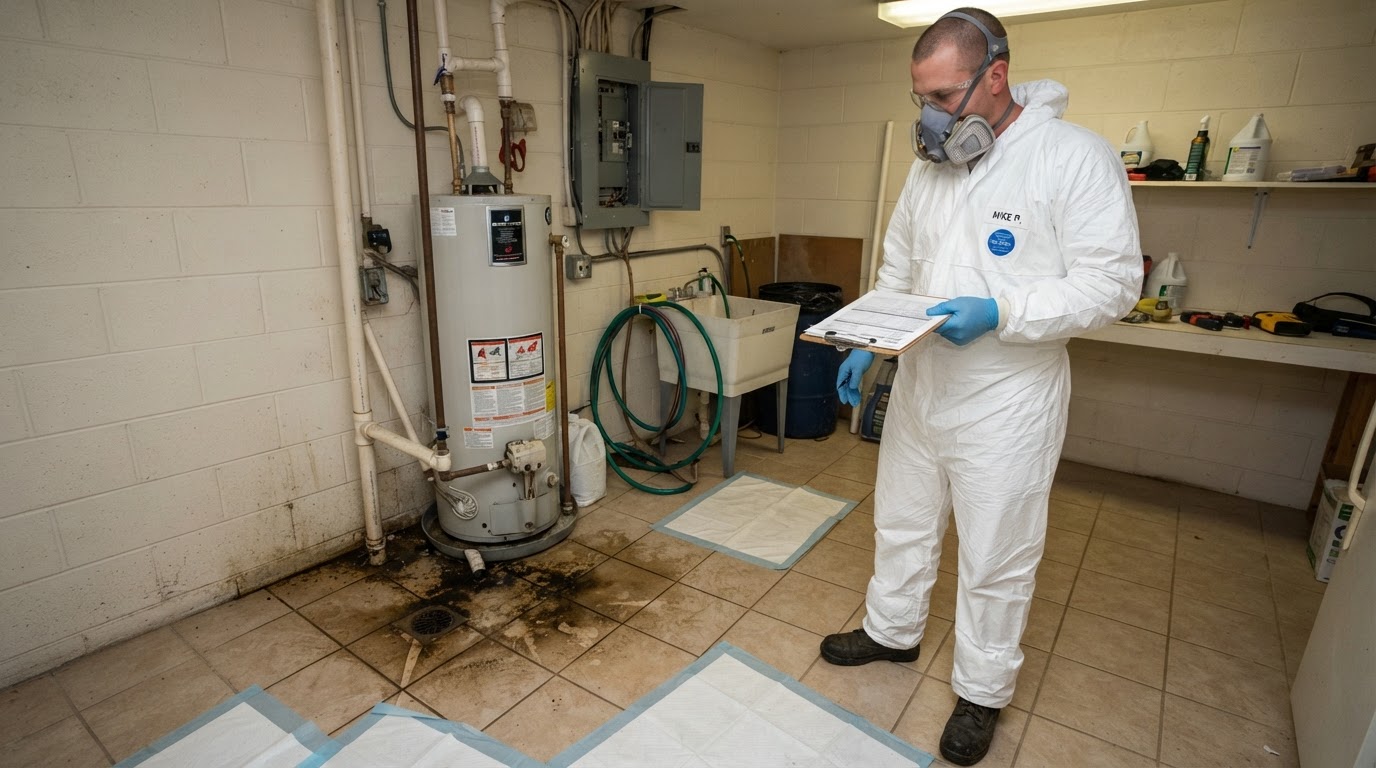
Water-heater leak cleanup addresses water that escapes from the tank, connections, or surrounding components by removing accessible water and drying moisture-affected flooring, drywall, baseboards, and nearby materials. The comparison shows a garage utility area before and after water removal and drying.
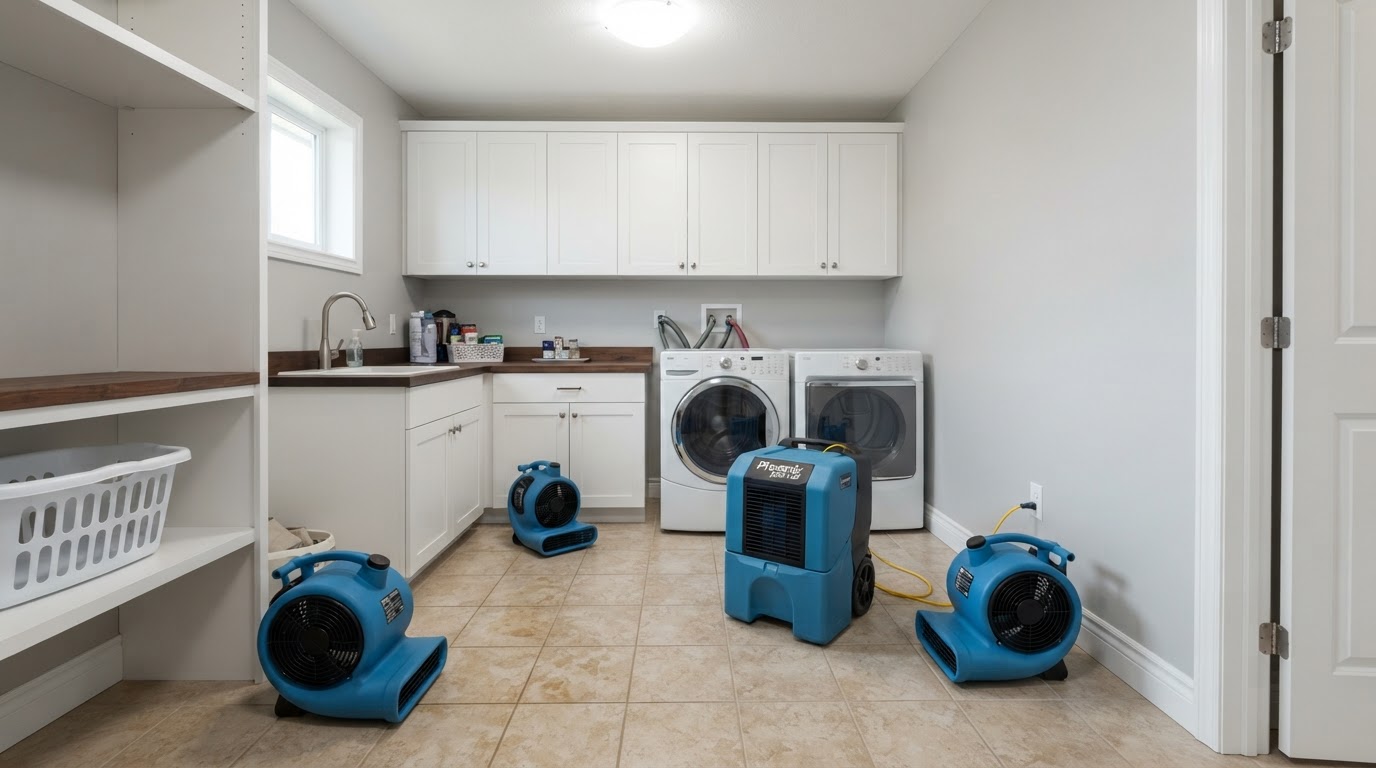
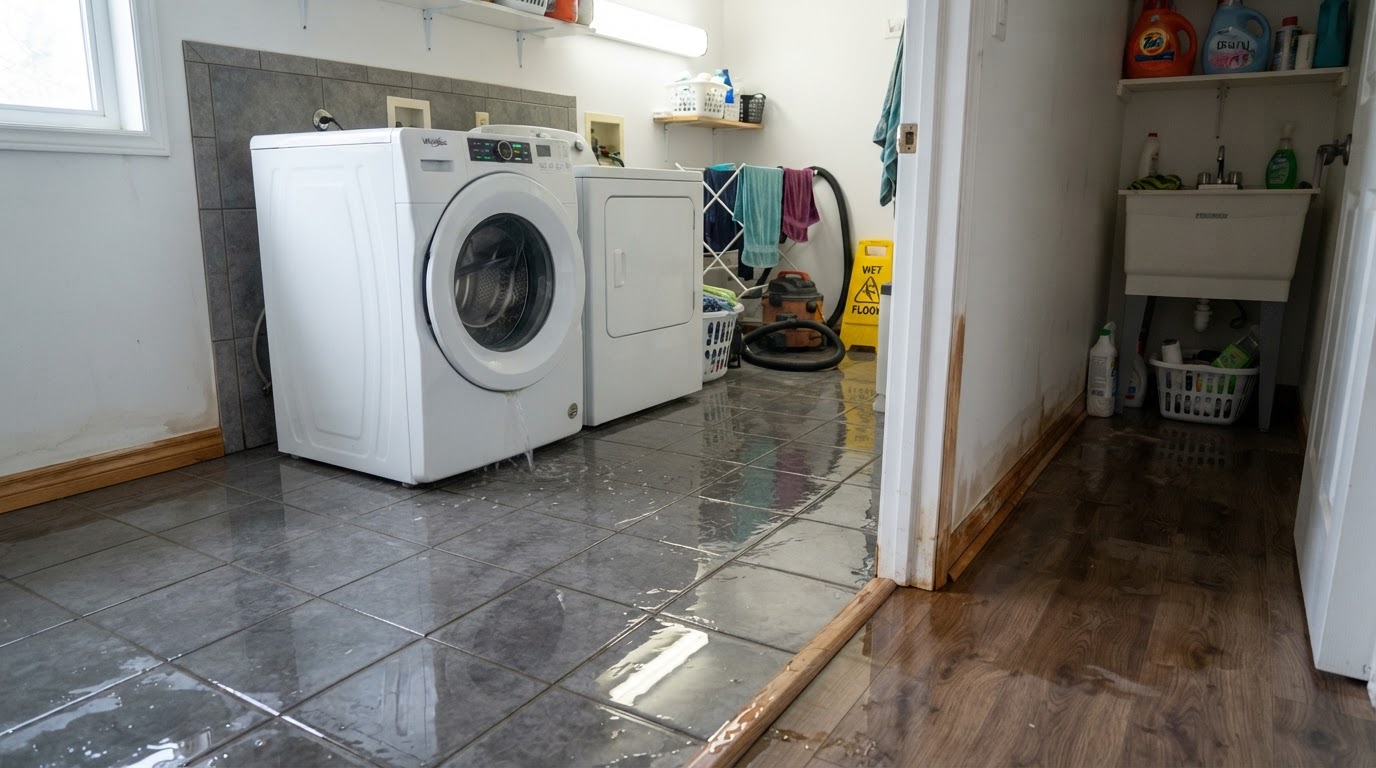
Washing Machine Overflow & Laundry Room Water Damage Cleanup Near St. Augustine
Washing-machine overflow cleanup can involve extracting water from the laundry area and nearby rooms, evaluating flooring and wall materials for moisture, and using professional drying equipment where necessary. The comparison shows a laundry room with overflow water before and after extraction and controlled drying.
Need Water Damage Cleanup in St. Augustine?
St. Augustine property owners and managers can help us prepare an accurate estimate by sharing details such as the property location, type of water intrusion, affected rooms, suspected source, how long the water has been present, and any photos of the damage.
Get Help Now
Need Water Removed From a St. Augustine Property?
Whether you are dealing with an active leak, standing water, wet flooring, ceiling damage, or hidden moisture, the next step is the same — get the water out and start drying. Call now or request service through the form.
Request Water Damage Service
Fill out the form and we'll follow up to help with your water damage situation in St. Augustine.