Storm & Hurricane Water Damage Restoration in Palm Coast, FL
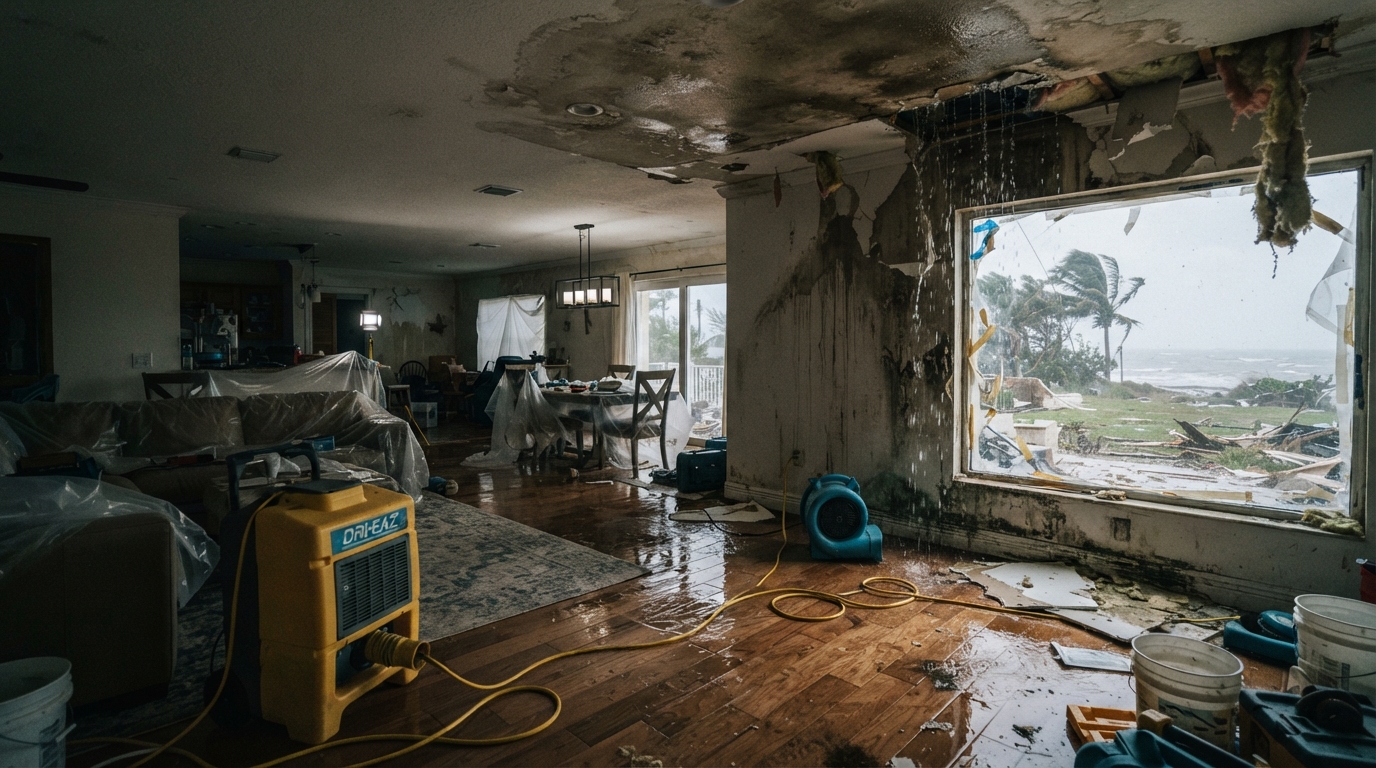
Storm and hurricane water damage restoration in Palm Coast, FL addresses water intrusion from wind-driven rain, roof damage, and storm-related flooding. Florida's storm season can push water into properties through openings around doors and windows, damaged roofs, and exterior breaches — and that water can travel into attics, wall cavities, and ceilings long before interior damage is visible.
Palm Coast Water Damage Contractors connects property owners with professional storm water damage restoration services across Palm Coast and surrounding coastal communities. The process includes interior water removal, moisture assessment of hidden areas, and controlled structural drying after the storm passes.
- Storm Water Removal
- Attic & Ceiling Inspection
- Hidden Moisture Detection
- Structural Drying
How Storms Drive Water Into Palm Coast Homes
Hurricane and storm water intrusion is different from a typical indoor plumbing leak. Wind-driven rain can force water through openings that would normally shed water — around doors and windows, through vents and soffits, and through small gaps in the building envelope. Roof damage from wind or falling debris can create entry points that allow rain to reach the attic, insulation, and ceiling drywall below.
The water may not be immediately visible. A roof leak can send water into the attic, where it saturates insulation and runs down rafters into wall cavities — appearing as a ceiling stain or drip days after the storm has passed. By the time the damage is visible, moisture may have spread across ceiling drywall and down into wall framing.
Storm-related flooding can also introduce water from outside the building, which may carry soil and contaminants. The cleanup approach for storm flood water differs from a clean indoor plumbing leak, and the contamination level is assessed as part of the restoration process.
Where Storm Water Hides
Storm water intrusion often affects areas that are not immediately visible. Attics and insulation are common collection points for roof leaks — water enters through damaged shingles or flashing and saturates the insulation and ceiling drywall below. Ceiling cavities can hold significant moisture that drips down slowly over time.
Wall cavities are another frequent hiding spot. Water that enters through the roof or around windows can run down inside the wall, saturating insulation and drywall without any visible sign on the interior surface. Flooring and baseboards can absorb storm water that has entered at ground level, and the moisture can remain trapped beneath flooring and behind baseboards even after the surface appears dry.
Because storm water travels along the path of least resistance, the visible damage is often only a fraction of the full extent. A thorough moisture inspection of attics, ceilings, walls, and flooring is essential to locate all the water before drying begins.
- Attics and insulation collect water from roof leaks
- Ceiling cavities hold moisture from above
- Wall cavities conceal water running down from the roof
- Flooring and baseboards absorb storm water at ground level
- Hidden moisture can remain trapped for days after the storm
Storm Water Damage Restoration Process
Storm water restoration begins with identifying the source and entry point of the water — whether it came through the roof, around windows, or from flooding. Interior water removal is the first priority: extracting any standing water using commercial pumps and vacuums. Note that permanent roof or exterior repairs may require a separate contractor; the restoration focus is on the interior water and drying.
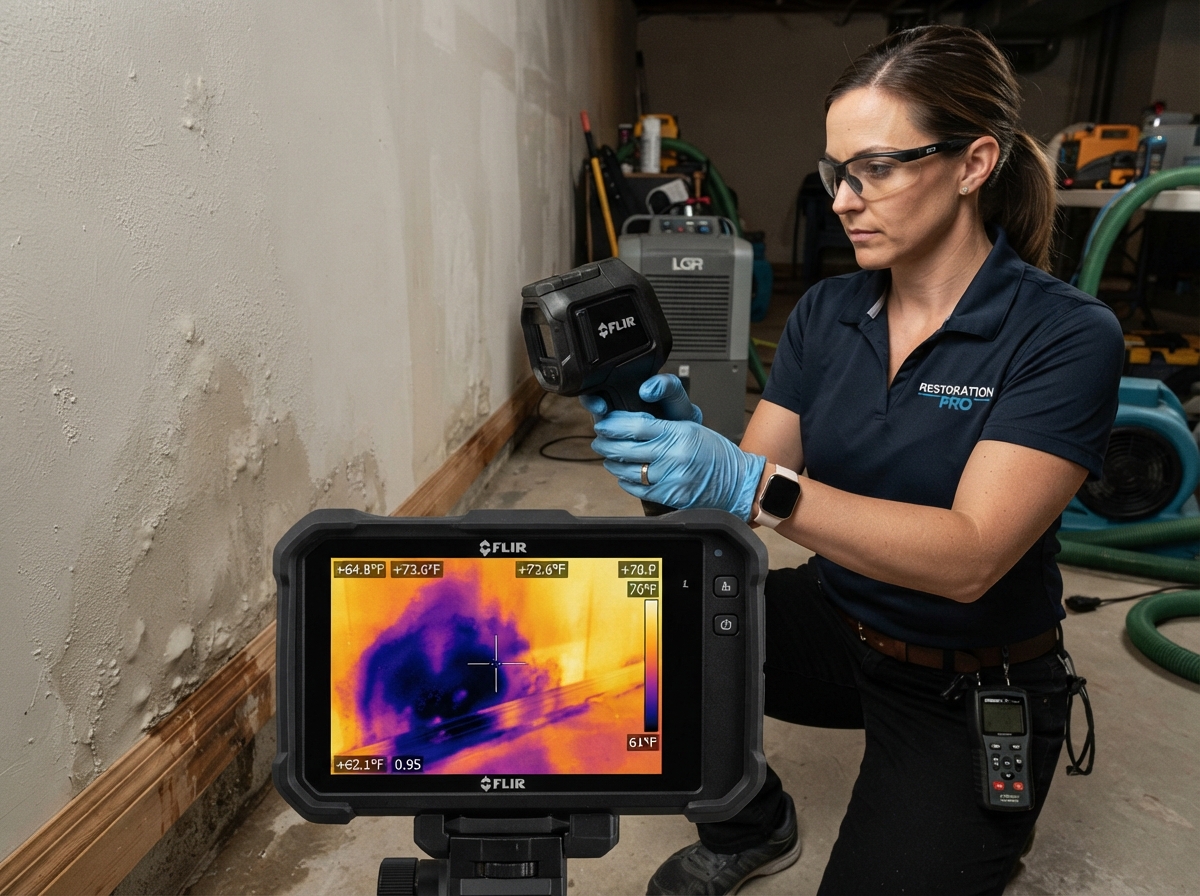
After extraction, a moisture assessment checks the areas most vulnerable to hidden storm water: attics, insulation, ceiling cavities, wall cavities, flooring, and baseboards. Moisture meters and thermal imaging are used to trace the full extent of water migration — because storm water can travel far from its entry point before becoming visible.
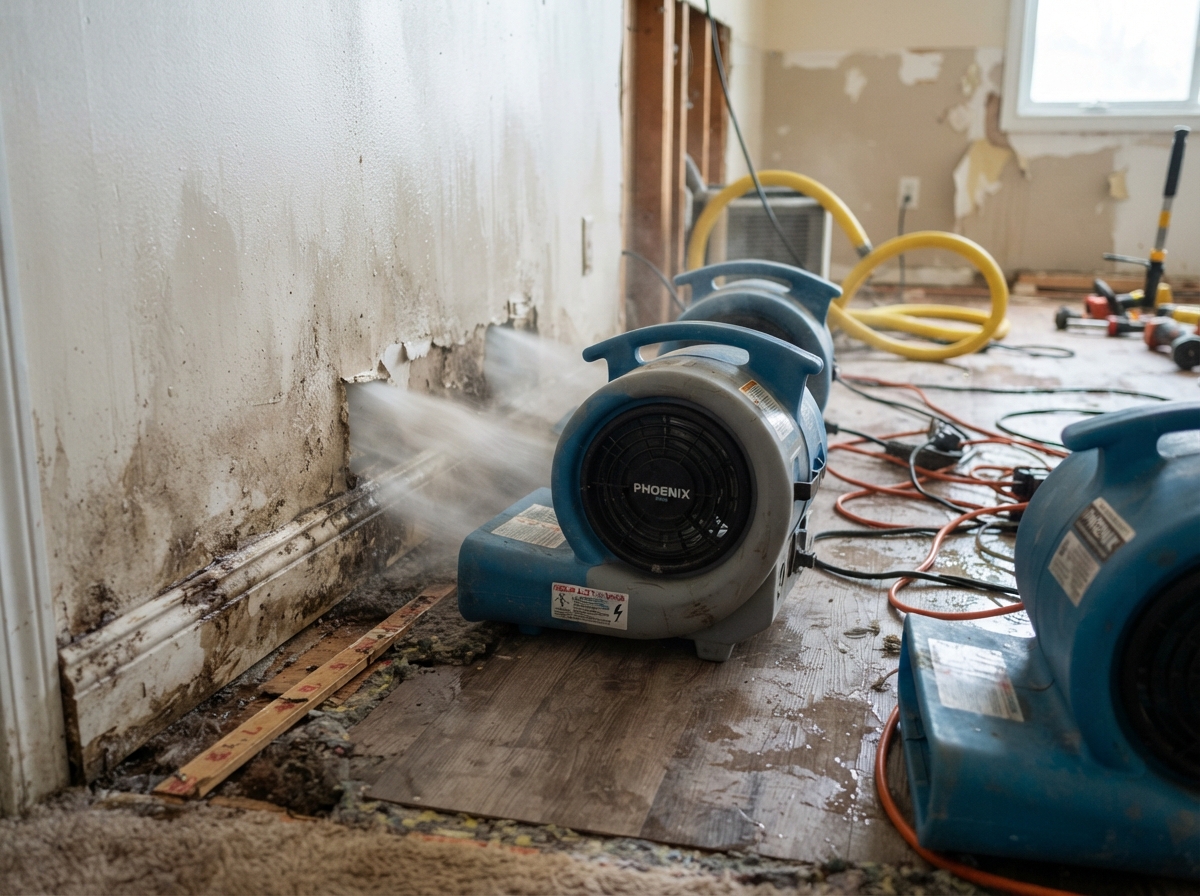
Controlled drying then uses air movers and dehumidifiers to draw moisture out of the affected materials. Equipment is positioned to target ceiling cavities, wall cavities, and attic spaces where water has collected. In Palm Coast's humid post-storm conditions, dehumidification is especially important — moist outdoor air can slow the drying of interior materials and allow secondary moisture to develop. Moisture levels are monitored throughout the drying phase and confirmed against an appropriate dry standard before equipment is removed.
- Source and entry point identification
- Interior standing water extraction
- Moisture assessment of attics, ceilings, walls, and flooring
- Controlled drying with air movers and dehumidifiers
- Dehumidification for humid post-storm conditions
- Moisture monitoring and verification
Storm Water Damage in Palm Coast, FL
Palm Coast's location on Florida's Atlantic coast makes it particularly exposed to tropical storms and hurricanes. Wind-driven rain, roof damage, and storm surge are recurring concerns for property owners throughout the region. After a storm, the priority is removing the water that has entered the building and drying the structure before secondary damage develops.
Florida's high humidity adds another challenge: after a storm, the outdoor air is often saturated with moisture, which can slow interior drying if the building is not properly dehumidified. This makes professional dehumidification especially important in the post-storm drying process. For roof-related intrusion, our roof leak and hidden water damage page covers moisture detection in ceilings and walls. For flood-level water, our flood damage cleanup page addresses contaminated water handling.
Related Water Damage Services
Frequently Asked Questions
Storm & Hurricane Water Damage Restoration FAQs
Get Help Now
Need Storm & Hurricane Water Damage Restoration Help?
Whether you are dealing with an active leak, standing water, or hidden moisture, the next step is the same — get the water out and start drying. Call now or request service through the form.
Request Service
Fill out the form and we'll follow up to help with your water damage situation.