Structural Drying & Dehumidification in Palm Coast, FL
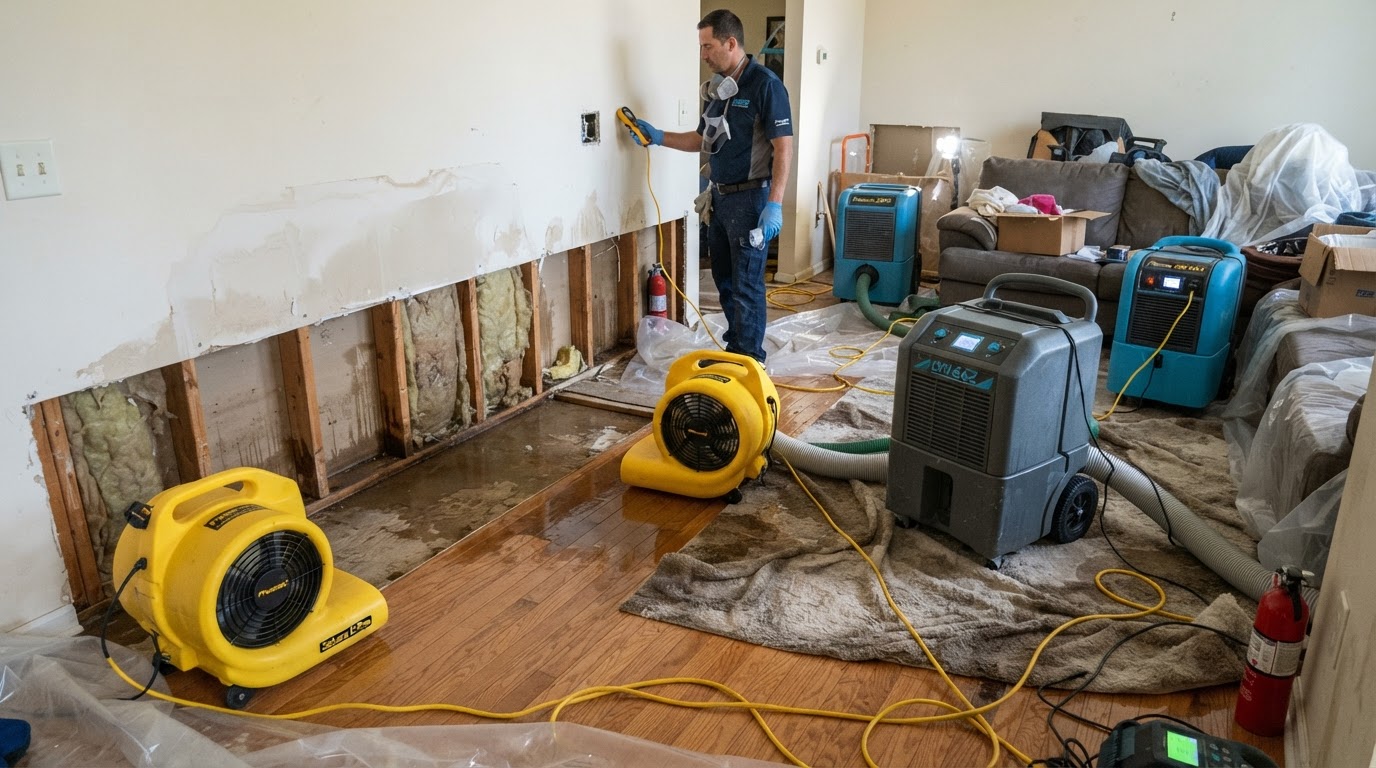
Structural drying and dehumidification in Palm Coast, FL is the phase of water damage restoration that removes the moisture absorbed by building materials after standing water has been extracted. While water extraction pulls the visible water out of a property, structural drying targets the bound moisture that remains inside drywall, framing, flooring, and other materials — the moisture that cannot be removed by extraction alone.
Palm Coast Water Damage Contractors connects property owners with professional structural drying services across Palm Coast and surrounding communities. In Florida's humid climate, dehumidification is an essential part of the drying process, because moist air can slow evaporation and allow secondary moisture to develop.
- Air Movers
- Commercial Dehumidifiers
- Moisture Monitoring
- Drying Verification
Why Extraction Is Not Enough
Extraction removes bulk water — the standing water on floors, in carpet, and on surfaces. But water does not stay on the surface. It is absorbed by porous building materials throughout the affected area: drywall wicks moisture upward, wood framing absorbs water, subflooring traps moisture beneath hard flooring, and insulation holds water against framing.
This bound moisture cannot be removed by pumps or vacuums. It requires a different approach: evaporation and dehumidification. Air movers create airflow across wet surfaces, turning the trapped moisture into water vapor. Dehumidifiers then pull that vapor out of the air, preventing it from reabsorbing into dry materials. Together, these two processes draw the moisture out of the building materials and out of the structure.
Without structural drying, the moisture that remains inside building materials after extraction can drive secondary damage over the following days and weeks. This is why extraction and drying are always paired — extraction removes the water you can see, and drying removes the moisture you cannot.
Materials That Hold Moisture
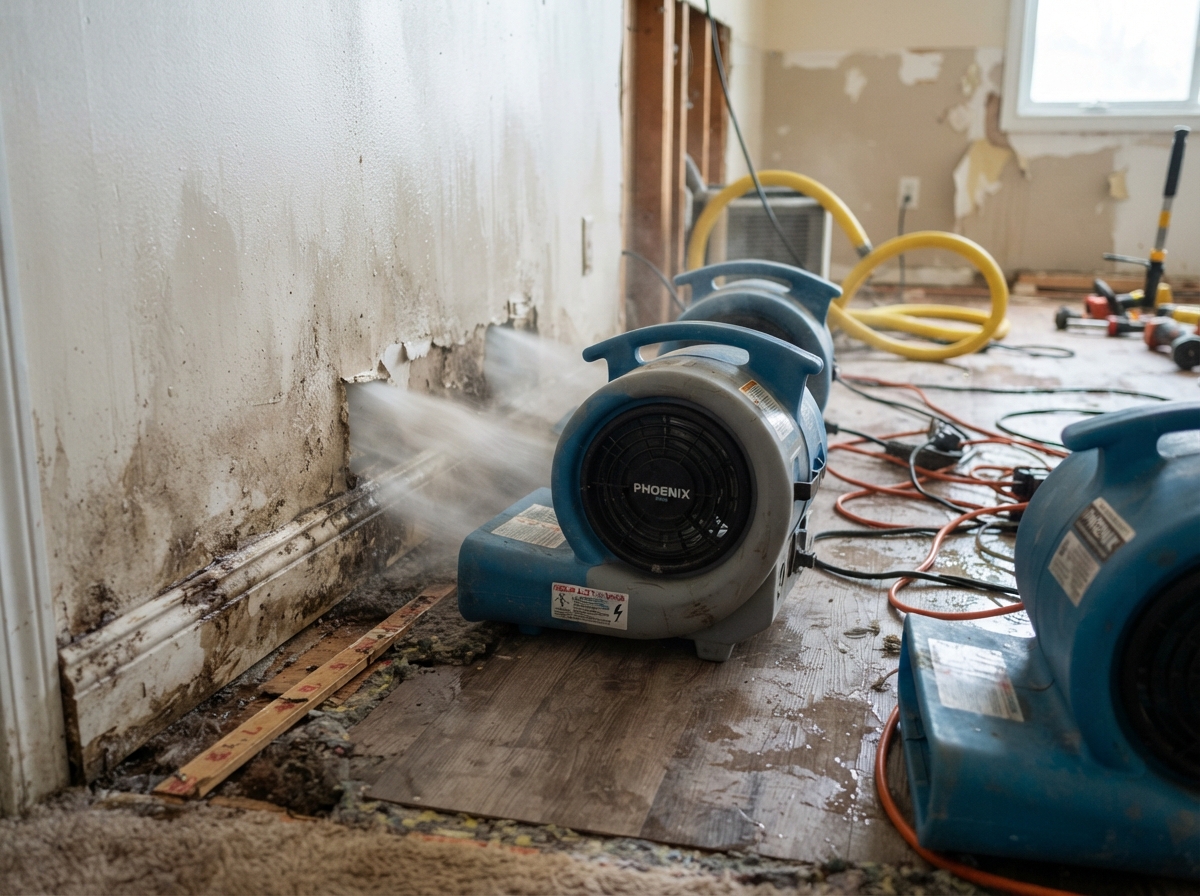
Many common building materials are porous and absorb water during a water loss. Drywall is highly porous and wicks moisture upward through capillary action, sometimes drawing water several inches above the visible water line. Wood framing, studs, and joists absorb water and can hold it for extended periods, which is why framing moisture content is monitored throughout drying.
Flooring materials vary: hardwood absorbs moisture and can cup or buckle, laminate can trap water beneath the planks, and tile can conceal saturated subflooring beneath. Subflooring — usually plywood or OSB — is highly porous and can hold significant moisture. Cabinets and baseboards can trap moisture against walls and flooring, slowing the drying of the materials behind them.
Ceilings can collect water from above, whether from a roof leak or an upper-floor plumbing failure. The ceiling drywall and any insulation above it can become saturated and hold moisture that drips down slowly. Understanding which materials are wet — and how wet they are — is the foundation of an effective drying plan.
- Drywall wicks moisture upward through capillary action
- Wood framing, studs, and joists absorb and hold water
- Hardwood and laminate flooring trap moisture against subflooring
- Subflooring (plywood/OSB) is highly porous
- Cabinets and baseboards trap moisture against walls
- Ceiling drywall and insulation collect water from above
How Structural Drying Works
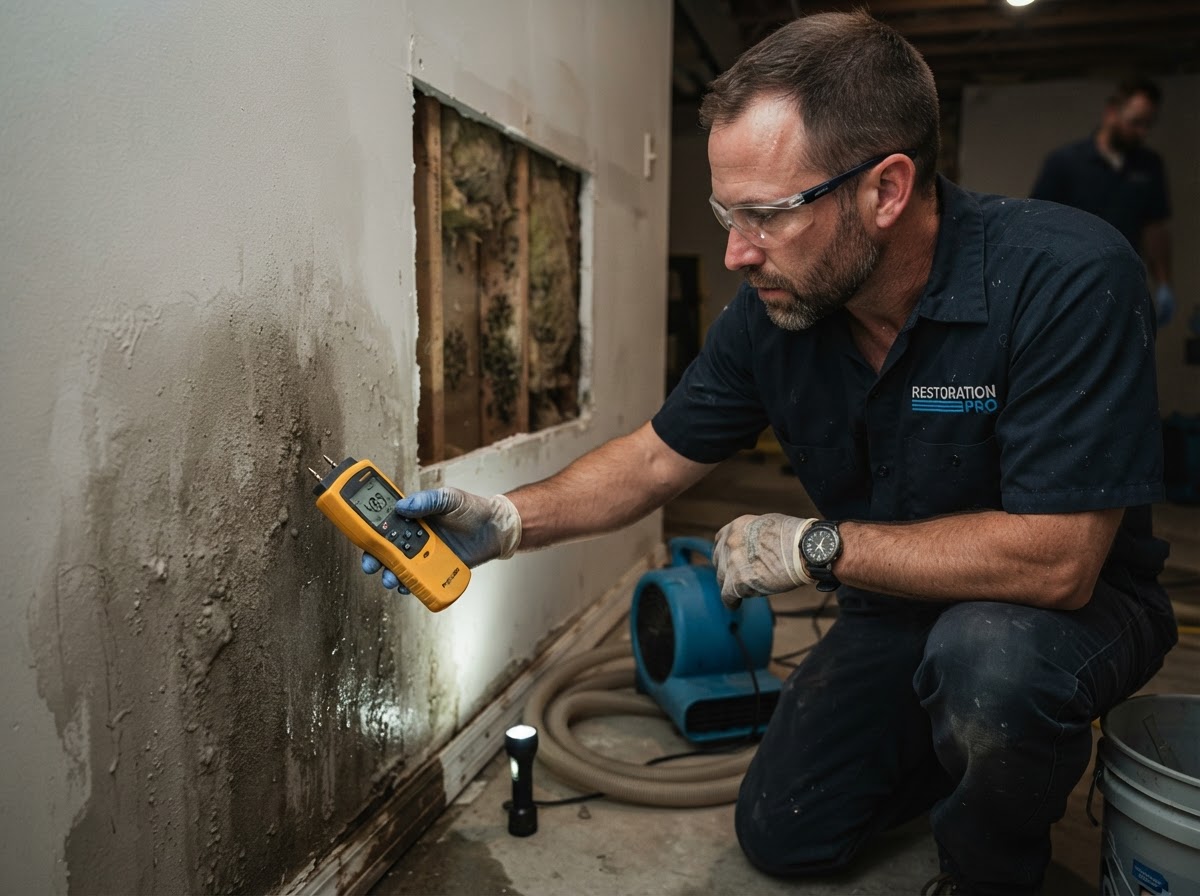
Structural drying begins with moisture readings. Moisture meters measure the moisture content of affected materials — drywall, framing, flooring, subflooring — to establish a baseline and set drying goals. These readings determine where equipment is placed and how the drying progress is tracked.
Air movers are then positioned to create airflow across wet surfaces and inside wall cavities. The airflow turns the trapped moisture into water vapor through evaporation. Dehumidifiers pull that vapor out of the air, lowering the indoor humidity and preventing the moisture from reabsorbing into dry materials. The combination of continuous evaporation and dehumidification is what draws the water out of the building materials.
Moisture levels are monitored throughout the drying phase, and the equipment layout is adjusted as different areas reach their dry standard. Some materials dry faster than others, and the drying plan adapts to the actual conditions. The drying process is complete when moisture readings return to an appropriate dry standard for the structure. No specific drying-time guarantee can be made, because the timeline depends on the extent of the water damage, the materials affected, and ambient conditions.
- Moisture readings establish baseline and drying goals
- Air movers create evaporation across wet surfaces and cavities
- Dehumidifiers pull water vapor out of the air
- Equipment placement targets the wettest materials
- Moisture monitoring tracks drying progress
- Equipment adjusted as areas reach dry standard
Structural Drying in Palm Coast's Climate
Palm Coast's humid coastal climate makes dehumidification especially important in the structural drying process. When outdoor air is saturated with moisture, it can slow the evaporation of water from interior building materials and even introduce new moisture into the structure. Professional dehumidification controls the indoor environment so that drying can proceed regardless of outdoor humidity.
Structural drying is a necessary step after any water loss that has saturated building materials — whether from a plumbing leak, appliance overflow, storm intrusion, or flood. For the extraction phase that precedes drying, see our emergency water extraction page. For the broader restoration process, our water damage restoration page provides an overview.
Related Water Damage Services
Frequently Asked Questions
Structural Drying & Dehumidification FAQs
Get Help Now
Need Structural Drying & Dehumidification Help?
Whether you are dealing with an active leak, standing water, or hidden moisture, the next step is the same — get the water out and start drying. Call now or request service through the form.
Request Service
Fill out the form and we'll follow up to help with your water damage situation.