Roof Leak, Ceiling, Wall & Hidden Water Damage Cleanup in Palm Coast, FL
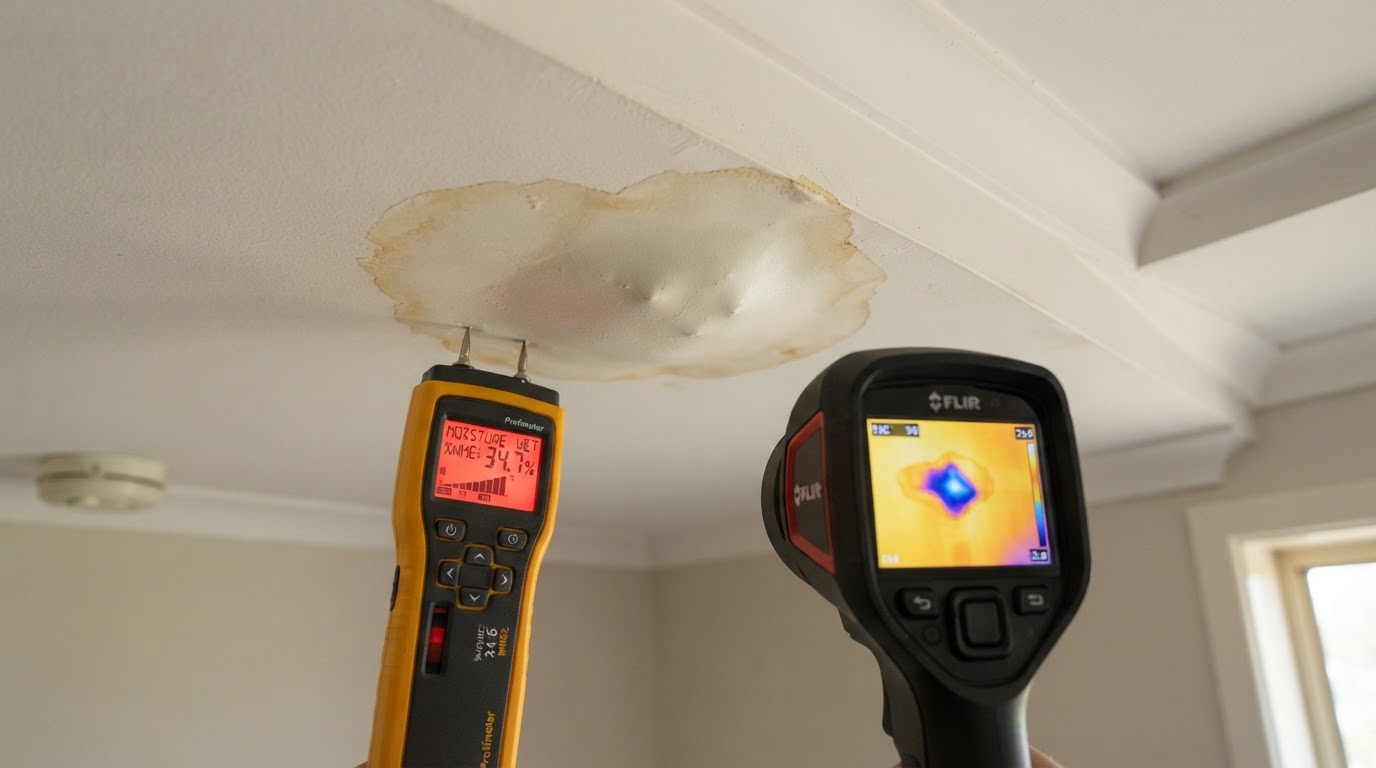
A ceiling stain or damp wall may be the first visible sign of water damage that has been developing inside the structure for days or weeks. Roof leak, ceiling, wall, and hidden water damage cleanup in Palm Coast, FL focuses on finding the full extent of moisture that has traveled behind surfaces — through attics, ceiling cavities, wall cavities, and into the framing below — and drying the affected materials.
Palm Coast Water Damage Contractors connects property owners with professional moisture detection and structural drying services for hidden water damage throughout Palm Coast and surrounding communities. Because the visible stain often does not represent the full extent of the moisture, a thorough inspection of the building structure is essential.
- Moisture Mapping
- Attic & Ceiling Inspection
- Wall Cavity Drying
- Thermal Imaging
Why Visible Staining Is Only Part of the Problem
A water stain on a ceiling or wall is often the last sign to appear — not the first. By the time a stain, drip, or bulge becomes visible, water has typically been traveling through the building structure for some time. Roof leaks can send water into the attic, where it saturates insulation and runs down rafters into wall cavities. The water may travel across ceiling drywall and down inside walls before any sign appears on the interior surface.
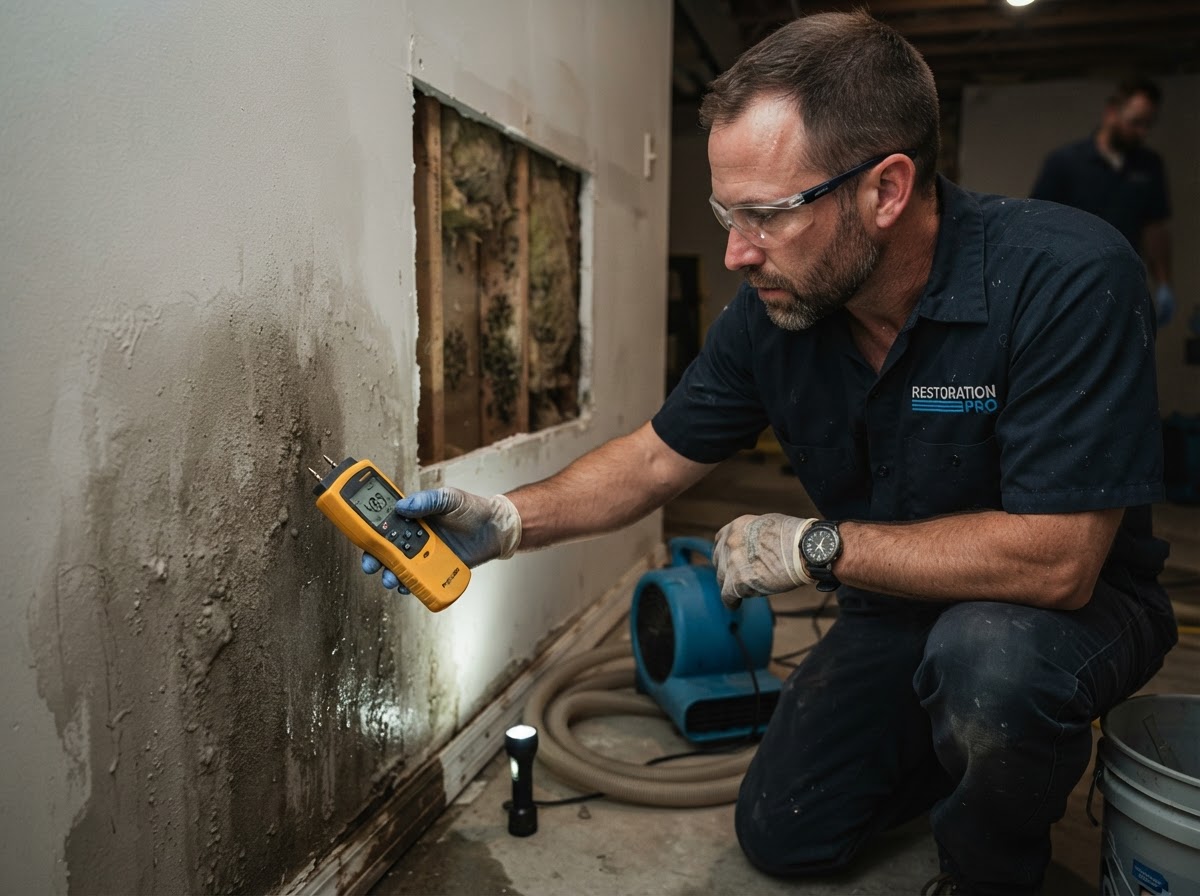
The moisture does not stay where it enters. Water follows the path of least resistance, migrating through attic insulation, across ceiling cavities, down inside wall cavities, and into framing and flooring below. Drywall can look completely dry on the surface while remaining saturated inside — because the moisture is trapped within the material and behind it, evaporating slowly into the wall or ceiling cavity.
This is why hidden water damage cleanup always begins with moisture mapping rather than relying on visible signs alone. The full extent of the moisture — in the attic, ceiling cavity, wall cavities, and framing — must be identified before drying can be planned. Treating only the visible stain leaves trapped moisture inside the structure, where it can drive secondary damage long after the surface appears dry.
What Causes Ceiling, Wall, and Hidden Water Damage
Ceiling and wall water damage can come from several sources, and identifying the correct source is essential before drying can begin. Roof leaks are a common cause — wind-driven rain, damaged flashing, or missing shingles can allow water to enter the attic and travel down into ceilings and walls. The stain may appear far from the actual roof entry point because water follows the path of least resistance.
Plumbing leaks from pipes running above ceilings or inside walls can also cause hidden water damage. A slow leak in a ceiling plumbing line can drip into insulation and drywall for weeks before a stain appears. HVAC condensate drain line overflows can send water into ceiling drywall and wall cavities near the air handler. A bathroom on an upper floor can leak through the subfloor and into the ceiling below.
It is important not to assume that every ceiling stain comes from a roof leak. The source could be a plumbing line, an HVAC condensate overflow, or an appliance on the floor above. Identifying the actual source is the first step in the cleanup process — and stopping the source may require a roofer, plumber, or HVAC technician depending on the cause. The restoration contractor focuses on the water and drying, not the repair of the source.
- Roof leaks from wind-driven rain, damaged flashing, or missing shingles
- Plumbing leaks from pipes above ceilings or inside walls
- HVAC condensate drain line overflows near the air handler
- Bathroom or appliance leaks from the floor above
- Hidden pipe leaks developing slowly inside wall cavities
- Water traveling far from the actual entry point
Hidden Water Damage Cleanup and Drying Process
The process begins with source identification — determining where the water is coming from, whether it is a roof leak, plumbing leak, HVAC overflow, or another source. This may require inspection of the attic, the roof (from below), and the plumbing and HVAC systems. Note that permanent repairs to the source may require a separate contractor; the restoration focus is on the water and drying.
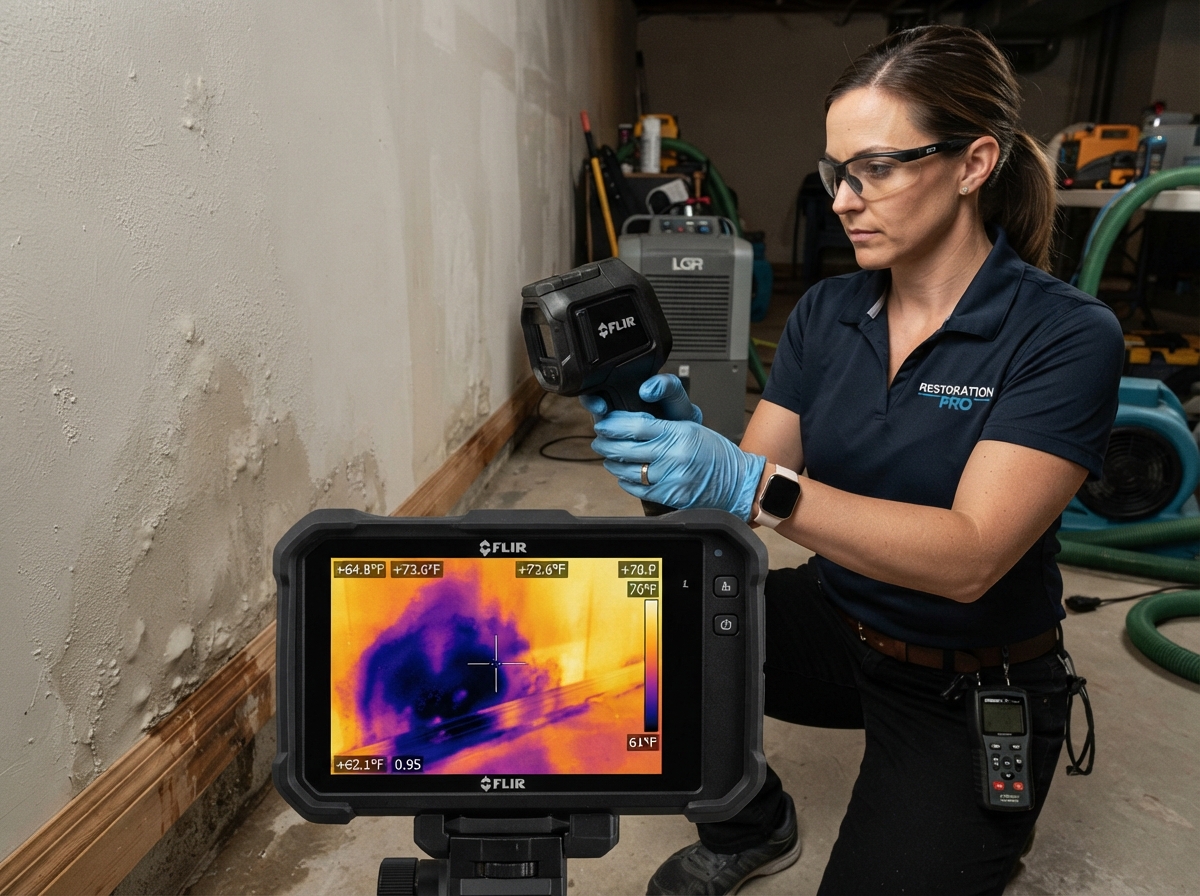
Moisture mapping then identifies the full extent of the water migration. Moisture meters and thermal imaging are used to check ceiling drywall, attic insulation, wall cavities, framing, and flooring below the visible damage. Because water can travel significant distances from its entry point, the inspection extends well beyond the visible stain. The moisture map determines where drying equipment is placed and how progress is tracked.
Drying and dehumidification then draw the moisture out of the affected materials. Air movers are positioned to create airflow across wet ceiling and wall surfaces, and dehumidifiers pull the resulting moisture out of the air. In some cases, access to wall cavities or ceiling cavities may be needed to dry insulation and framing effectively. Severely saturated drywall or insulation that cannot be dried may need to be removed. Moisture levels are monitored throughout the drying phase and confirmed against an appropriate dry standard before equipment is removed.
- Source identification (roof, plumbing, HVAC, or other)
- Moisture mapping of ceiling, attic, walls, and framing
- Evaluation of ceiling and wall materials for salvageability
- Structural drying with air movers and dehumidifiers
- Access to wall and ceiling cavities where needed
- Removal of non-salvageable materials where necessary
- Moisture monitoring and verification to dry standard
Hidden Water Damage in Palm Coast Properties
Palm Coast's exposure to wind-driven rain, tropical storms, and humidity makes hidden water damage a recurring concern for property owners. A roof leak during a Florida storm can send water into an attic and down through wall cavities long before a ceiling stain appears — and the humid coastal climate can slow the natural drying of trapped moisture, making professional dehumidification especially important.
For storm-related roof and ceiling damage, our hurricane water damage restoration page covers the full post-storm drying approach. For the structural drying process that follows moisture detection, our structural drying page explains how air movers and dehumidifiers return hidden building materials to a dry condition.
Frequently Asked Questions
Roof Leak, Ceiling, Wall & Hidden Water Damage Cleanup FAQs
Get Help Now
Need Roof Leak, Ceiling, Wall & Hidden Water Damage Cleanup Help?
Whether you are dealing with an active leak, standing water, or hidden moisture, the next step is the same — get the water out and start drying. Call now or request service through the form.
Request Service
Fill out the form and we'll follow up to help with your water damage situation.