Flood Damage Cleanup in Palm Coast, FL
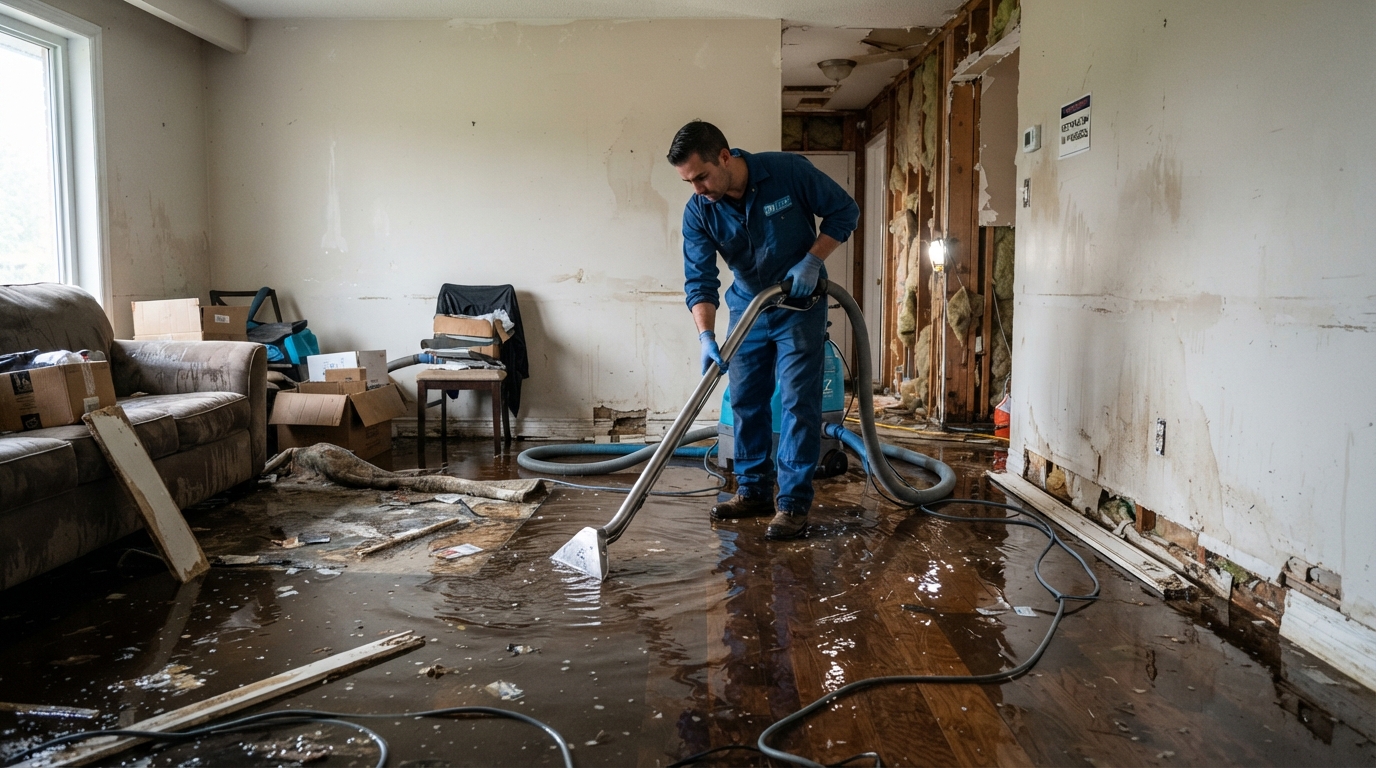
Flood damage cleanup in Palm Coast, FL addresses water that has entered a property from a range of sources — from interior plumbing floods and appliance overflows to storm-driven rain and surface water intrusion. The cleanup process includes extracting the water, assessing which materials have been affected, and beginning structural drying to return the property to a dry, stable condition.
Palm Coast Water Damage Contractors connects property owners with professional flood cleanup services across Palm Coast and surrounding communities. Because the cleanup approach depends on the water source and contamination level, a thorough assessment is the first step in determining what can be dried and what needs to be removed.
- Flood Water Removal
- Affected-Material Assessment
- Moisture Mapping
- Structural Drying
What Homeowners Mean by a Flood
The word "flood" gets used to describe several very different situations, and the cleanup approach can differ based on the source. An interior plumbing flood — a burst pipe, supply line failure, or appliance overflow — typically involves clean water that has spread across flooring and into adjacent rooms. The concern is the volume of water and how far it has migrated, not contamination.
Storm intrusion and surface water entry are different. When wind-driven rain, rising water, or storm surge pushes water into a property from outside, that water may carry soil, debris, and contaminants. The cleanup process for contaminated water involves more careful handling of affected materials, and porous materials that have absorbed contaminated water may need to be removed rather than dried.
Understanding the source matters because it determines the cleanup protocol. Clean water from a plumbing source may allow more materials to be dried in place, while water from outside the building envelope may require removal of saturated porous materials. A professional assessment identifies the source, the contamination level, and the affected materials before cleanup begins.
Materials Affected by Flood Water
Flood water affects materials throughout the property, and the damage is not limited to the visible water line. Flooring and carpet are the first to absorb water, but moisture quickly travels into subflooring, beneath baseboards, and up into drywall through capillary action. Cabinets and furniture in contact with the floor can trap water against walls and flooring.
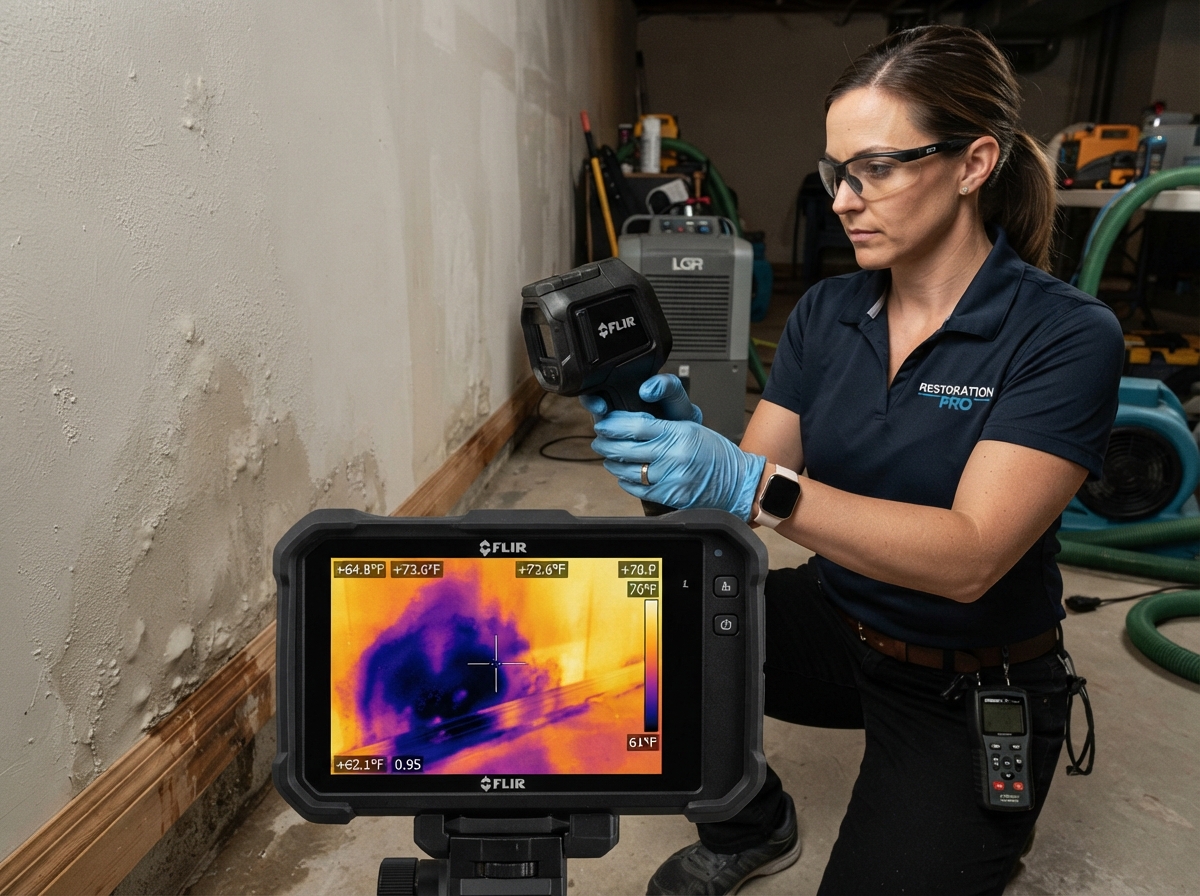
Behind the visible surfaces, water migrates into wall cavities, saturating insulation and framing. Ceiling cavities can collect water from upper-floor leaks or roof intrusion. The full extent of the damage is often wider than what is visible — which is why moisture mapping is used to identify every affected area before drying begins.
The materials that can be saved versus removed depend on the water source, how long the materials have been wet, and whether contamination is present. Clean water may allow drying in place for many materials, while contaminated water may require removal of carpet padding, saturated drywall, and insulation.
- Flooring, carpet, and carpet padding absorb water first
- Subflooring traps water beneath hard flooring surfaces
- Drywall wicks moisture upward and into wall cavities
- Baseboards and cabinetry hold moisture against walls
- Insulation and framing inside wall cavities can saturate
- Ceiling cavities collect water from above
The Flood Cleanup and Drying Process
Flood cleanup begins with extracting the standing water using commercial pumps and vacuums. The faster bulk water is removed, the less it can continue migrating into drywall, subflooring, and adjacent rooms. Extraction is the first step, but it is not the last — the bound moisture that has already been absorbed by building materials requires structural drying to remove.
After extraction, a thorough affected-material assessment identifies which materials have been wet, how saturated they are, and whether they can be dried or need to be removed. Moisture mapping uses meters and thermal imaging to trace the full extent of water migration — checking walls, floors, baseboards, cabinetry, and ceiling cavities. This step ensures that no wet area is missed, even if it is hidden behind a wall or beneath flooring.
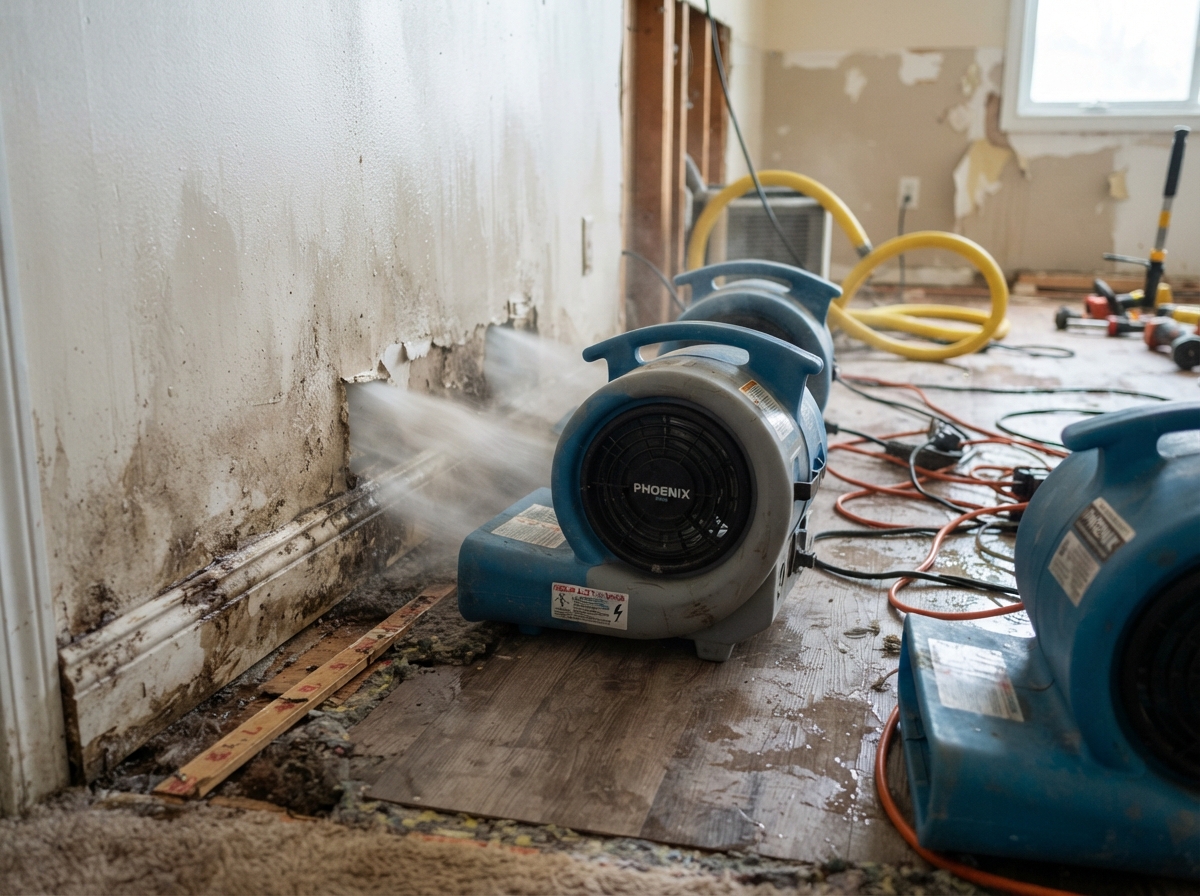
Structural drying then uses air movers and dehumidifiers to draw the remaining moisture out of the affected materials. Air movers create evaporation across wet surfaces while dehumidifiers pull moisture out of the air, preventing it from reabsorbing into dry materials. In humid Palm Coast conditions, dehumidification is essential to keep drying on track. Moisture levels are monitored throughout the drying phase and confirmed against an appropriate dry standard before equipment is removed.
- Standing water extraction with commercial pumps and vacuums
- Affected-material assessment and moisture mapping
- Removal of non-salvageable porous materials where needed
- Structural drying with air movers and dehumidifiers
- Cleaning considerations based on water source and contamination
- Moisture monitoring until dry standard is reached
Flood Cleanup in Palm Coast, FL
Palm Coast's location along Florida's Atlantic coast means properties can face both indoor flooding from plumbing and appliance failures and outdoor water intrusion from storms and hurricanes. The cleanup approach differs for each, but the priority is the same: remove the water, find the full extent of the moisture, and dry the structure.
For storm-related flooding, our hurricane water damage page covers the drying approach after severe weather. For standing water that needs immediate removal, see our emergency water extraction page.
Frequently Asked Questions
Flood Damage Cleanup FAQs
Get Help Now
Need Flood Damage Cleanup Help?
Whether you are dealing with an active leak, standing water, or hidden moisture, the next step is the same — get the water out and start drying. Call now or request service through the form.
Request Service
Fill out the form and we'll follow up to help with your water damage situation.