Toilet Overflow, Shower & Bathroom Water Damage Cleanup in Palm Coast, FL
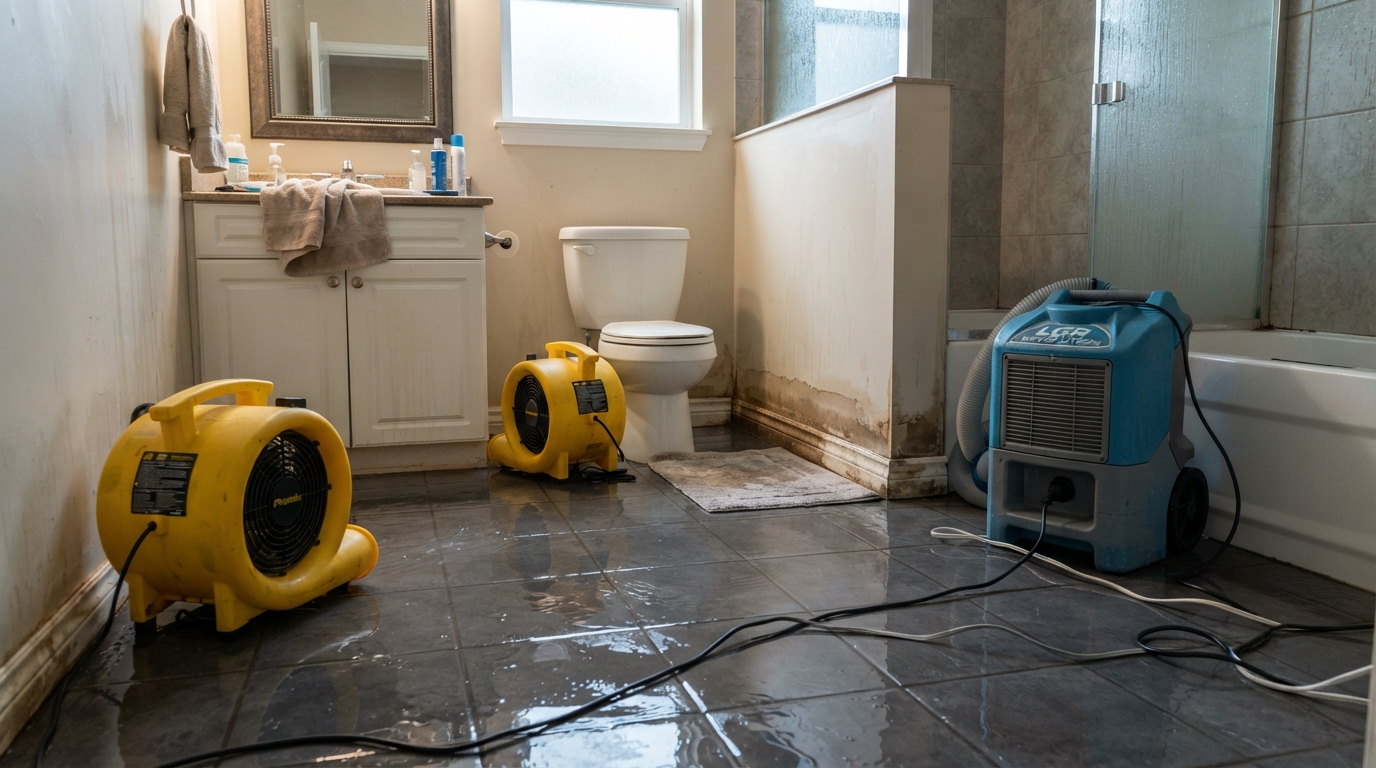
Bathroom water damage from toilet overflows, shower leaks, tub overflows, and plumbing connection failures can affect flooring, subfloors, drywall, and the rooms below. Bathroom water damage cleanup in Palm Coast, FL addresses the water source, extracts standing water, and dries affected materials — with the cleanup approach varying based on whether the water is clean or contaminated.
Palm Coast Water Damage Contractors connects property owners with professional bathroom water damage cleanup services across Palm Coast and surrounding communities. Because bathroom water can travel beneath tile and into adjacent rooms, a thorough moisture inspection is essential to finding the full extent of the loss.
- Water Extraction
- Subfloor Moisture Detection
- Clean & Contaminated Water Protocols
- Structural Drying
Why Bathroom Water Damage Is Different
Bathroom water damage presents a unique challenge because the water source can range from clean to contaminated — and the cleanup approach changes accordingly. A tub overflow or shower supply line leak typically involves clean water, which allows more materials to be dried in place. A toilet overflow involving waste water is considered contaminated and requires more careful handling, containment, and material decisions.
Bathroom flooring is another concern. Tile and stone are water-resistant on the surface, but the grout lines, underlayment, and subflooring beneath can absorb and trap water. A shower leak or tub overflow can send water beneath the tile, where it saturates the subfloor and remains hidden — even after the surface looks completely dry. Water can also travel through the floor assembly into the ceiling and walls of the room below.
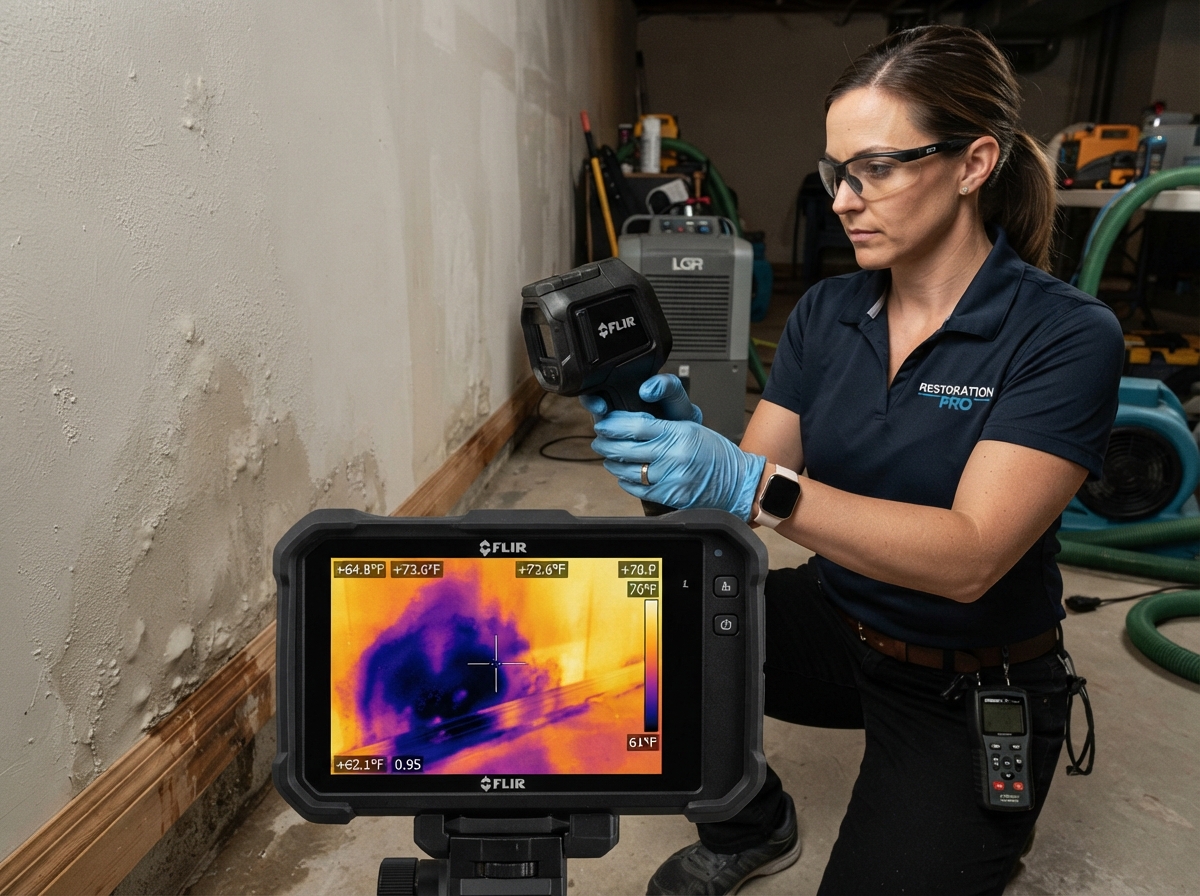
This is why bathroom water damage cleanup always includes a moisture inspection that checks beneath flooring, behind baseboards, and in the rooms below. The visible water on the tile floor is often only a fraction of the moisture that has migrated into the building structure.
Common Sources of Bathroom Water Damage
Toilet overflows are one of the most common sources of bathroom water damage. A blockage in the drain line can cause the toilet to overflow rather than drain, sending water — and potentially contaminated water — onto the bathroom floor. Toilet supply line failures can also release clean water across the floor rapidly if the line cracks or detaches.
Tub overflows occur when a tub is left running or the drain is blocked, sending water over the rim and onto the floor. Shower leaks can develop from a failing shower pan, damaged grout, or a plumbing connection behind the wall — and these leaks often go unnoticed for extended periods, allowing water to saturate the subfloor and wall cavities. Sink overflows and plumbing connection failures under the vanity can saturate the cabinet, flooring, and wall cavity below.
The cleanup approach depends on the water source. Clean water from a supply line or tub overflow may allow drying in place for many materials. Contaminated water from a toilet overflow requires containment protocols and may require removal of porous materials that have absorbed contaminated water. A professional assessment determines the contamination level and the appropriate cleanup approach.
- Toilet overflows (clean or contaminated depending on content)
- Toilet supply line failures
- Tub overflows from running water or blocked drains
- Shower pan leaks and grout failures
- Sink overflows and vanity plumbing connection leaks
- Plumbing connection failures behind walls
Bathroom Water Damage Cleanup Process
The cleanup process begins with identifying the water source and determining whether the water is clean or contaminated. For contaminated water from a toilet overflow, appropriate containment protocols and protective equipment are used, and the cleanup approach follows contaminated-water procedures. For clean water, the process focuses on extraction and drying.
Water extraction removes standing water from the bathroom floor using commercial vacuums and extraction tools. Even after the surface water is removed, moisture has likely been absorbed by the subflooring beneath the tile, the drywall behind the walls, and the materials in the room below — so extraction is followed by a thorough moisture inspection.
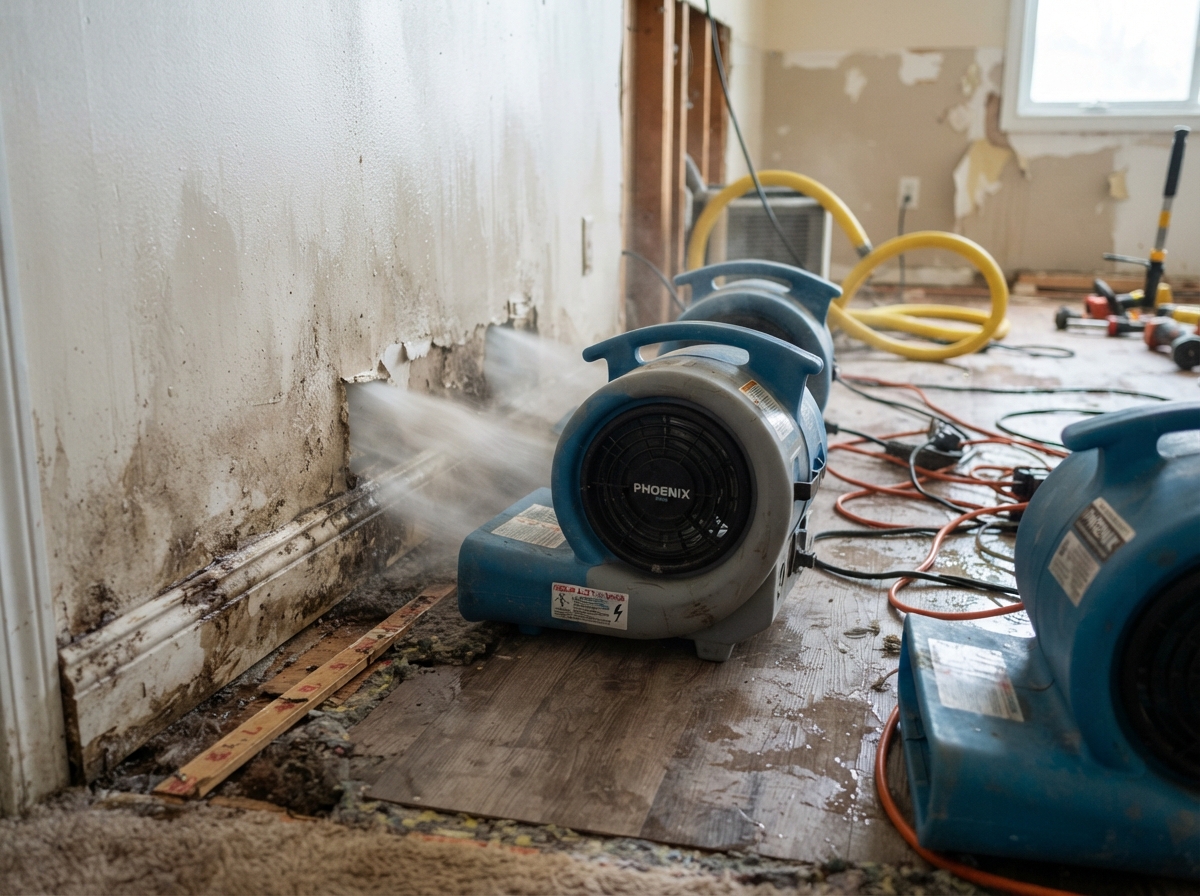
The inspection checks the subflooring beneath the tile, the baseboards and drywall, the wall cavities behind the shower and toilet, and the ceiling and walls of the room below if applicable. Air movers and dehumidifiers are then placed to dry the affected materials. For contaminated water losses, non-salvageable porous materials may be removed before drying begins. Moisture levels are monitored throughout the drying phase and confirmed against an appropriate dry standard before equipment is removed.
- Source identification and contamination level assessment
- Containment protocols for contaminated water where needed
- Standing water extraction from bathroom floor
- Moisture inspection of subfloor, walls, and room below
- Structural drying with air movers and dehumidifiers
- Appropriate cleaning based on water source
- Moisture monitoring to dry standard
Bathroom Water Damage Cleanup in Palm Coast
Bathroom water damage is a frequent issue in Palm Coast homes, and because bathrooms share walls and floors with other rooms, the moisture can travel beyond the bathroom itself. Palm Coast Water Damage Contractors connects property owners with professional water removal and drying services throughout Palm Coast and surrounding Flagler County communities.
If the bathroom water loss involved a toilet backup or contaminated water, our sewage backup and black water cleanup page covers the containment and material-handling protocols. For the drying phase, our structural drying page explains how air movers and dehumidifiers return bathroom building materials to a dry condition.
Related Water Damage Services
Frequently Asked Questions
Toilet Overflow, Shower & Bathroom Water Damage Cleanup FAQs
Get Help Now
Need Toilet Overflow, Shower & Bathroom Water Damage Cleanup Help?
Whether you are dealing with an active leak, standing water, or hidden moisture, the next step is the same — get the water out and start drying. Call now or request service through the form.
Request Service
Fill out the form and we'll follow up to help with your water damage situation.